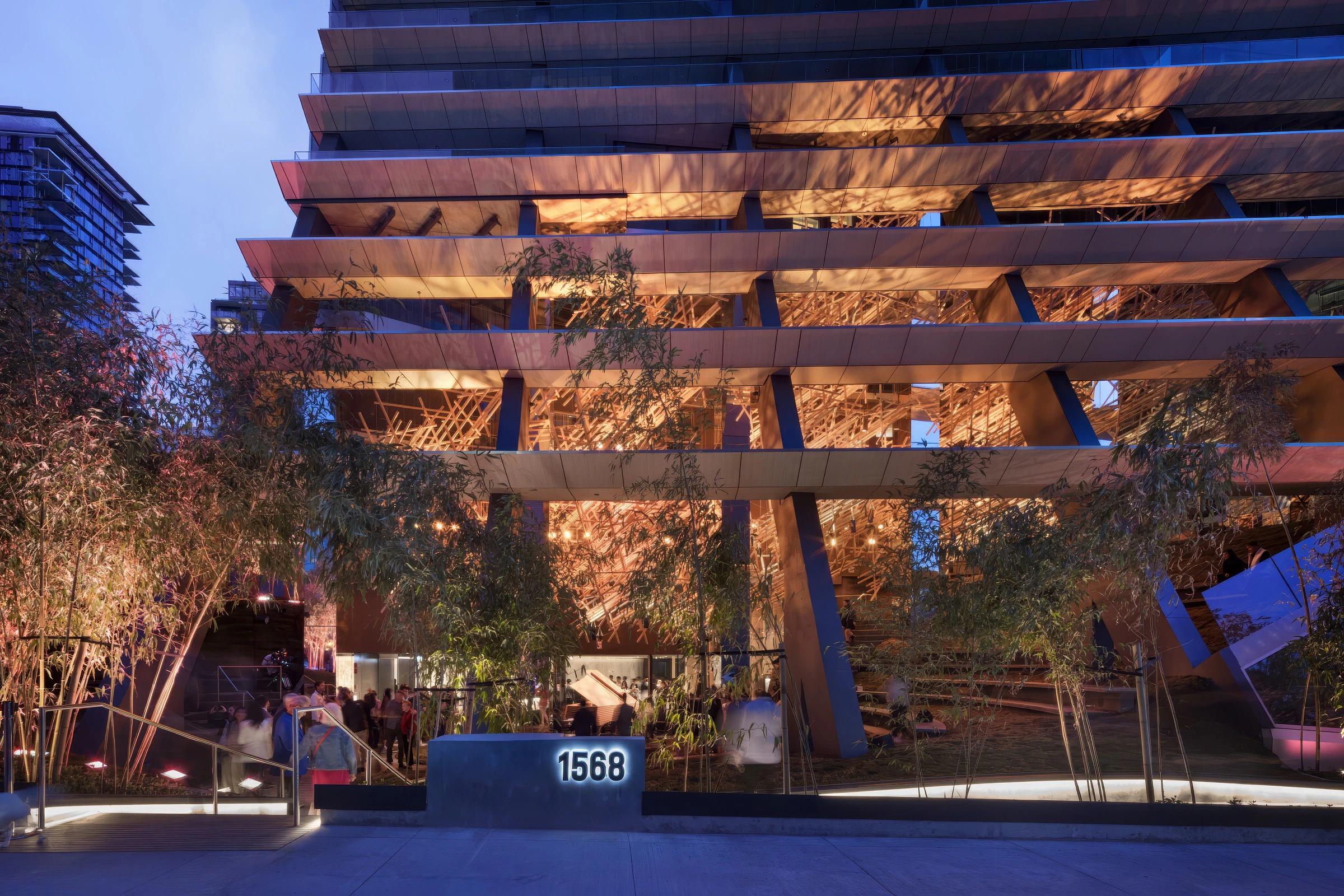
Urban Context and Architectural Expression
Alberni Street, a downtown corridor, has undergone a significant transformation. Once associated primarily with prestige and display, it now features a vibrant restaurant culture and dense residential development. The urban character of the area is shaped by both its historical context and Vancouver's zoning and planning policies. The city’s protected view corridor bylaw mandates that new developments preserve sightlines to the mountains and waterfront. Additional regulations, such as the Downtown Official Development Plan (DODP), promote active street-level uses, require tower setbacks, and stipulate that new buildings enhance the public realm through amenities and open space. Within this complex context, buildings must be evaluated not as isolated objects in the skyline, but as entities negotiating the intersections of commerce and neighbourhood, spectacle and domesticity, and the dynamic between urban movement and the rituals of arrival and dwelling.
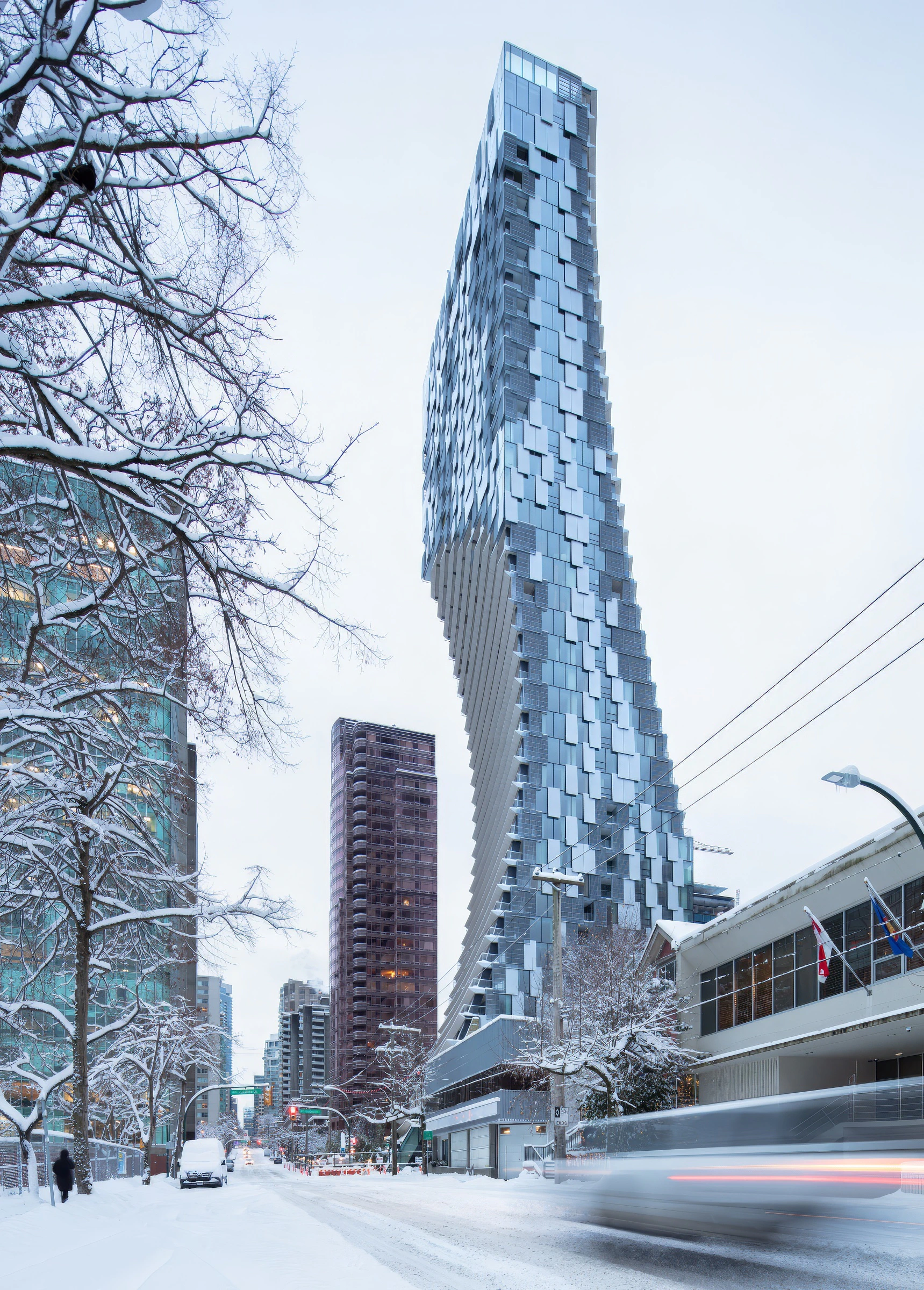
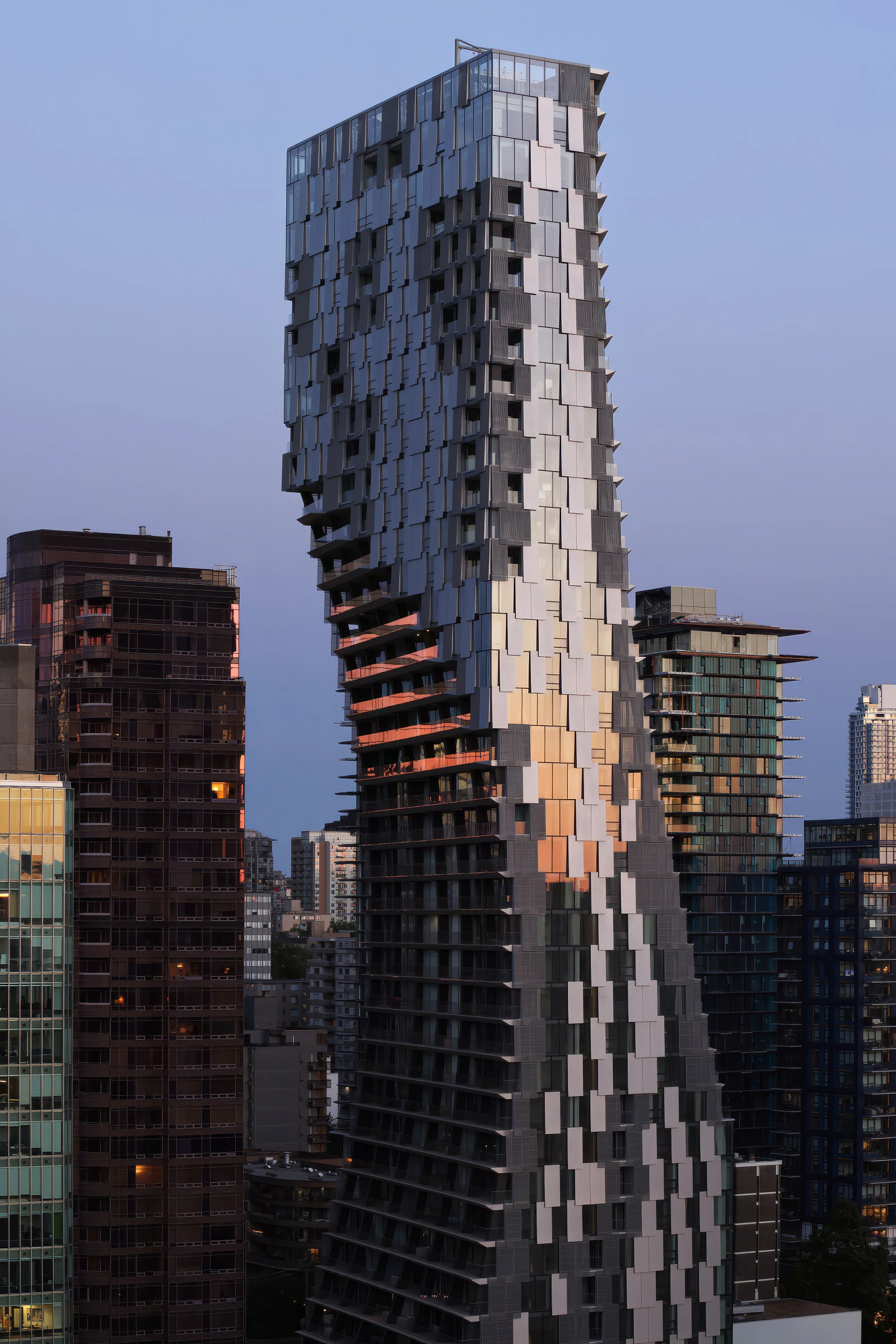

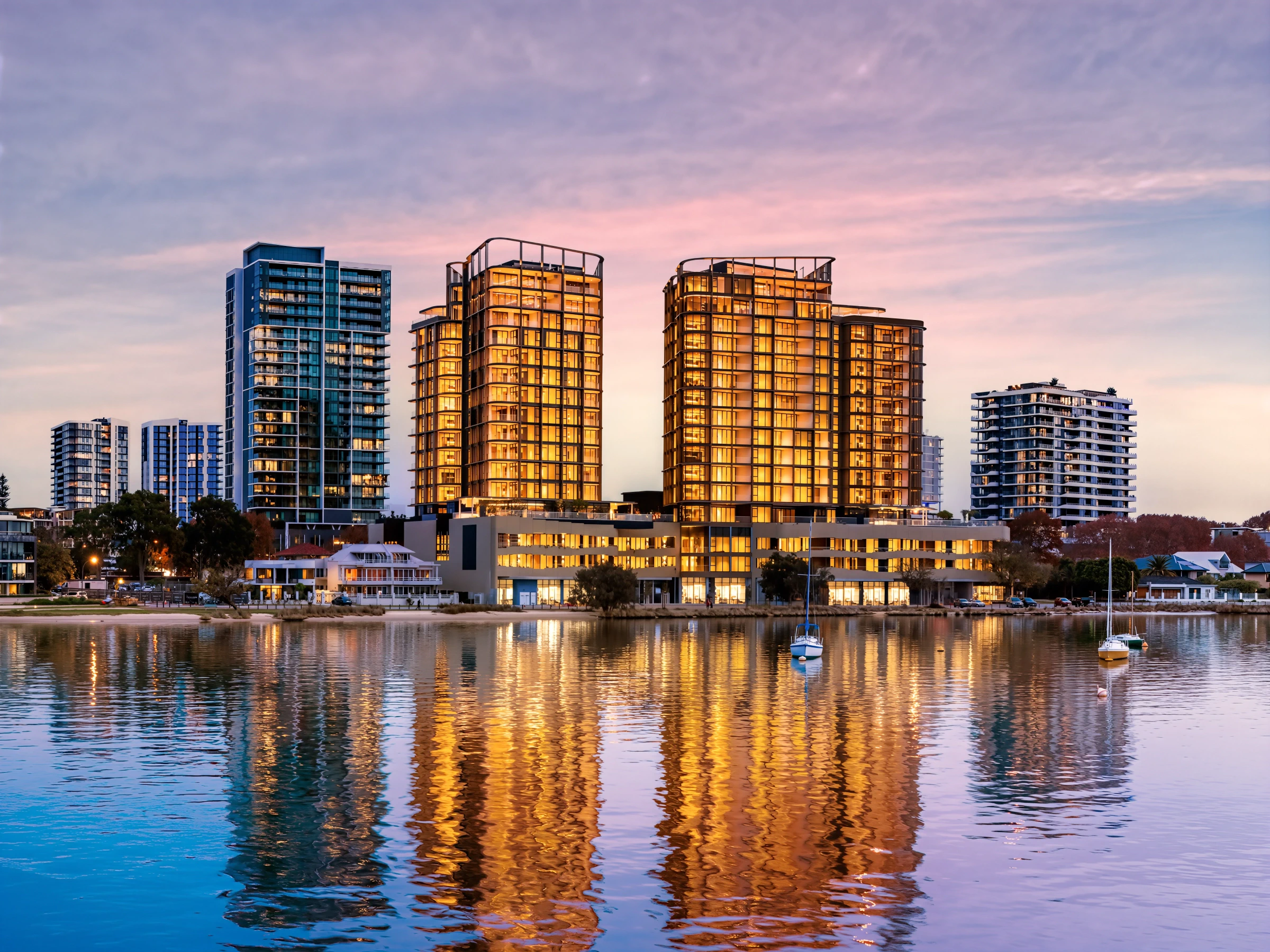
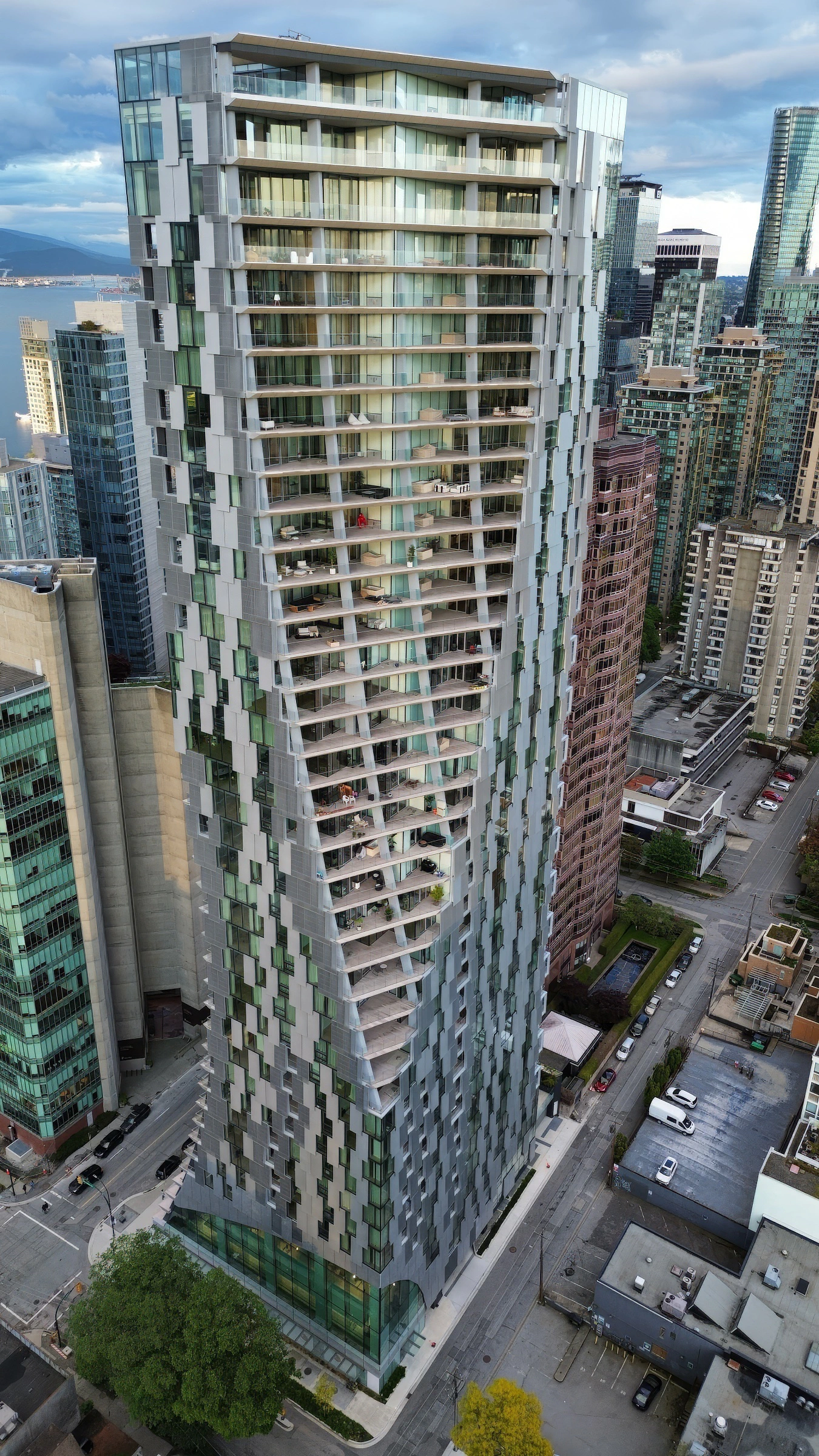
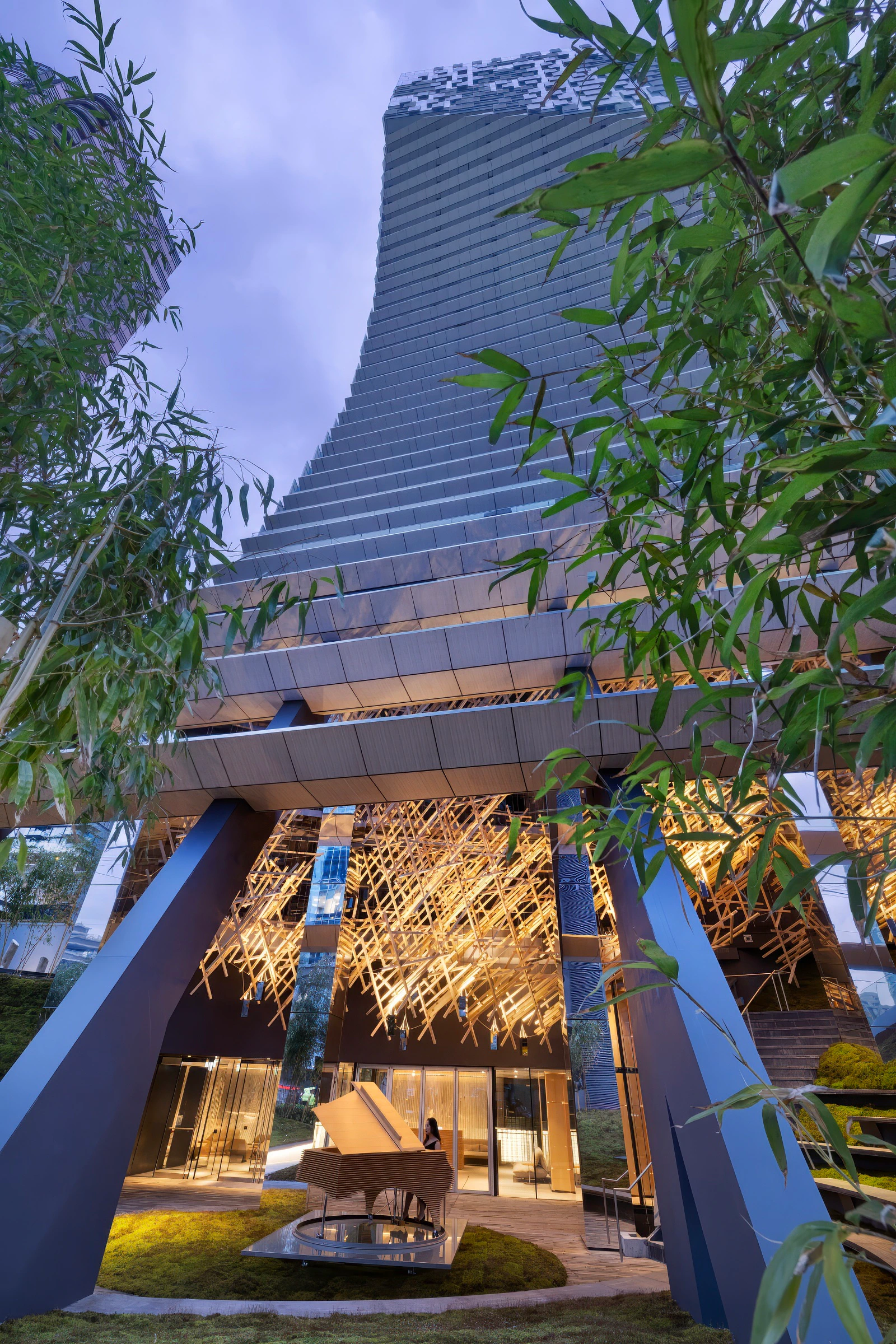
The design intent is immediately evident from the street. Initially, the tower appears exceptionally slender, emerging from a corridor of trees and adjacent high-rises as a sharply vertical plane. This impression shifts upon closer observation. Two deep recesses carved into the structure alter the perception of mass: the seemingly flat surface becomes sculpted, and the rigid form appears to bend into space. These voids serve a functional purpose. In response to Vancouver’s protected view corridors toward the harbour, mountains, and Stanley Park, the building’s form is hollowed to preserve sightlines while providing generous terraces. Kengo Kuma and Associates’ assertion that “No two views of the building are the same, its shape elusive” is accurate. The building’s geometry transforms when viewed from different perspectives.


The Japanese philosophy of layering is similar to the philosophy of Gesamtkunstwerk – the total work of art – that we have been exploring at Westbank, yet there is something about the subtleties of the Japanese approach that is very different.Ian GillespieFounder of Westbank
The façade further amplifies this sense of instability. At close range, the building envelope incorporates glass, opaque aluminium panels, and fine grilles set at varying depths. This strategy produces diverse interactions with light, ensuring the surface never appears uniform. Some panels reflect brightly, while others recede into shadow. The warmer soffits beneath the terraces introduce a softer tone within the sharper exterior. This strategy is notable in Vancouver, where residential towers typically employ smooth glazing and repetitive forms to convey a sense of lightness. While Alberni aligns with the tradition of slender towers and expansive views, it deliberately avoids uniformity. Overlapping, projecting, and receding elements cause the building to function more as a layered screen than as a monolithic slab. The Japanese influence is evident not in decorative motifs, but in the method: the design is articulated through relationships between surface and depth, exposure and shelter, and precision and atmosphere.
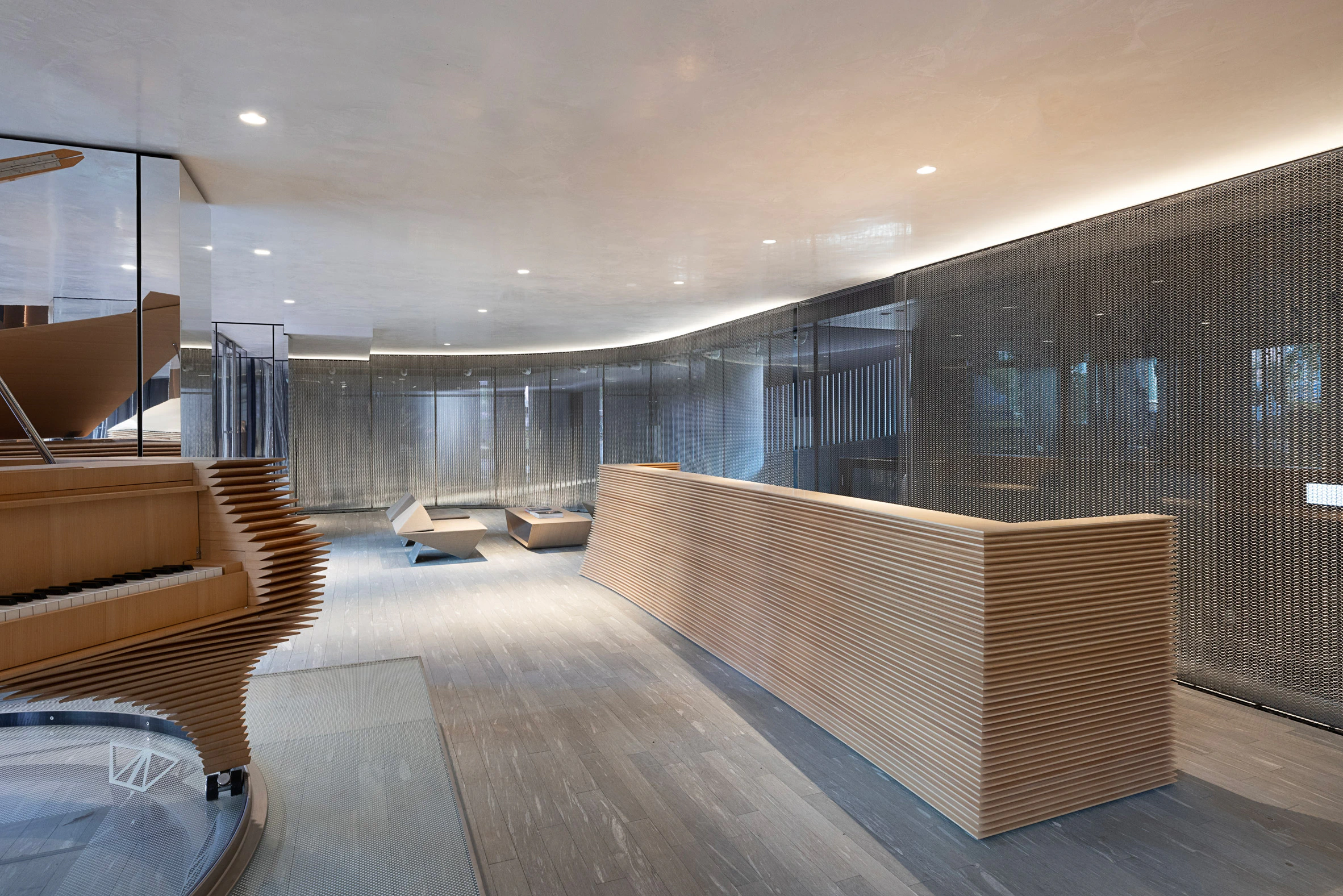
At ground level, this approach transforms the entrance into more than a private forecourt. A moss-covered open-air amphitheatre rises beneath the tower, while above, a suspended cloud of interlocking members interprets the principles of kigumi joinery as a contemporary canopy. This integration is significant: moss, structure, performance space, and circulation are unified within a single volume. As a result, the experience of arrival becomes an urban room that encourages the street to pause. The inclusion of a bespoke Fazioli piano further reinforces this concept. Designed in dialogue with the architecture, the piano serves as more than a luxury; it integrates music into the spatial composition. The building thereby creates an environment in which landscape, sound, and structure are unified into a cohesive whole.
"The uniformity of Vancouver's skyscraper materiality is both its strength – a characteristic, unified cityscape – and its opportunity to provide something different"Kengo KumaArchitect


Interior Spatial Layers
Inside, the common areas continue that argument. Instead of repeating a branded idea of luxury, they move from one atmosphere to another. The reception area extends the entrance sequence. It uses height and reflection of mirror-clad columns to evoke a sense of a clearing rather than a conventional lobby. The wine room then shifts the experience from openness to intimacy. This contrast is important, as it demonstrates the project’s understanding of comfort as careful calibration rather than visual excess. Each room is attuned to a distinct form of attention.

The pool provides the most illustrative example. Its long, restrained basin features a calm water surface and a pale enclosure. These details prevent the eye from settling on ground-level decoration, instead directing attention upward to the ceiling. A suspended field of interlocked members spans the room, evoking a constructed cloud. This effect is achieved through translation rather than imitation: elements reminiscent of timber joinery are executed in aluminium, maintaining delicacy while meeting the technical requirements of a high-rise interior. The quiet spatial arrangement of the pool hall ensures that the ceiling serves as the primary spatial event, with reflections in the water amplifying the sense of layered depth.
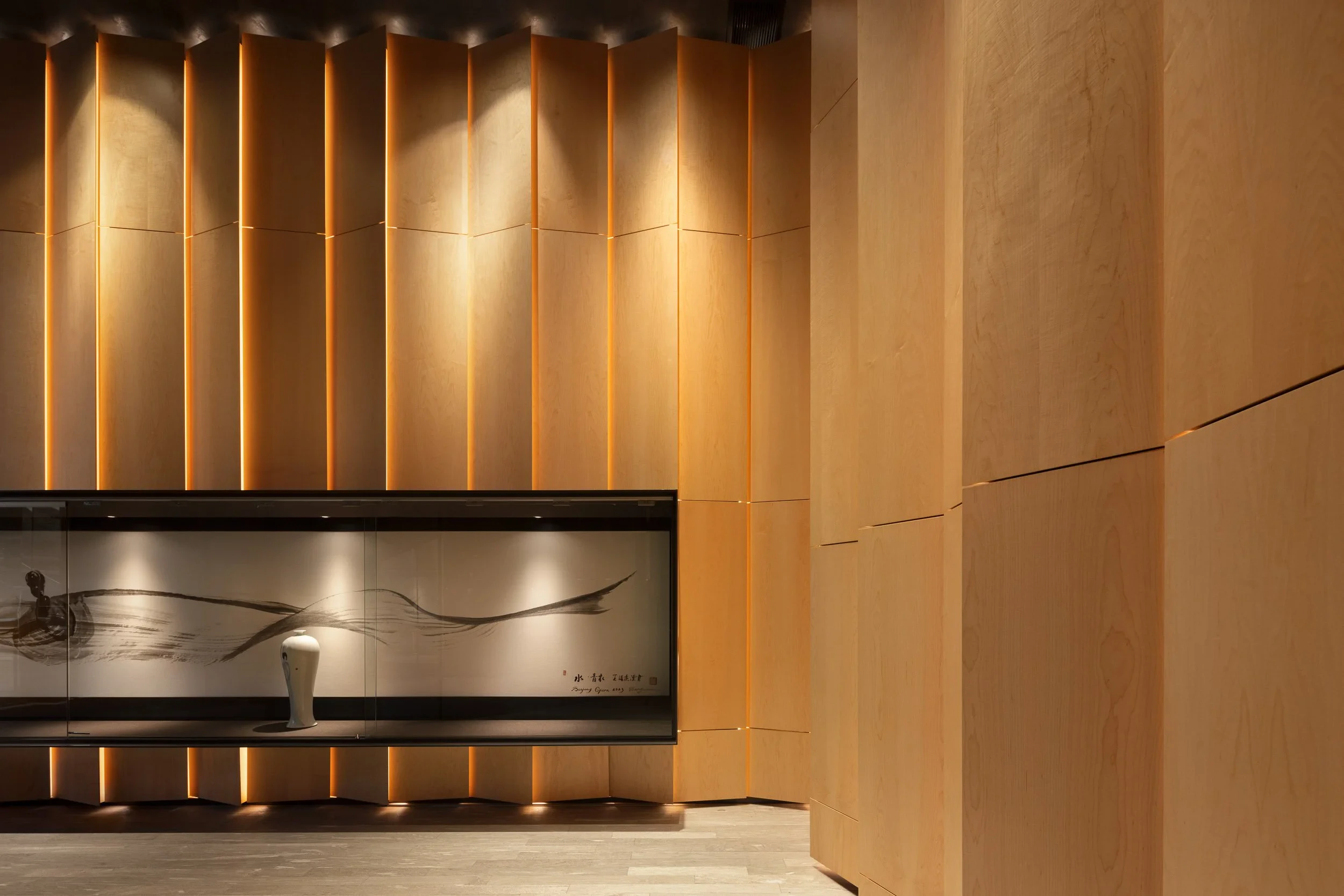
The cork-lined listening room exemplifies the same design philosophy. Cork is selected not solely for its texture, but because it softens reverberation and retains sound with warmth and depth. This acoustic strategy transforms the room into a space intended for focused listening rather than visual display. When considered alongside the amphitheatre and piano at the entrance, this approach demonstrates that Alberni exhibits an uncommon attentiveness to sound as an architectural medium. The tower is not only seen and inhabited; it is also experienced through sound, whether present or intentionally subdued.



The Crown Jewel — Penthouse One
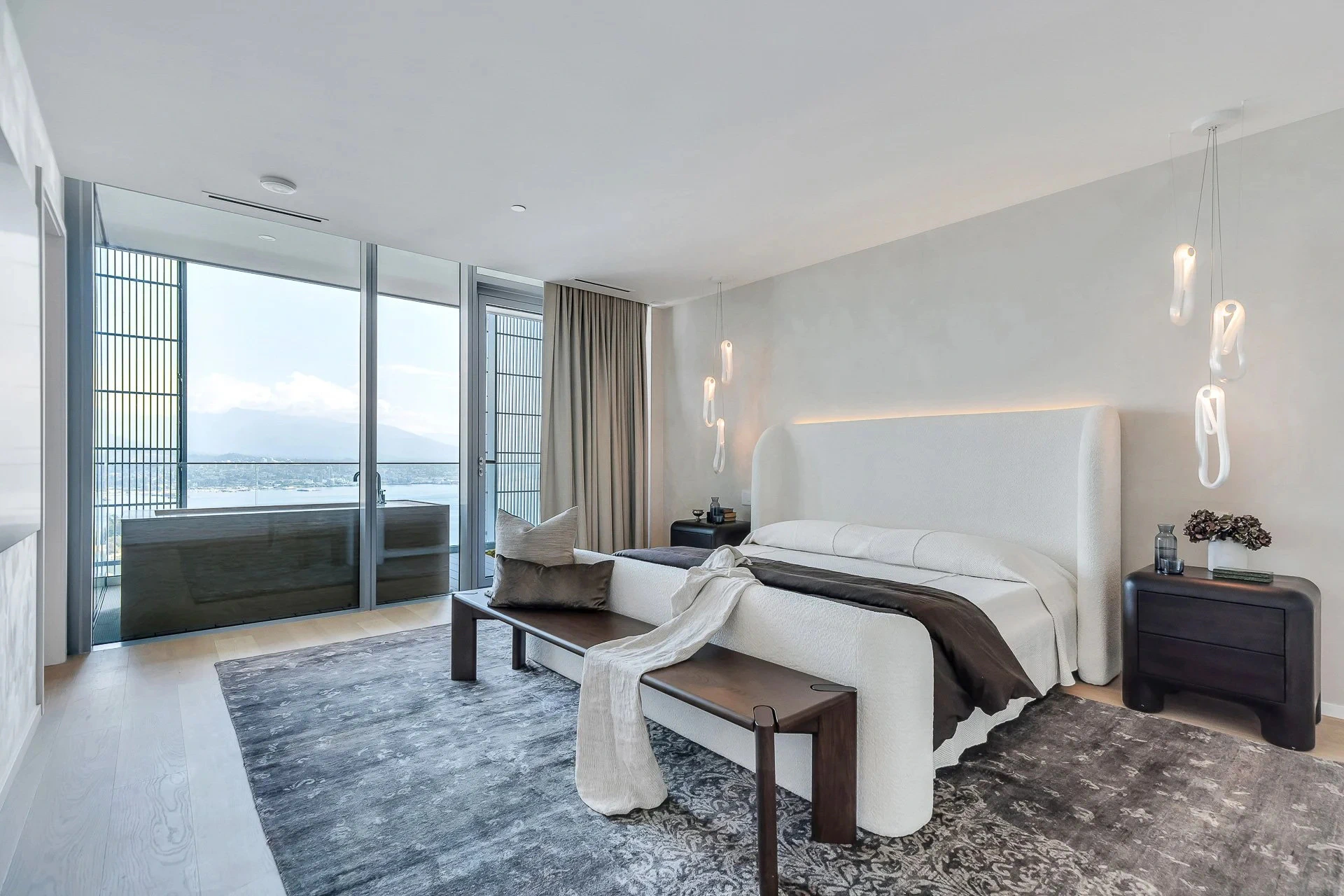
Penthouse 1 is particularly compelling within Alberni’s broader architectural narrative because it does not diverge from the tower’s core themes of layering, atmosphere, and calibrated spectacle; rather, it refines these concepts within a domestic context. The building as a whole transforms protected views, carved voids, and shifting surfaces into an architecture of depth and perception, and the penthouse extends this logic indoors through heightened material richness and a more intimate sense of craft. Exclusive interior upgrades by

This sense of luxury is inseparable from space and setting. The living and dining area, rising to 20-foot ceilings, employs height and expansive glazing to frame sweeping views across Coal Harbour, the North Shore Mountains, and English Bay, integrating the city and landscape into the interior composition. The most dramatic feature is the private glass-bottom swimming pool and spa, suspended above so that water, light, and structure become a unified architectural event, with shimmering reflections cast into the living space below. Three outdoor terraces extend the penthouse into the open air, accessible by stairs or a private glass lift, while an outdoor soaker tub connected to the primary suite transforms the uppermost level into a retreat above the city. Penthouse 1 presents luxury not as accumulation for its own sake, but as a precise orchestration of rare materials, artful illumination, panoramic exposure, and a singular act of architectural theatre.



Concluding Thoughts
This may constitute Alberni’s most significant contribution to Vancouver. While the city has developed expertise in constructing dense residential towers that preserve light and views, this project offers a more comprehensive understanding of how a tower can engage with its street and climate. View protection is achieved through sculpted voids, and the building becomes a dynamic presence among trees, weather, and neighbouring structures. Private amenities are conceived as a sequence of crafted interiors, each with its own atmosphere and sensory logic. Alberni Street has historically been a site where urban identities accumulate rather than replace one another. This tower embodies that history in vertical form, translating a philosophy of layering into a building that is distinctly characteristic of Vancouver.