In a tight South Yarra setting, where inner-city houses are often pushed towards overbuilding or overcomplication, Lang 靚 takes a more disciplined path.
That clarity helps explain why the house feels so resolved. Rather than treating the site as a container to be filled, the design treats it as a set of environmental and spatial conditions to be negotiated carefully. The result is a 254-square-metre home that aims to do more with less: less circulation, less energy waste and less visual clutter, but more flexibility, more greenery and more usable volume.
Design decisions—inside and out
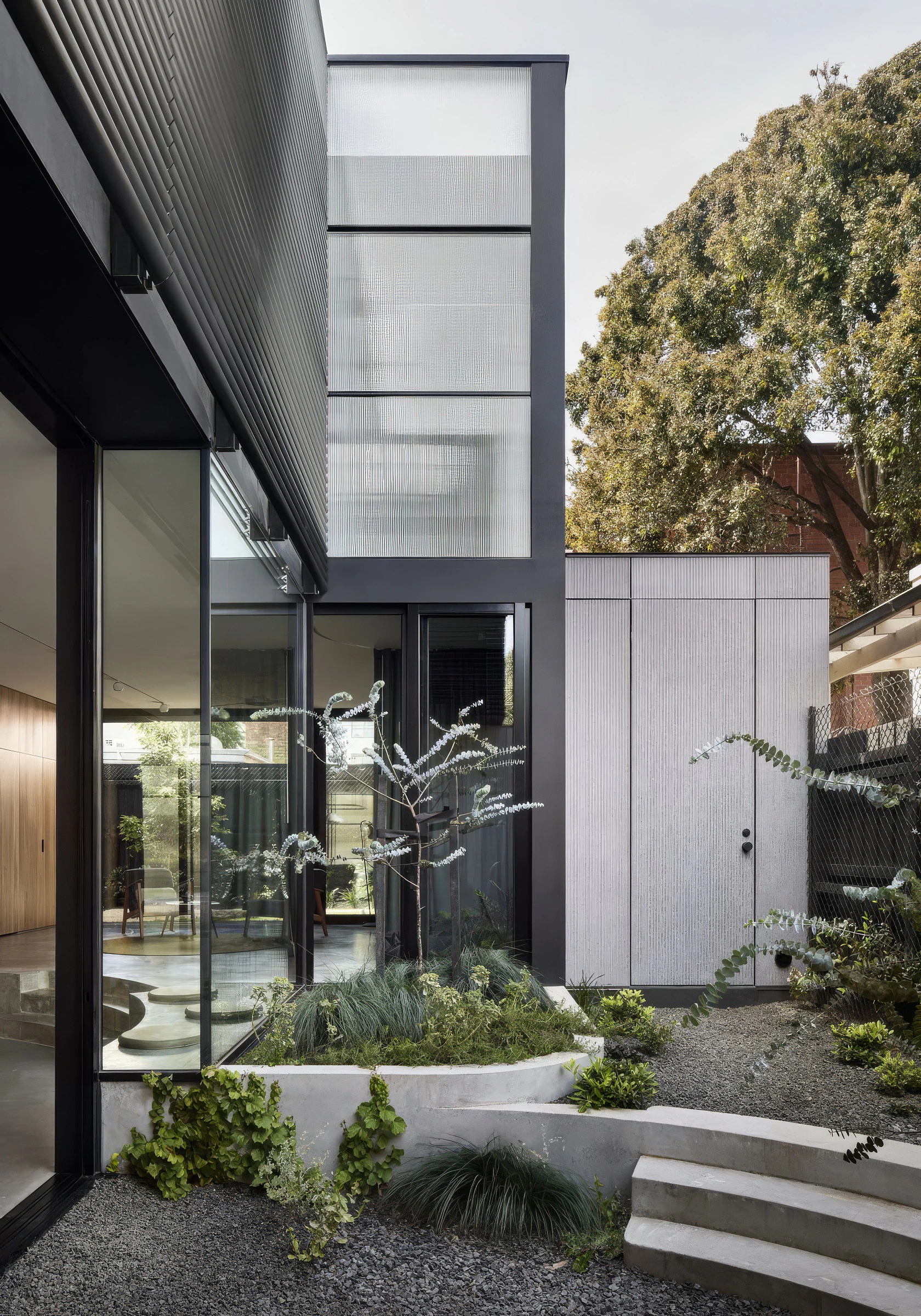
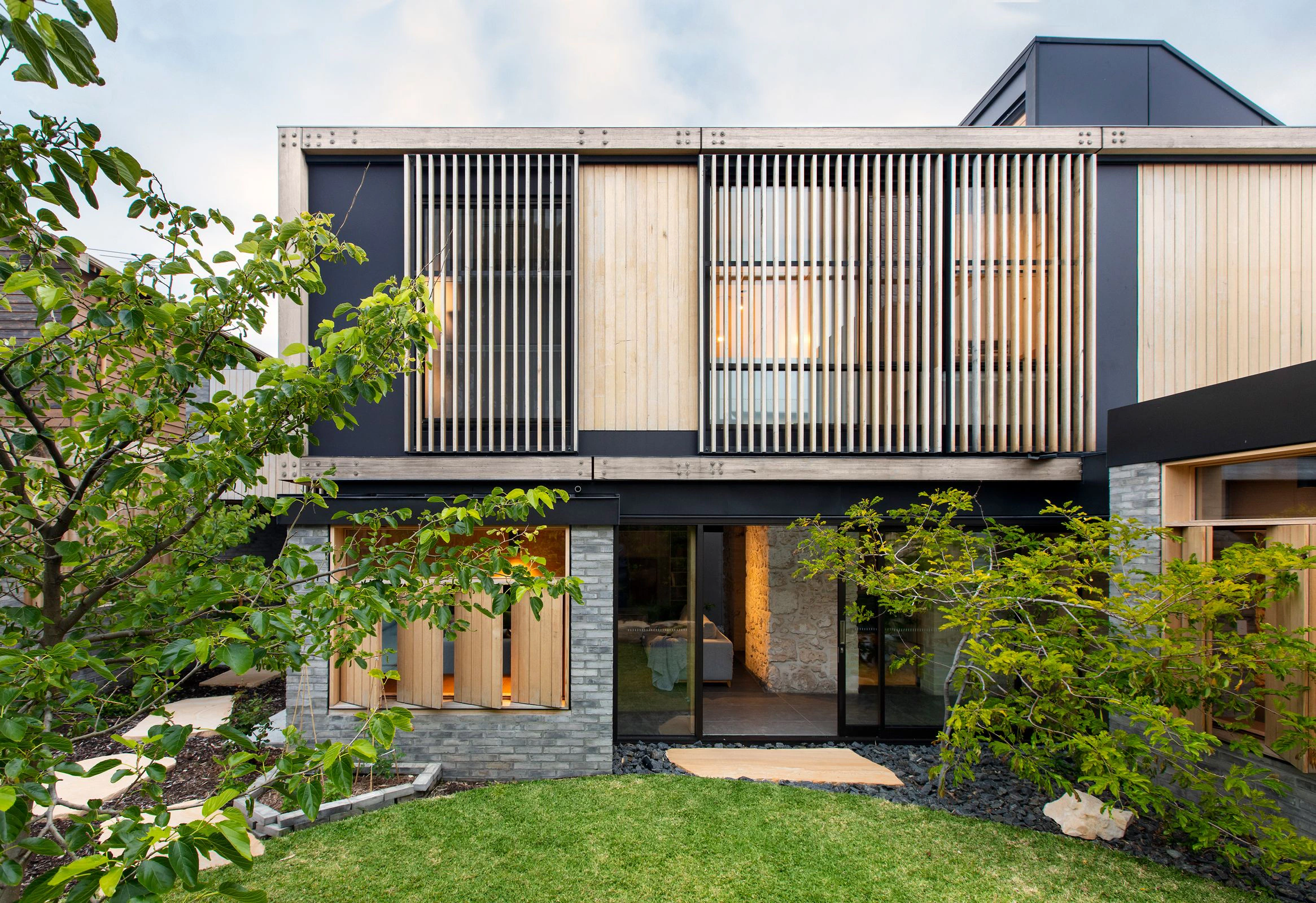
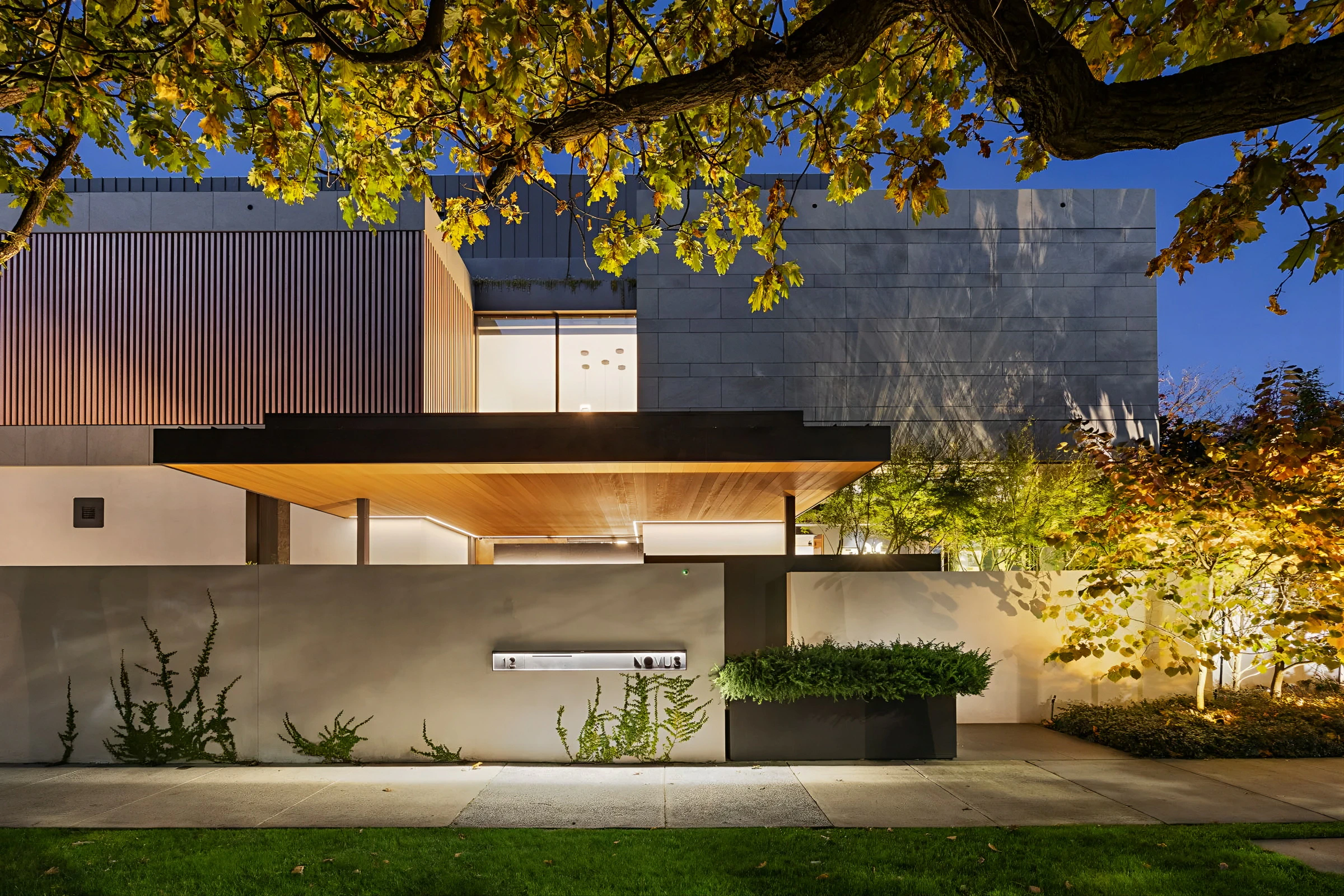
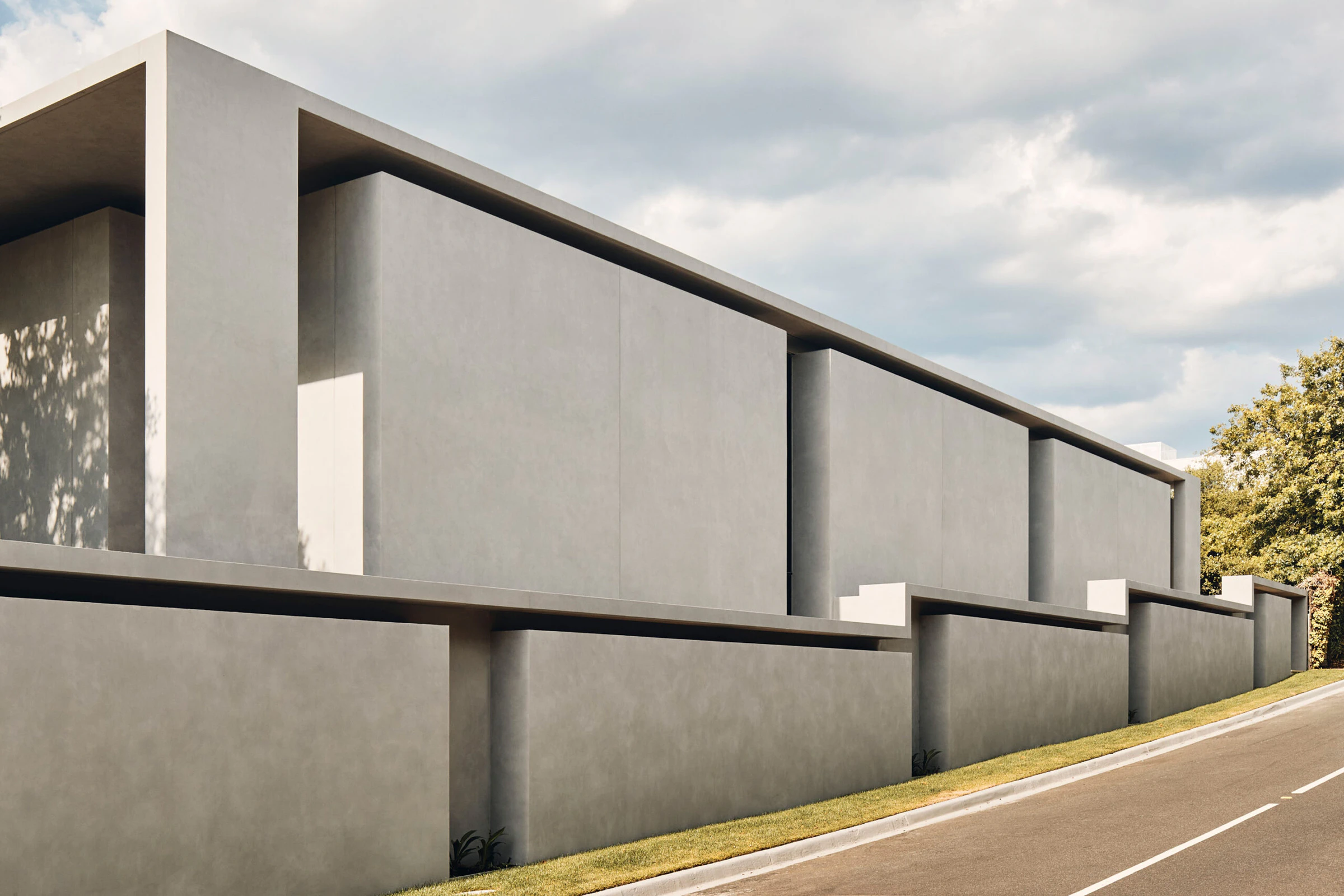
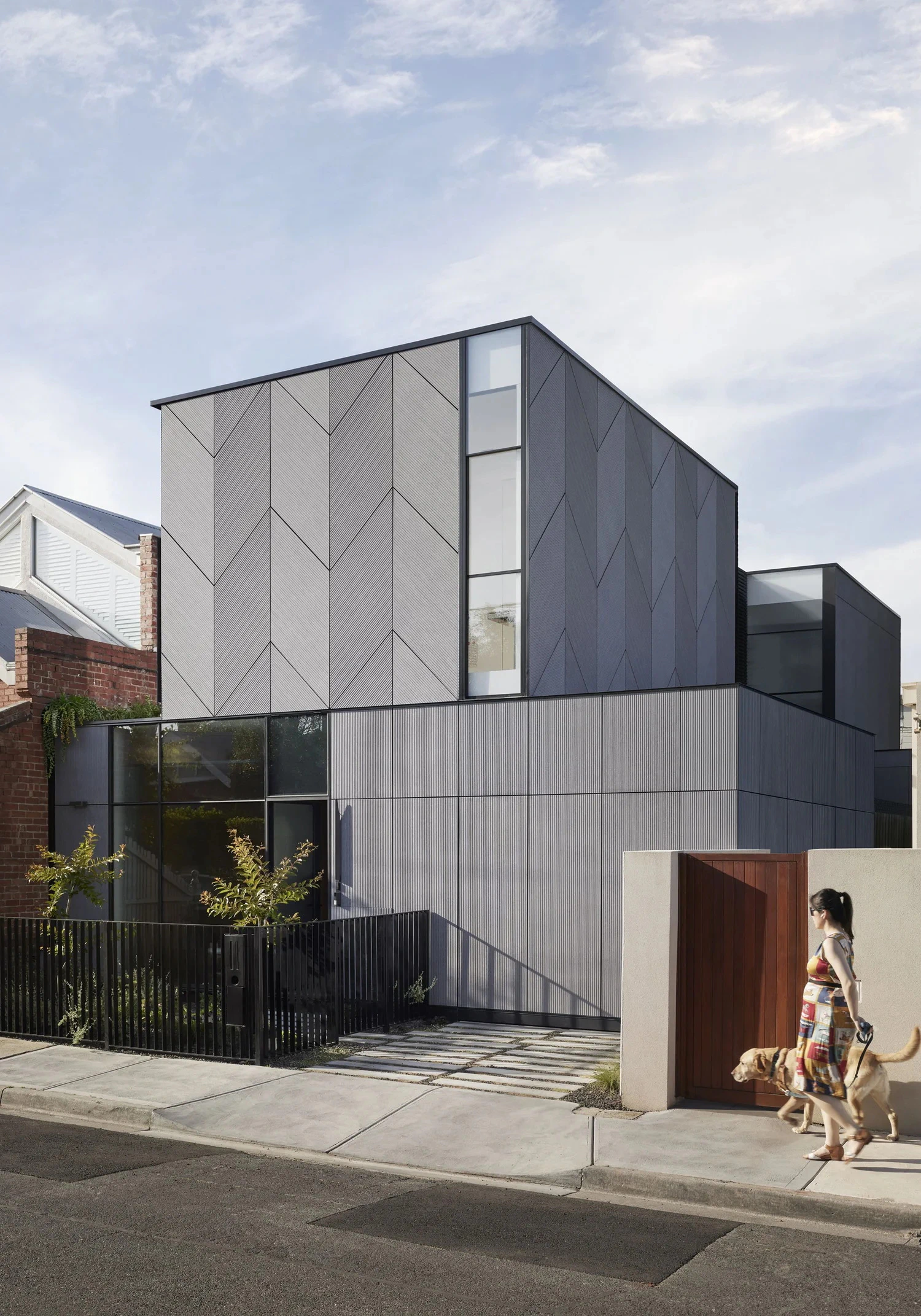
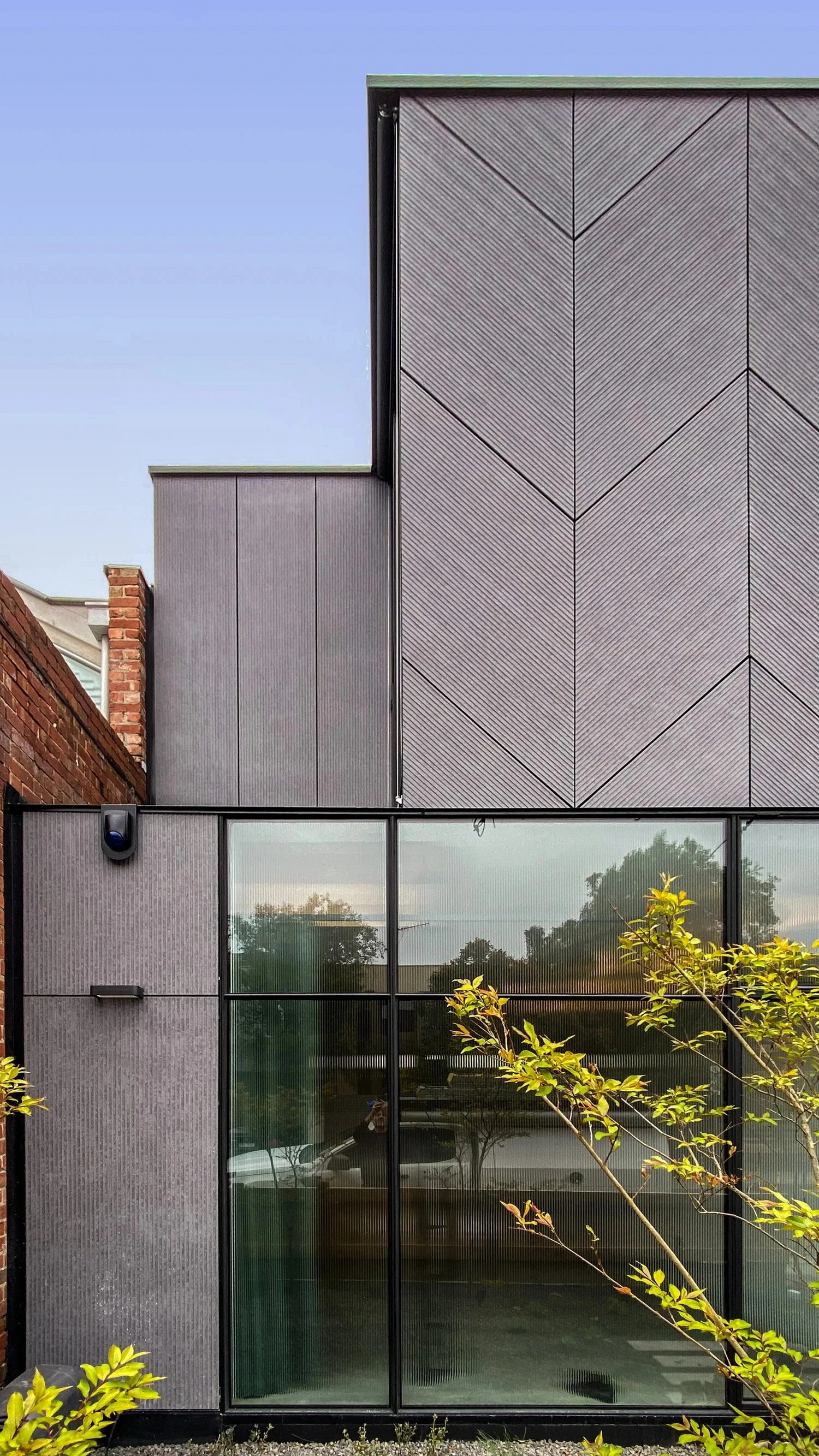
The external form follows that logic. To the street, the house presents as a robust, rectilinear composition in durable equitone cladding, with a fluted glass frontage that filters views while still allowing daylight and passive surveillance. Its mass is weighted to the western side and steps down to the east, a move shaped by neighbouring access to light and garden space. At the rear, the upper level projects to shade the living zone below, showing how form has been driven by solar performance as much as appearance.
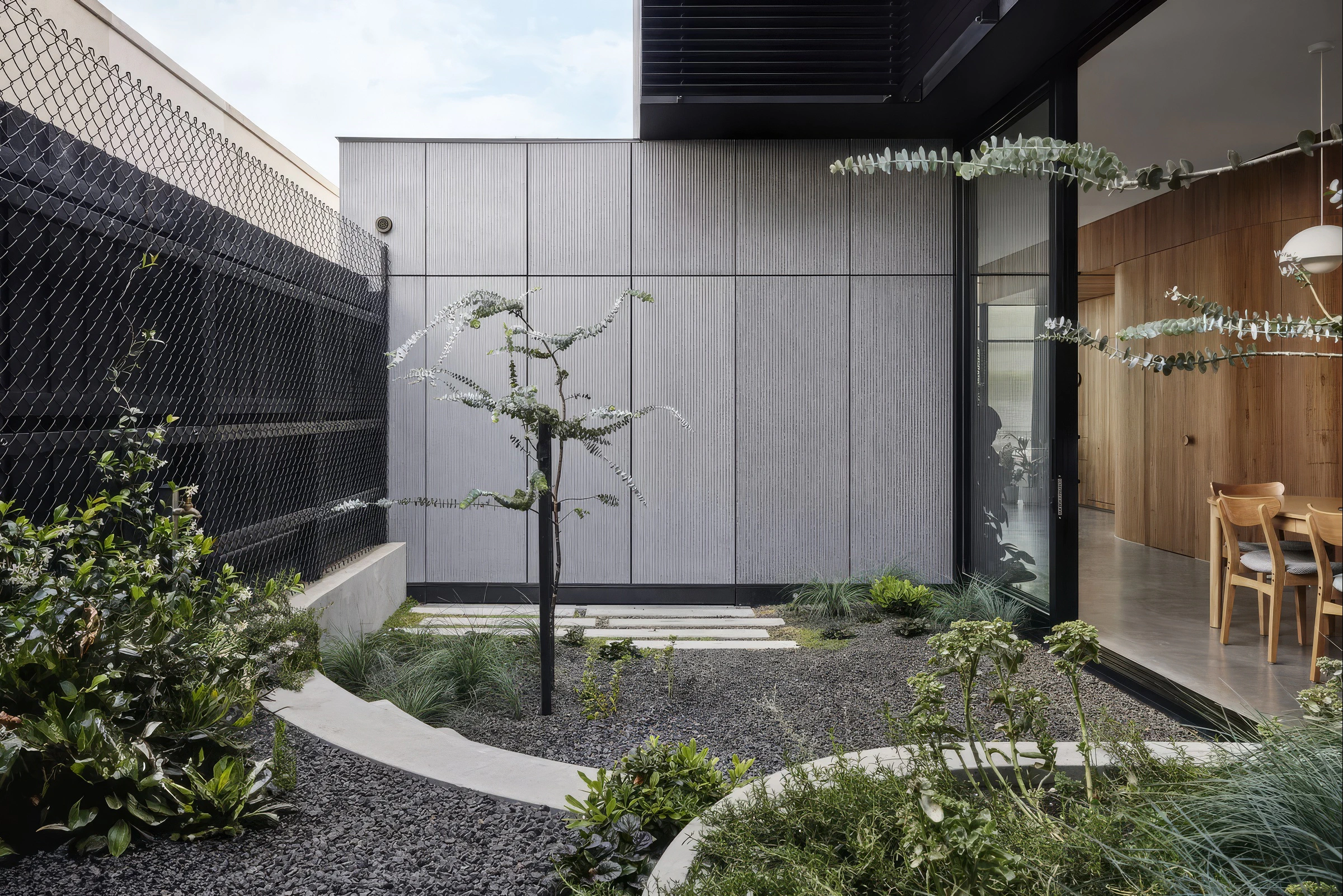
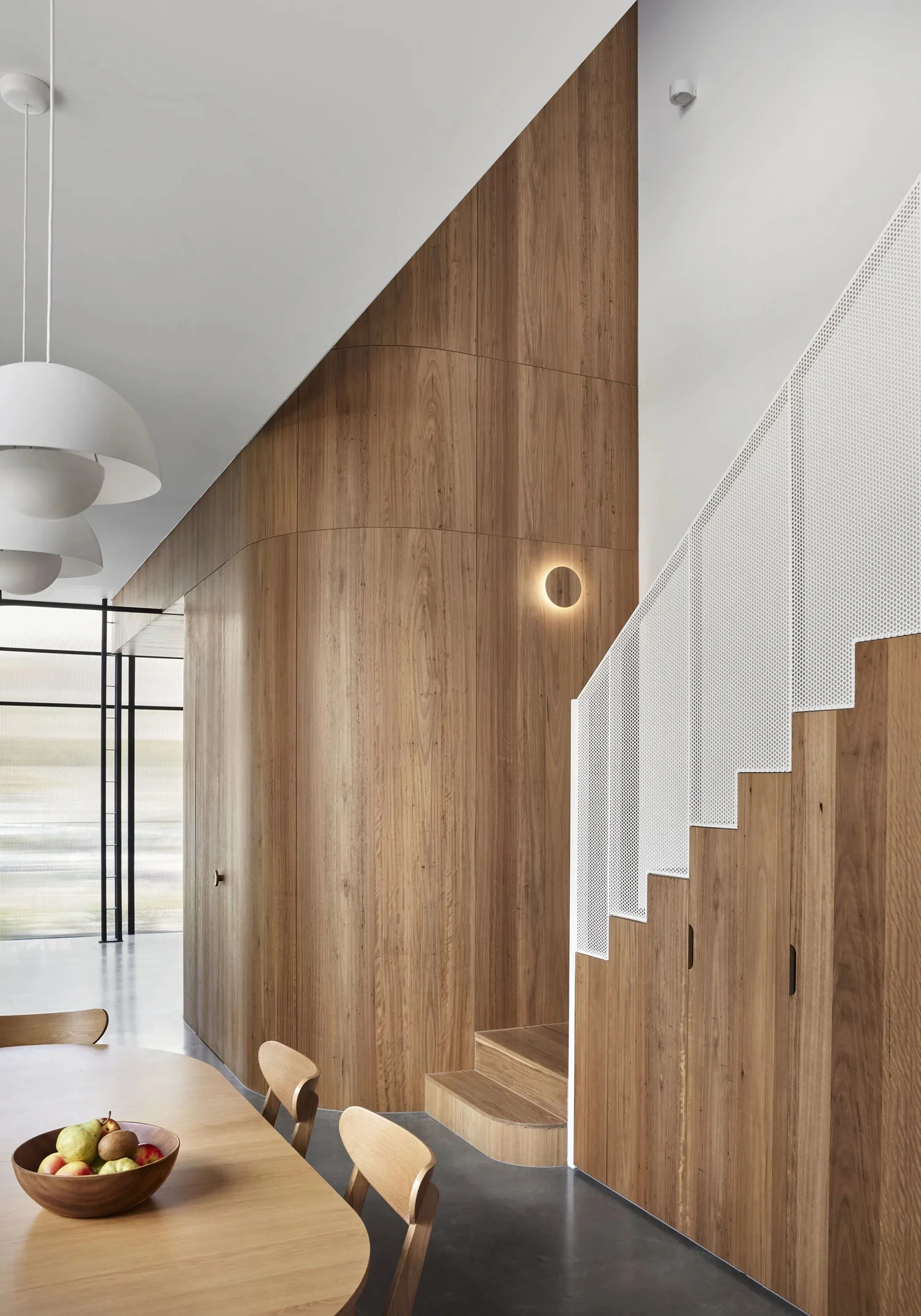
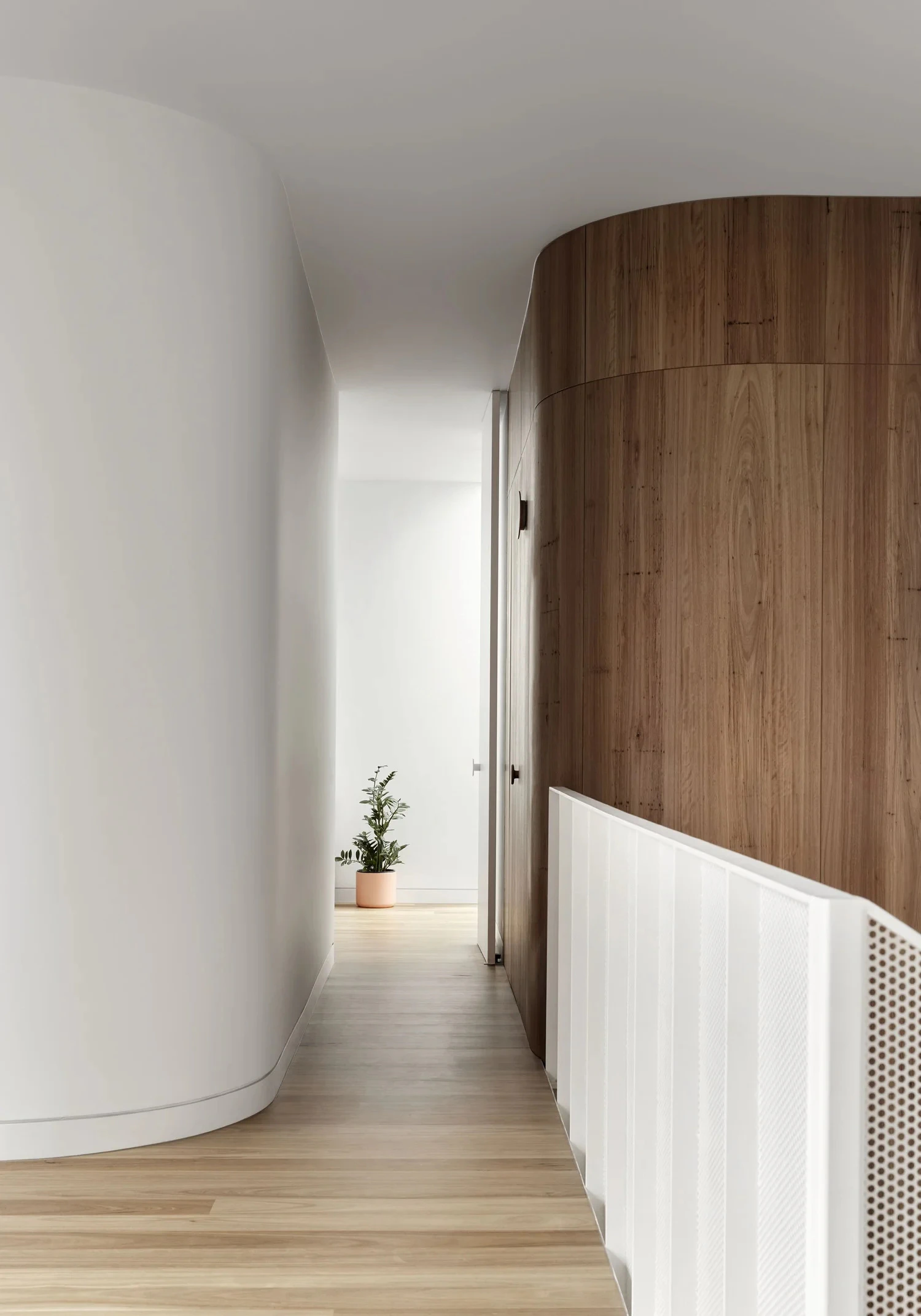
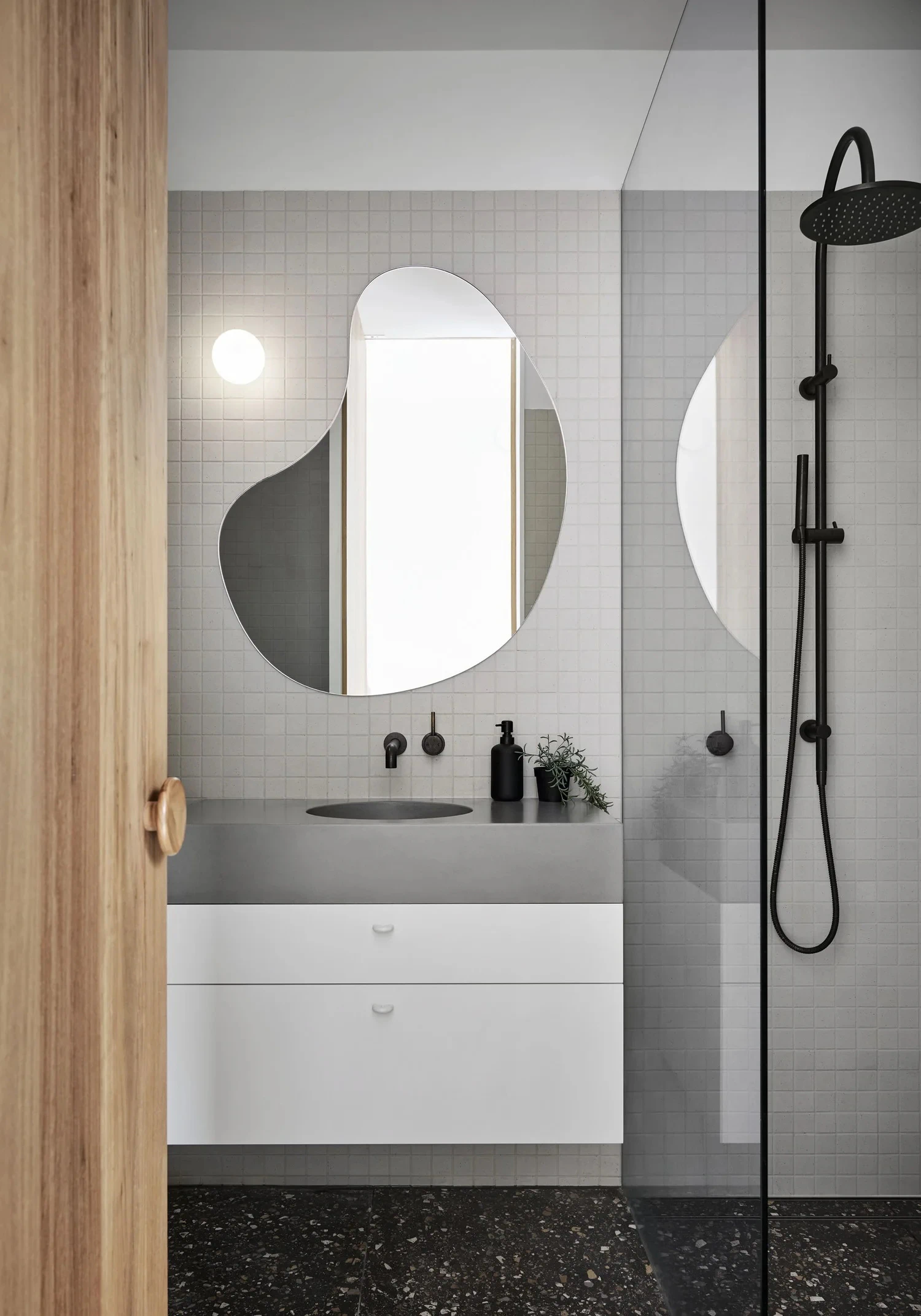
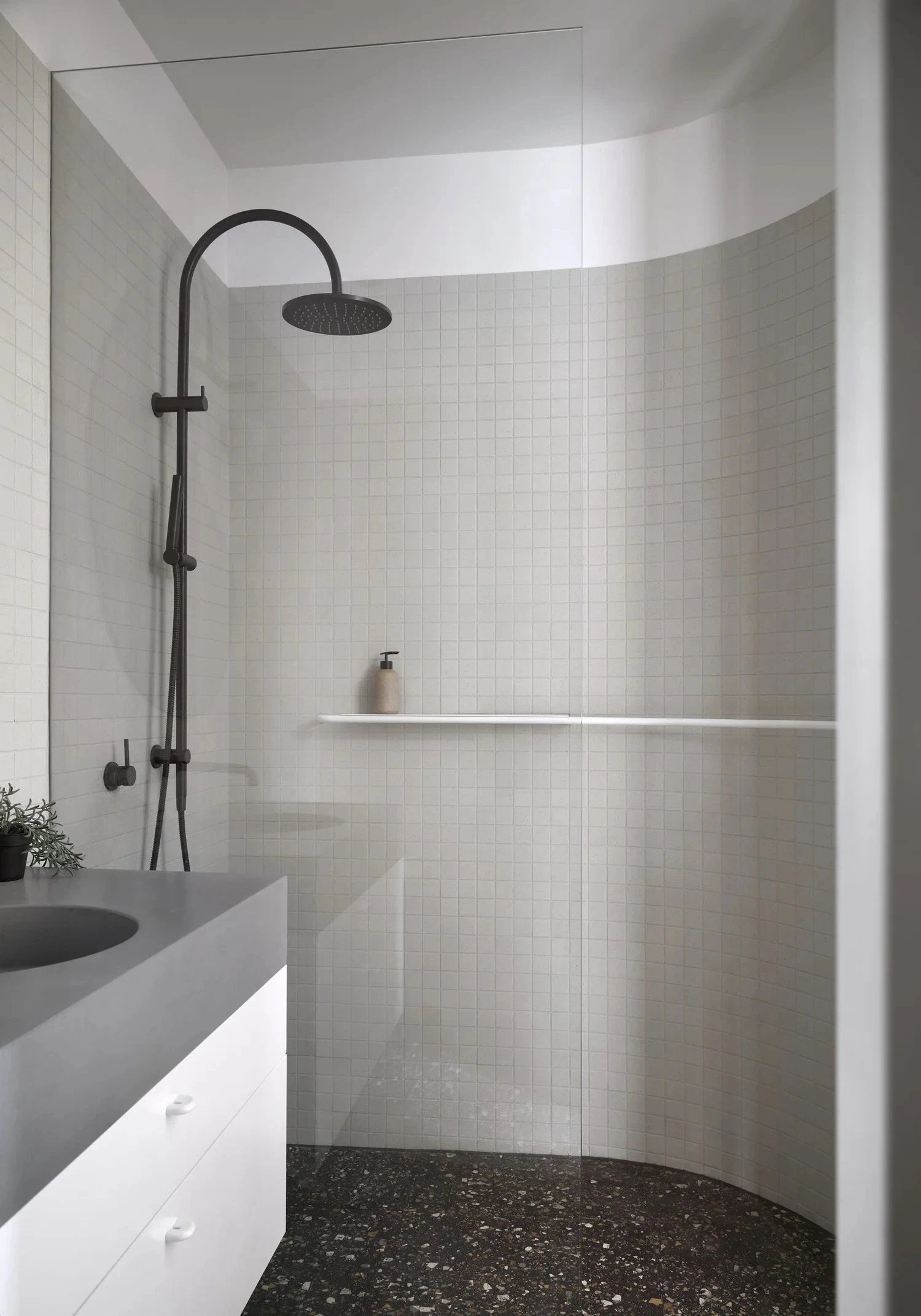
Inside, the tone shifts deliberately. Because the brief called for calm and openness rather than defensiveness, the tougher exterior gives way to timber linings, soft curves, planting and restrained finishes. The key organising element is a curved timber volume containing the bathrooms on both levels. It acts as a central anchor around which the house turns, allowing kitchen, dining and living spaces to stretch the full length of the ground floor. Large openings and an internal courtyard pull the garden into everyday life, while upstairs bedrooms and a rumpus room are designed to adapt as the family’s needs change.
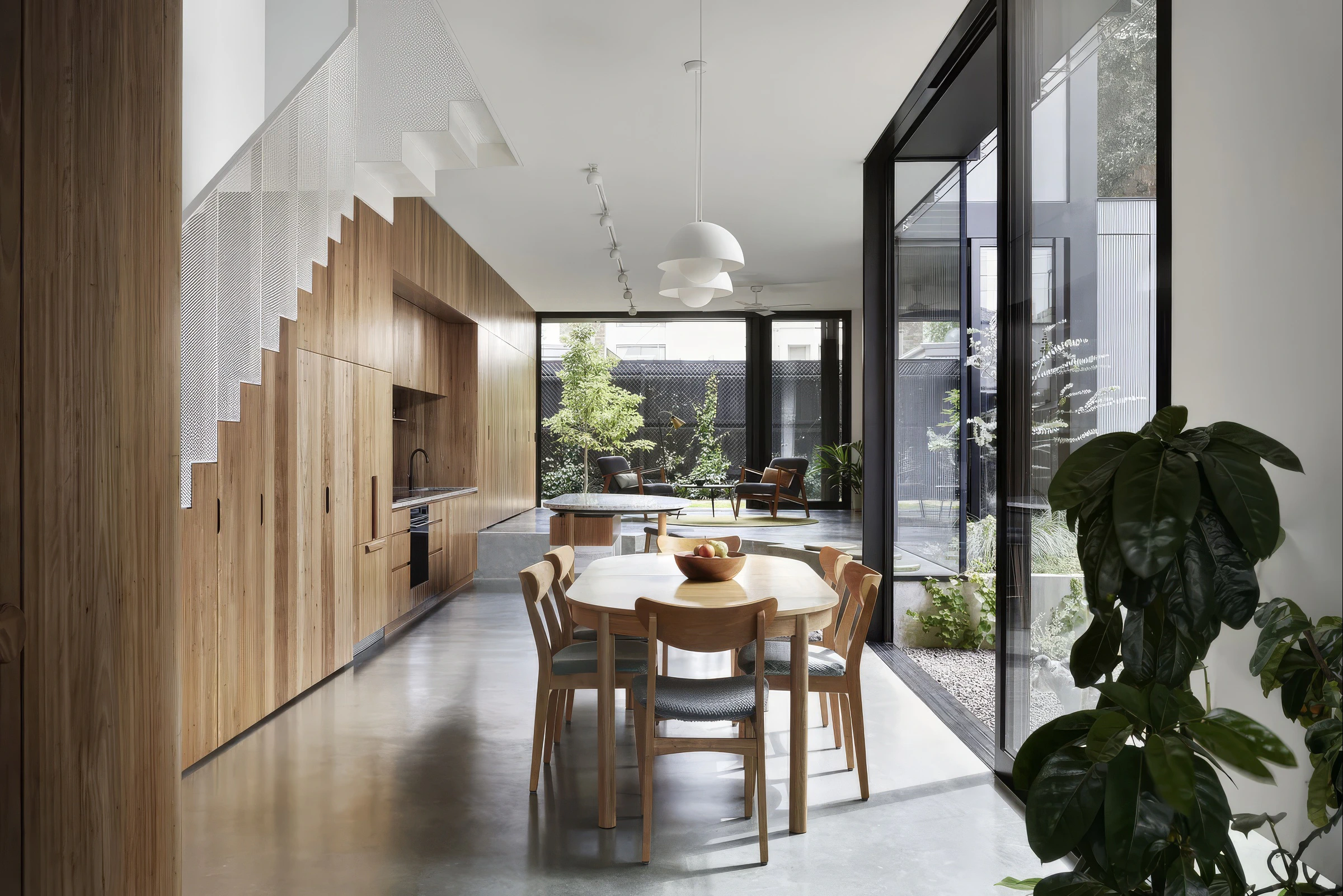
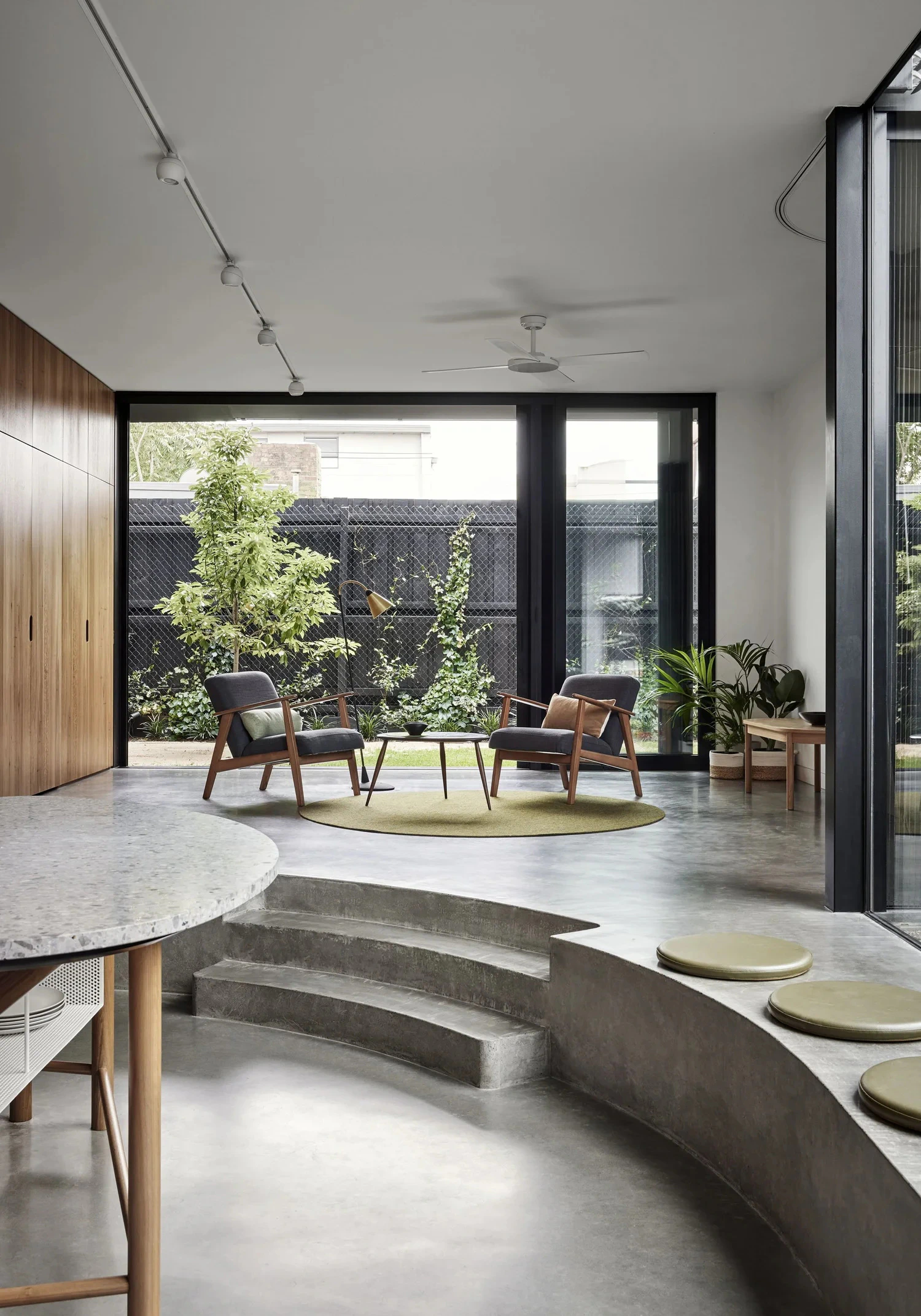
The project’s strongest details come from use rather than ornament. Curves recur in the bathroom volume, stair geometry, curtain tracks and island bench, creating continuity without fuss. Material choices also tie the house together, with interior surfaces subtly echoing exterior textures. A slender internal steel support at the front does structural work while doubling as a shelf, giving it the character of furniture rather than exposed engineering. Practical choices are equally considered, including the upstairs laundry beside bedrooms and bathroom, with direct access to a balcony for drying and services.
Efficient use of space
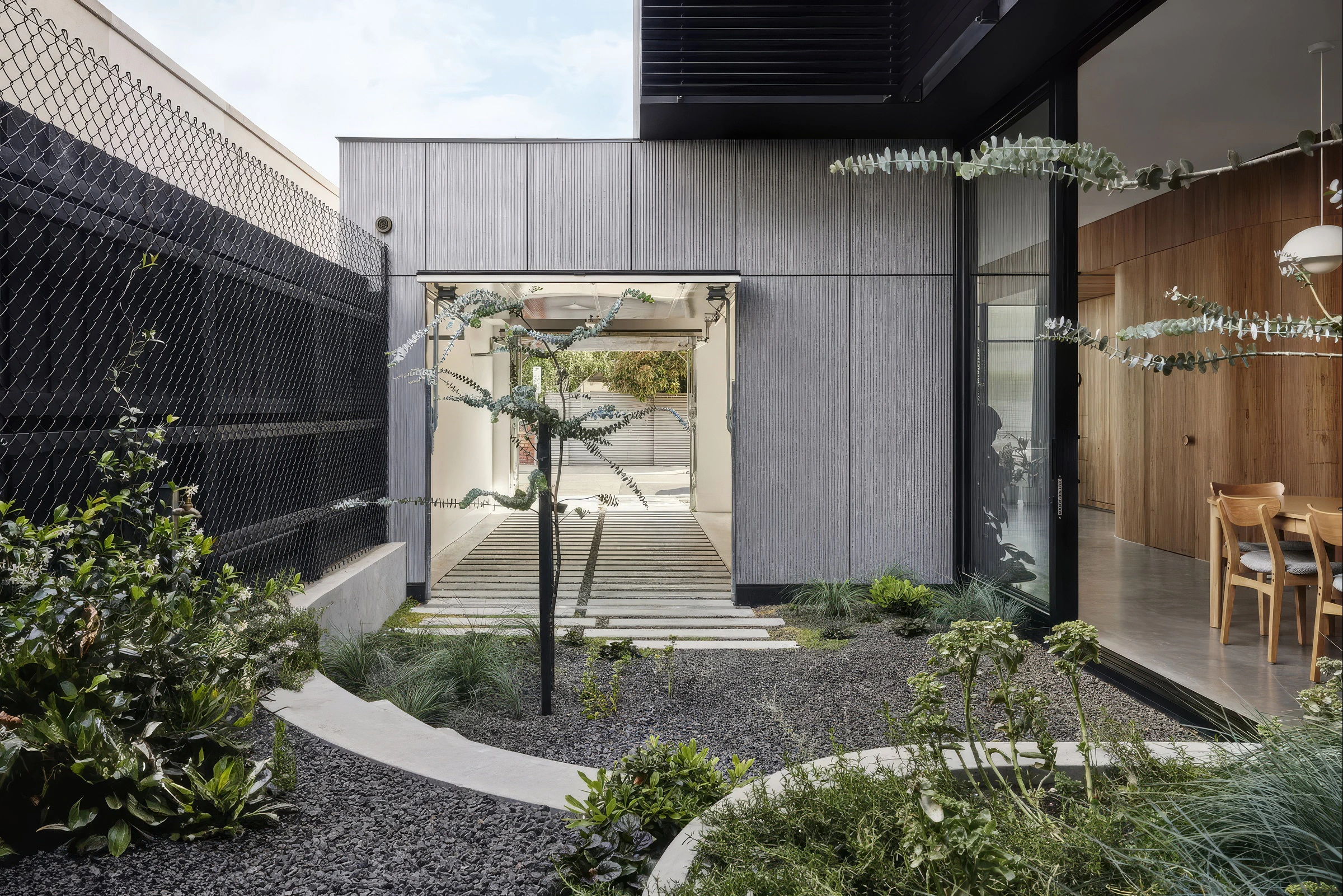
On a compact site, spaciousness depends less on floor area than on how space is connected. Here, the house opens to three sides, with a void along the fourth wall and a perforated steel stair that preserves light, airflow and transparency. Even the garage avoids becoming dead frontage: with openings at each end and concrete sleepers in place of a standard slab, it reads as part of the courtyard and entertaining area.
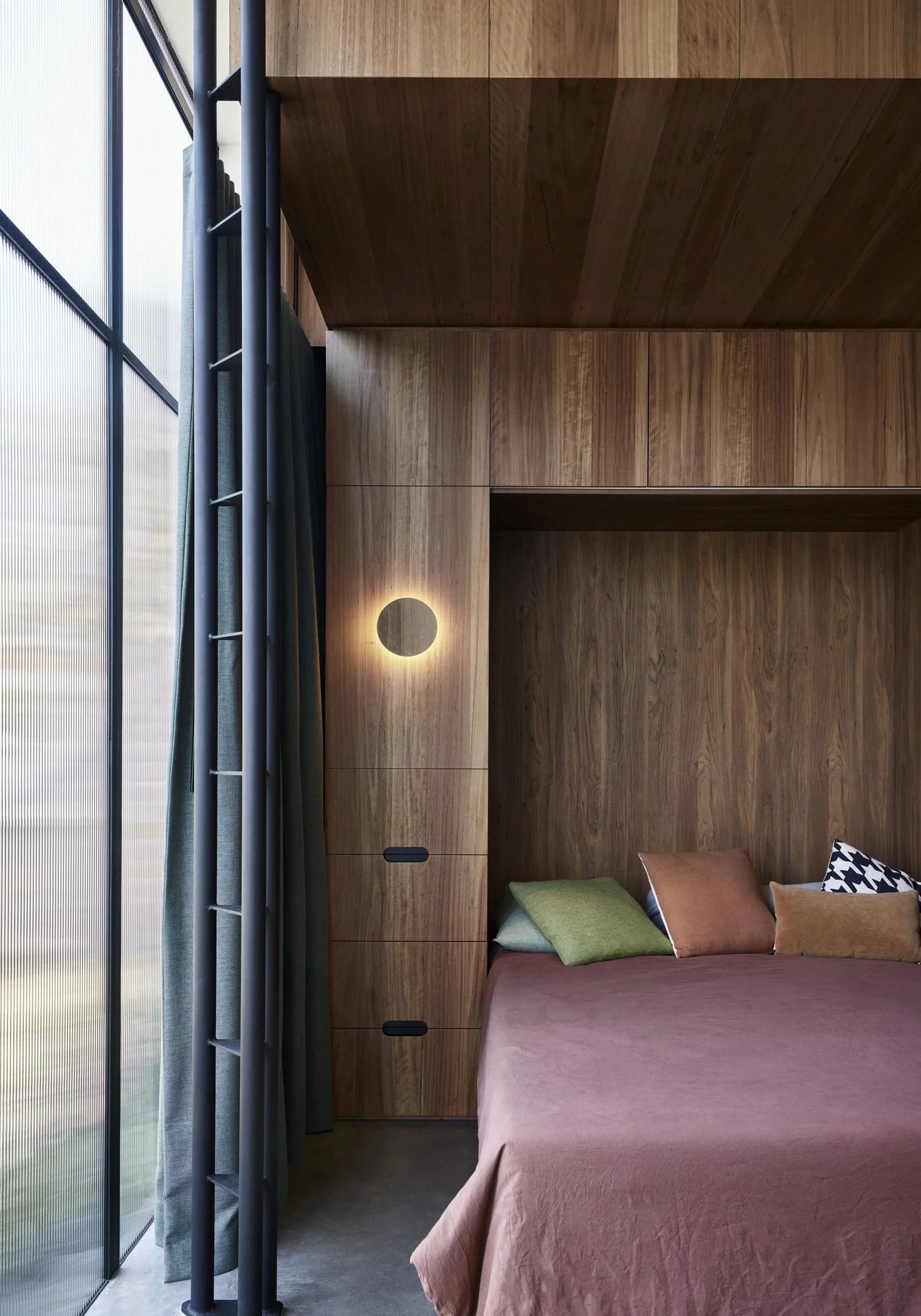
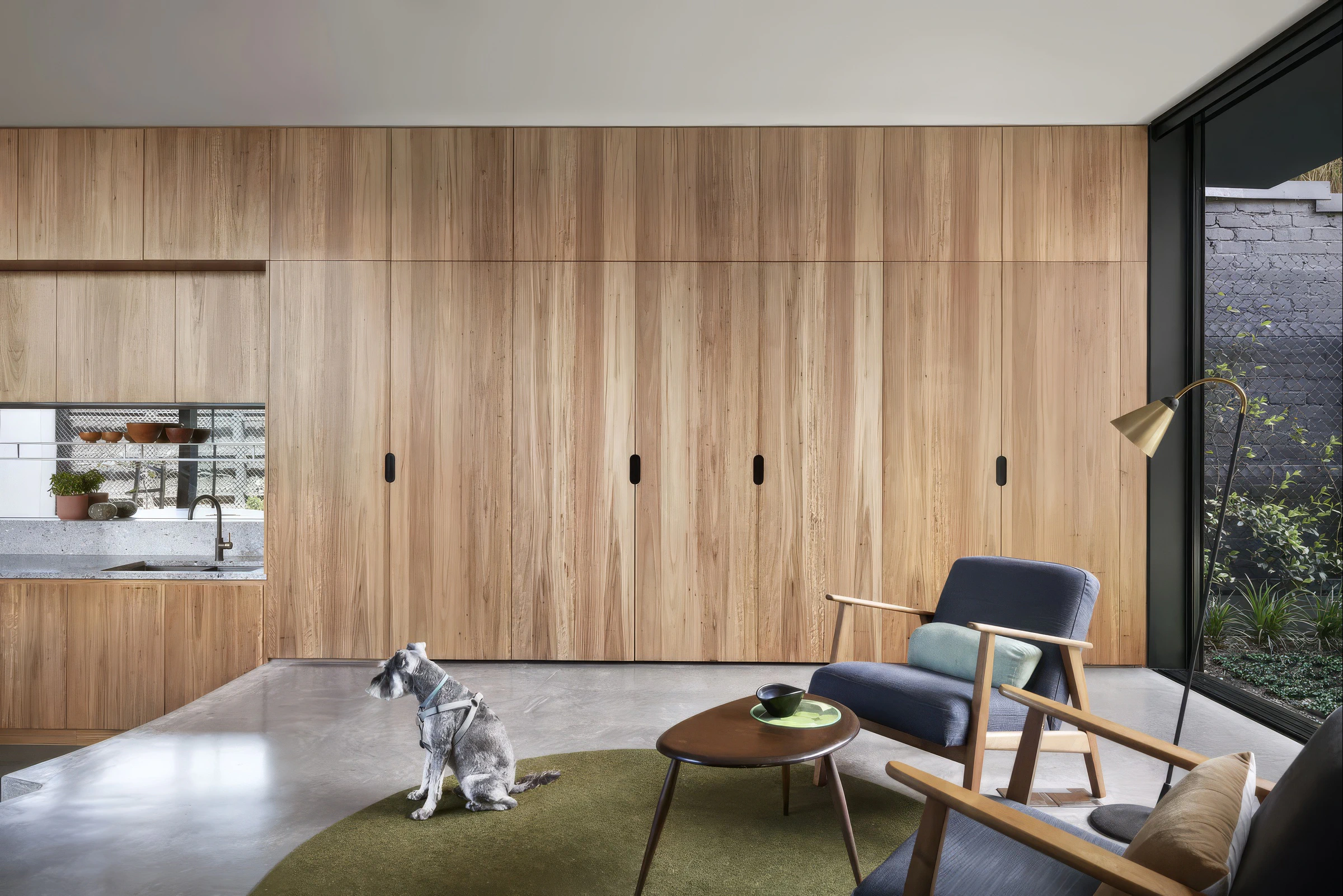
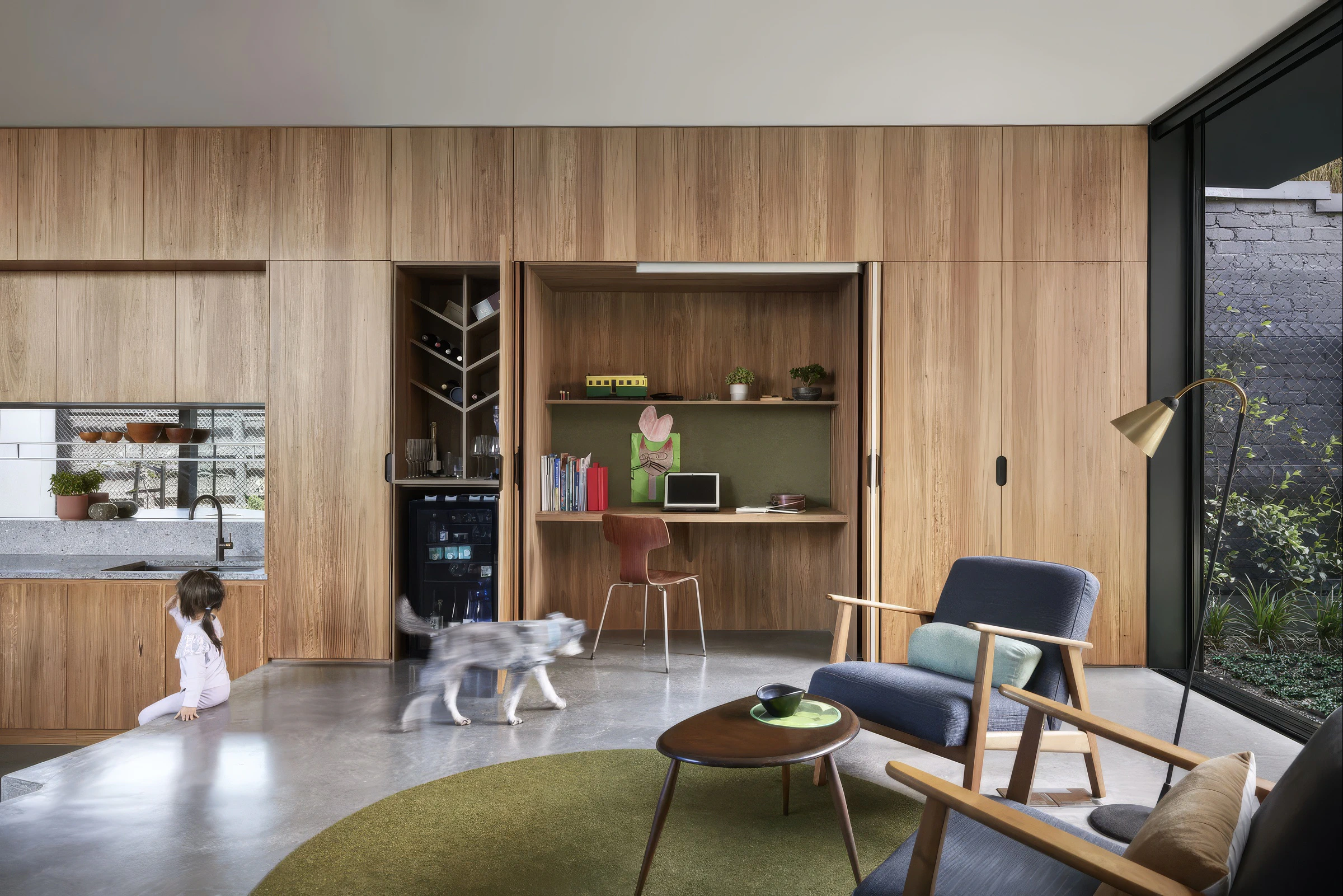
That same economy appears in the joinery and room planning. The entry can become guest accommodation through a Murphy bed, curtains and integrated storage. Study and reading spaces can be screened when needed. Cabinetry conceals pantry functions, appliances, wine storage and work areas, reducing the need for separate rooms and helping the interior remain clear and flexible.
Sustainability
Because the brief prioritised pragmatic performance,
Those larger moves are reinforced by quieter ones: efficient appliances, LED lighting, low-VOC finishes, sustainably sourced flooring and veneers, permeable outdoor surfaces, a 3,000-litre water tank for toilet flushing and irrigation, and a green roof adjoining the bathroom and southern first-floor bedroom. The Lang House shows how compact urban living can still feel generous when every decision is made to work harder.