Light, Country and the Theatre’s Public Expression
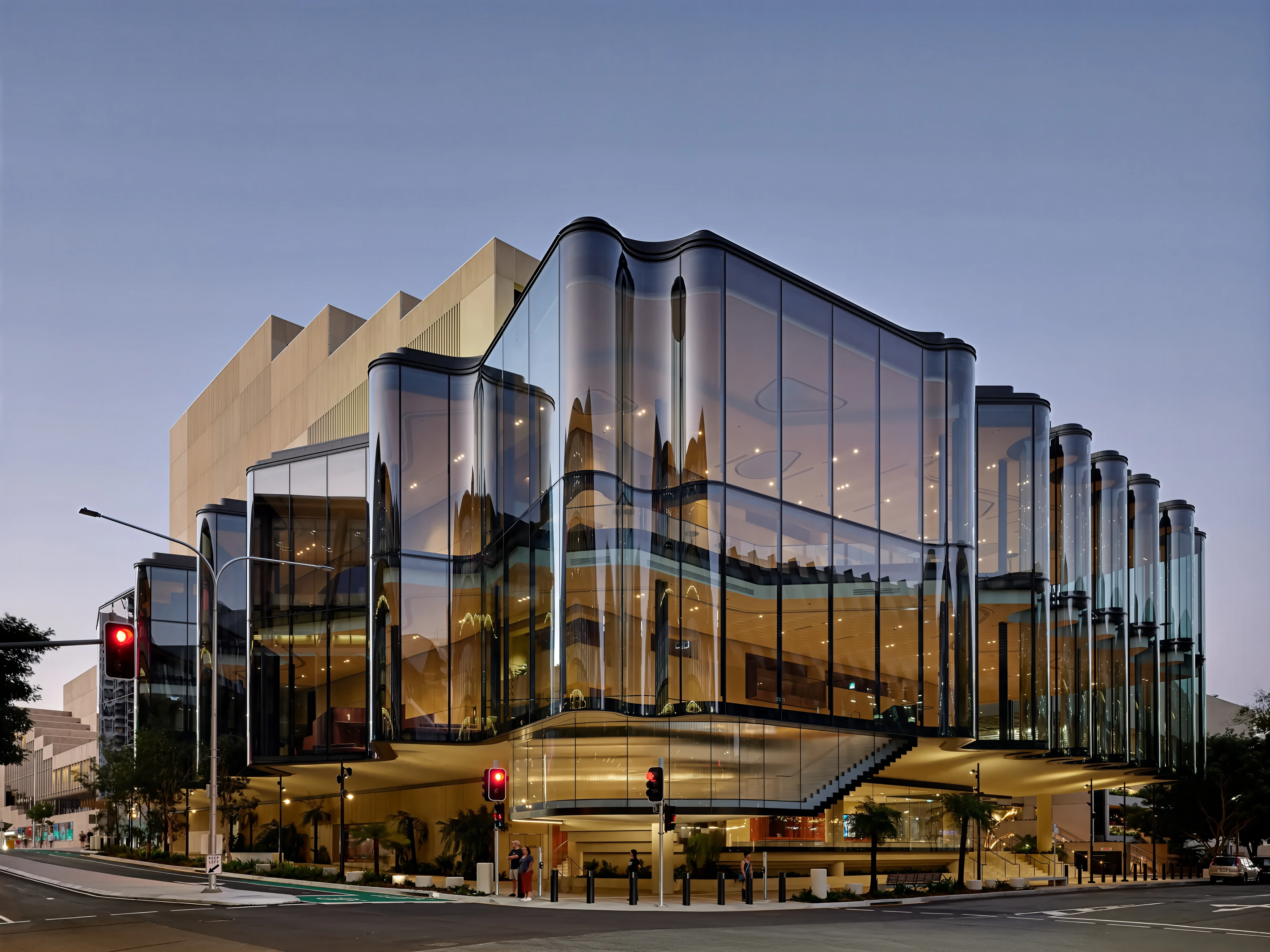
The Glasshouse Theatre had to solve a problem that was as urban and cultural as it was architectural. Queensland Performing Arts Centre already sits within Robin Gibson’s heritage-listed South Bank cultural precinct, and the new building occupies a previously unbuilt corner on Brisbane’s river-facing edge. That meant any addition risked being read as either an overbearing extension or a timid afterthought. The design team,
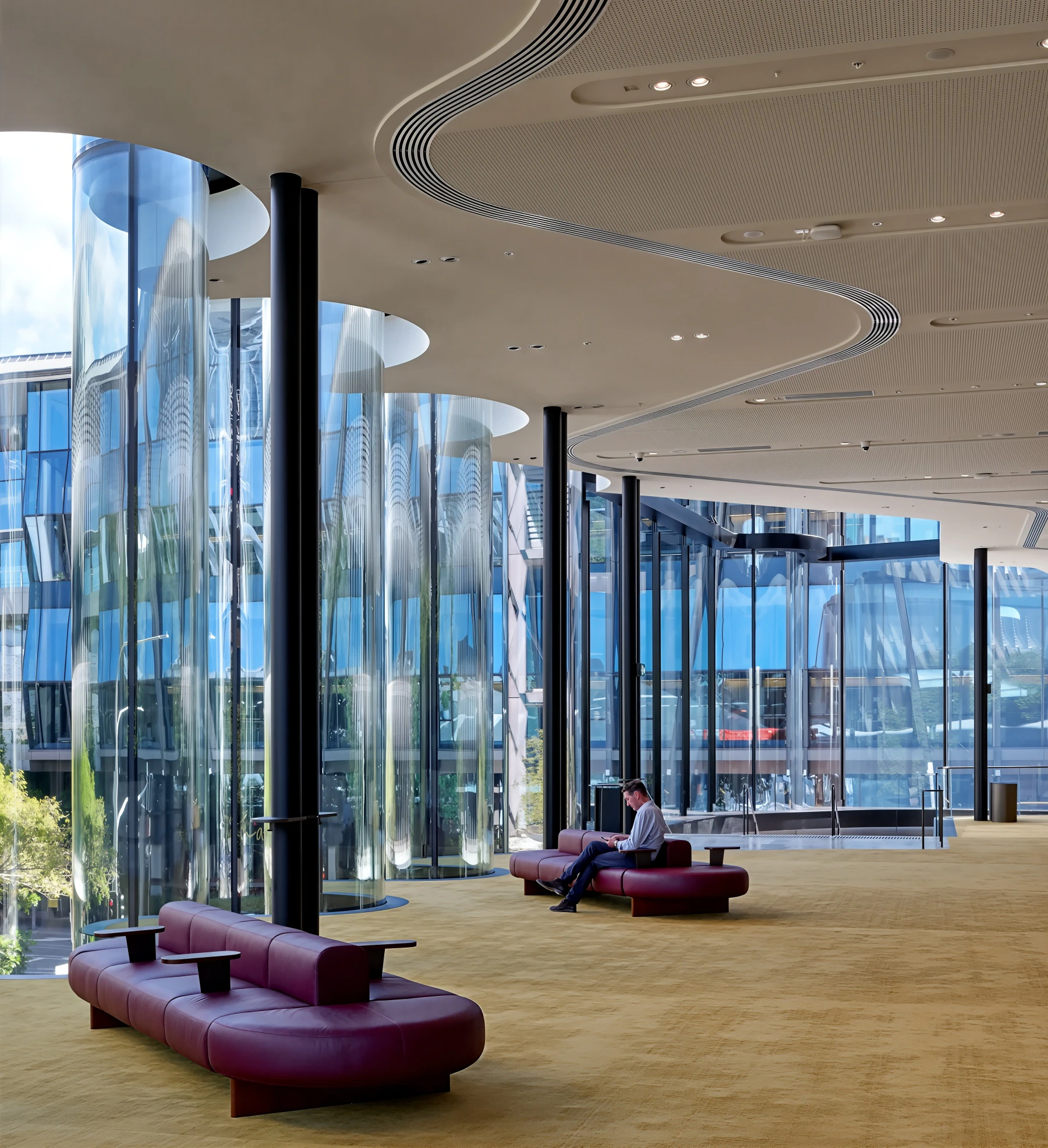
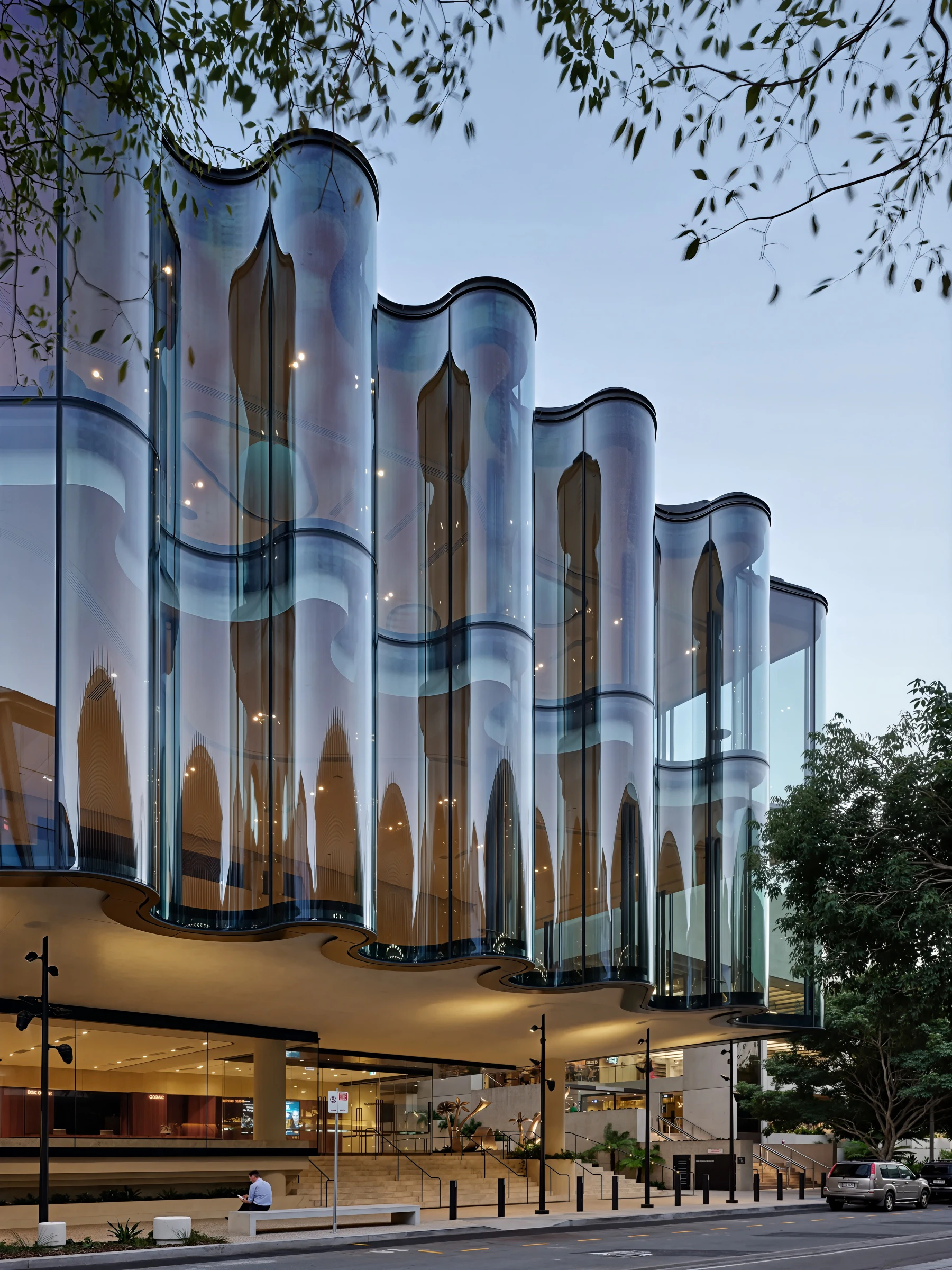
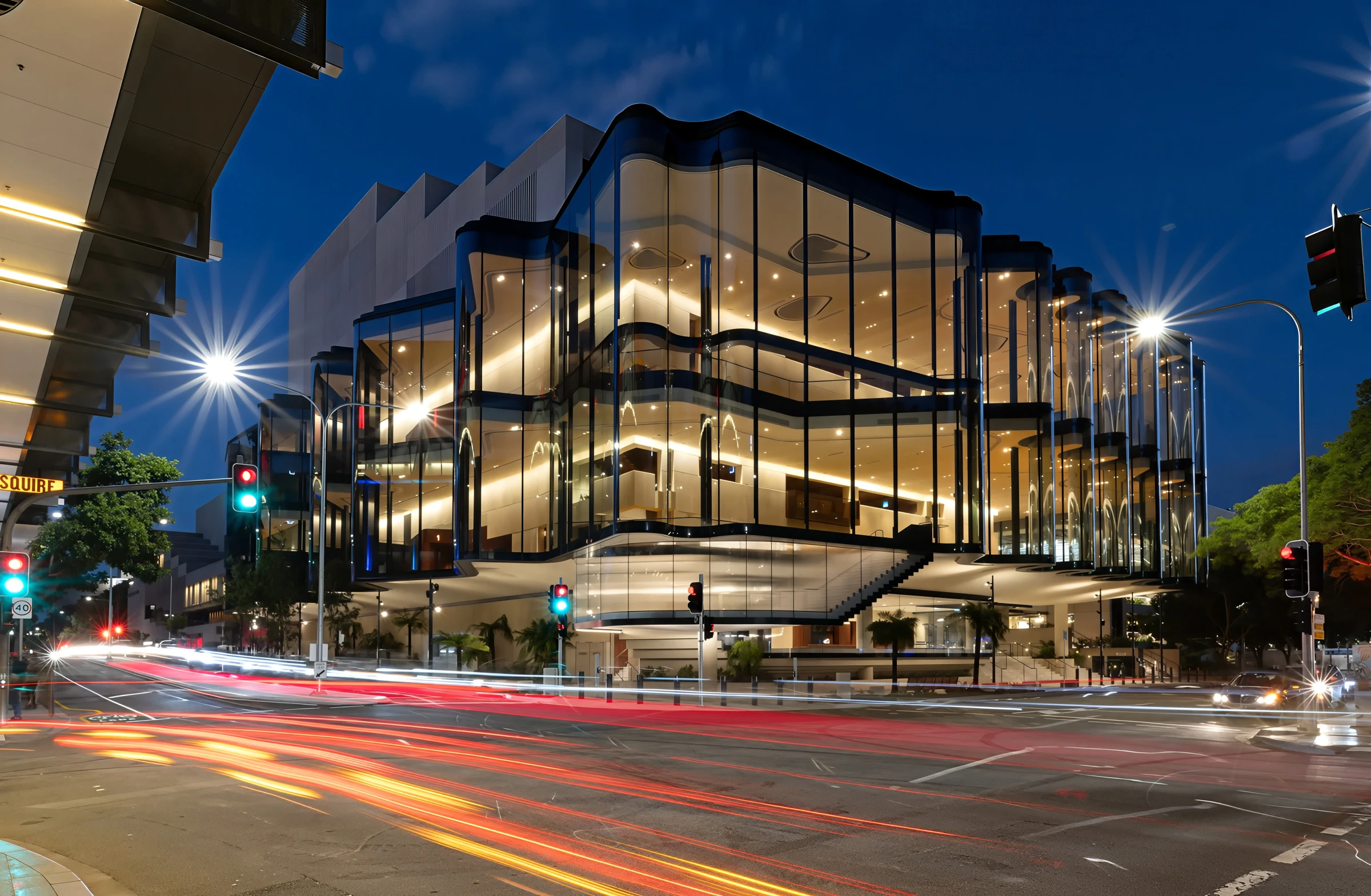
That reasoning explains why the façade matters so much. Michael Rayner’s description of the foyer as a “public theatre” is not simply a clever phrase; it identifies the building’s central architectural move. Rather than treating the envelope as a neutral wrapper, the design turns the building's edge into a civic room. The city sees people gathering, circulating and pausing before the performance begins, while the life of the street is drawn into the building. The result is a cultural institution that feels less sealed and more permeable than many conventional theatre buildings.
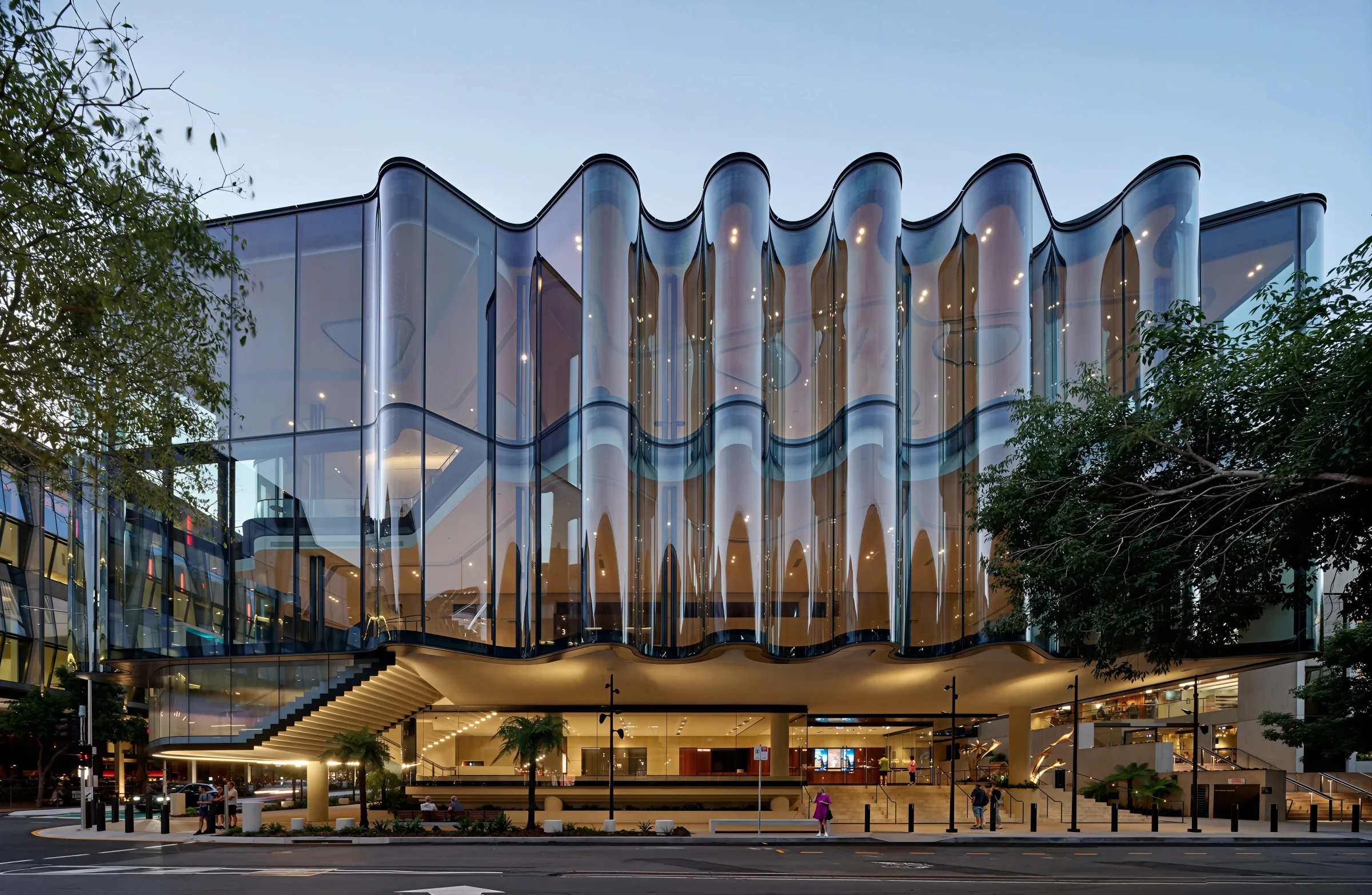
“We thought to make the transparent façade a setting for a kind of public theatre where people in the foyers would be seen variously clear and blurred from the street.”Michael RaynerBlight Rayner Director
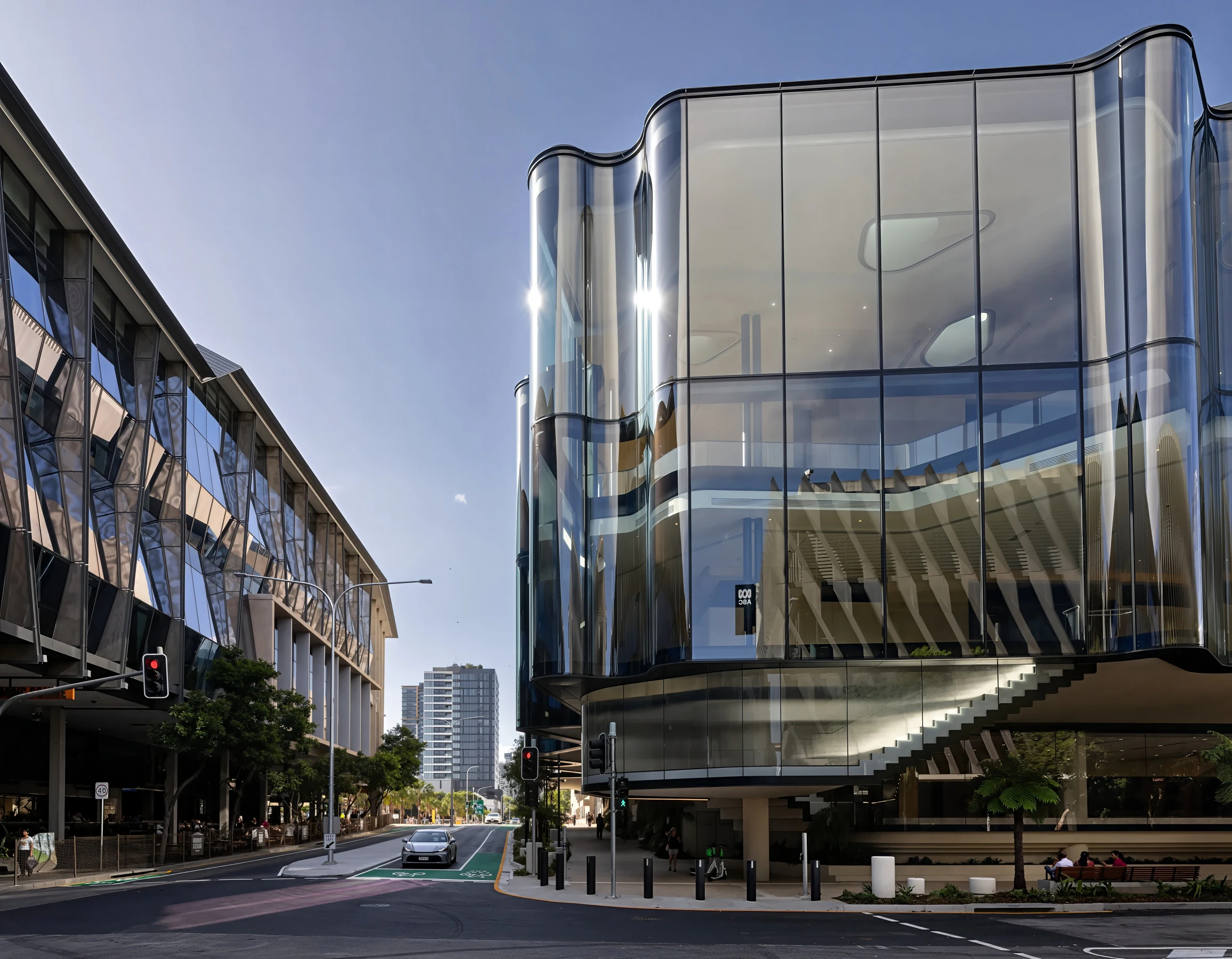
The glass wall conveys this idea both technically and symbolically. The rippling façade is made up of two tiers of panels, each about seven metres high, rising to 14.28 metres overall. Every panel is unique, manufactured by
The façade also carries the project’s most visible acknowledgment of Country. The design recognises the cultural significance of the site to First Nations Peoples, and the undulating glass line grows from a prose-poem by Aboriginal Elder and artist Aunty Lilla Watson that evokes Kurilpa, the Brisbane River and fish moving beneath the surface. That origin gives the building’s most public gesture a specific cultural grounding. The wavering surface does not operate as abstract sculptural language detached from place; it becomes a formal response to river movement and to Meanjin as a place of gathering. In a precinct long defined by major civic buildings, that choice matters because recognition is embedded in the architecture’s primary expression rather than added later as interpretation.
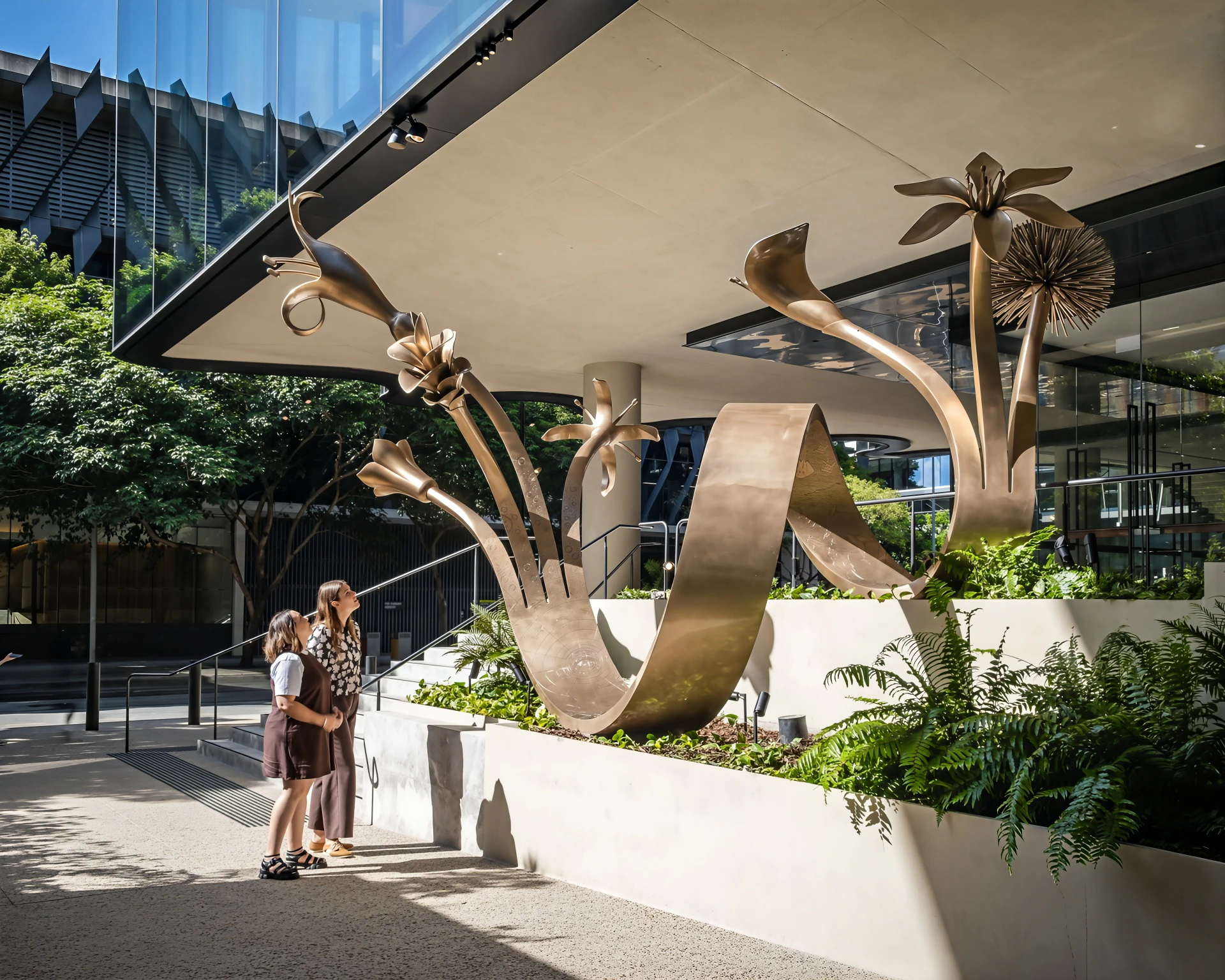
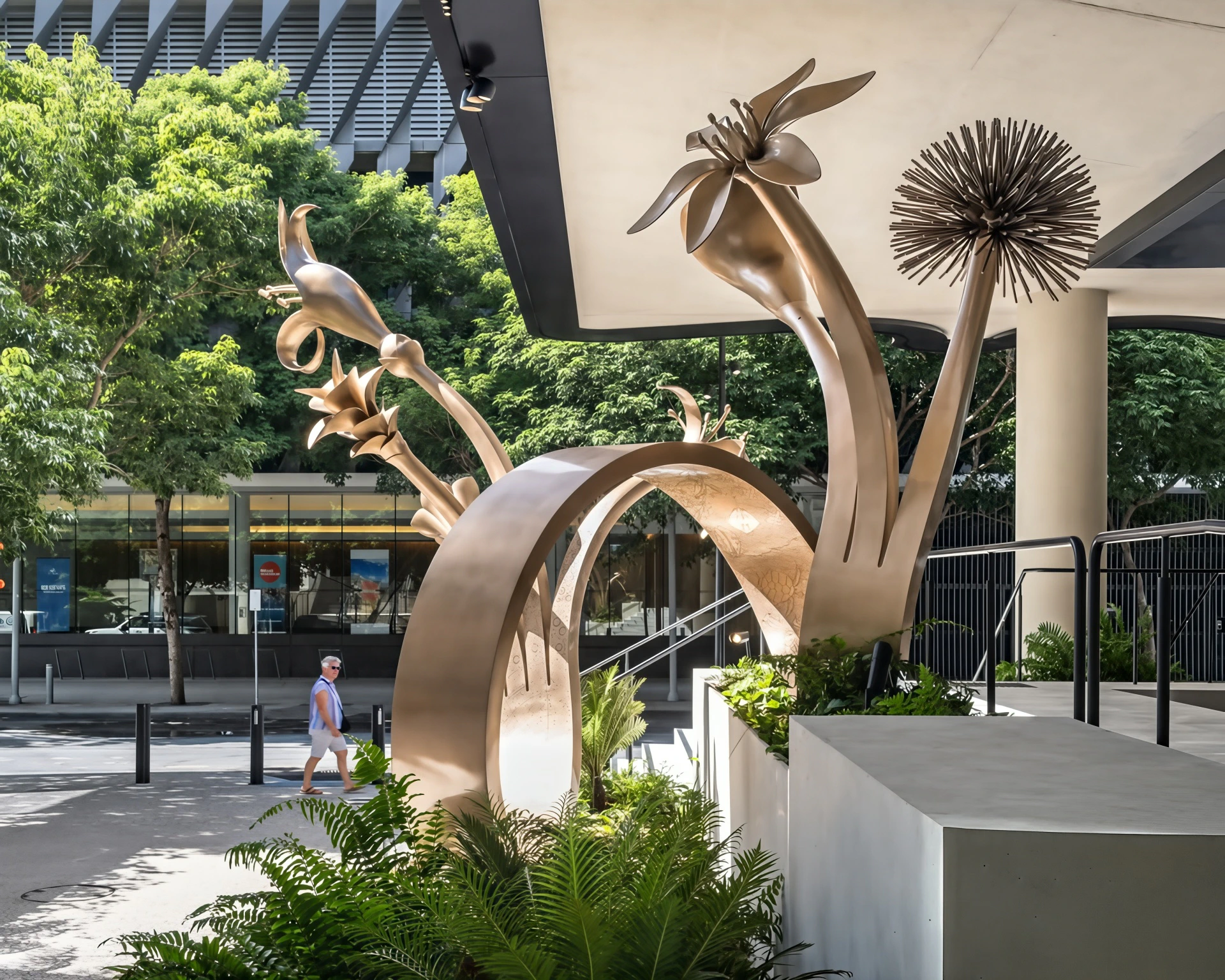
This framework extends beyond the façade. Research by QPAC Elder-in-Residence Aunty Colleen Wall informed seven skylights in the roof, each representing one of Queensland’s seven watersheds. At ground level, Brian Robinson’s Floriate anchors the entry plaza as a four-metre-high bronze sculpture composed around seven flowering plants associated with Queensland. The logic is cumulative. The skylights translate cultural knowledge into light and orientation overhead; Robinson’s sculpture gives that same sense of layered place a tangible presence at the threshold. Together, they shape arrival as more than circulation. They make the forecourt, foyer and roofline part of a single cultural narrative.
A Theatre Tuned for Many Forms
If the exterior is organised around openness and civic invitation, the auditorium is driven by a different but equally clear discipline: versatility without compromise. The brief called for a venue that could accommodate ballet, dance, symphony, opera, theatre and musicals at a high standard, and that requirement affects every decision about the room’s shape, seating and machinery. Gumji Kang’s characterisation of the auditorium as a “finely tuned musical instrument” is apt because the phrase points to performance criteria, not just atmosphere.
“The auditorium was conceived as a highly adaptable performance environment capable of hosting a wide spectrum of artforms. The theatre was designed to operate like a finely tuned musical instrument—adjustable to support world-class opera, ballet, dance, symphony, theatre and musical productions.”Gumji KangManaging Director of Snøhetta Australasia
The room seats 1,500 people, with about 1,000 in the stalls and 500 in the balcony, but those numbers do not tell the whole story. The more important measure is proximity. Wrap-around balconies, balcony boxes and carefully compressed sightlines bring the audience close to the stage, with the furthest seat only 28 metres away. This matters acoustically and theatrically: shorter distances strengthen visual connection, support unamplified performance and help maintain intimacy even at a relatively large scale. Rather than chasing monumentality, the design concentrates on the exchange between performer and audience.
Material choices reinforce that acoustic logic. The auditorium is lined with dark grey Queensland ironbark and layered timber ribbons, while the floor is finished with rainforest-green carpet. These materials create a warmer, denser atmosphere than the bright foyer, but the effect is not merely stylistic. Specially shaped wall surfaces are used to control sound reflection so that frequencies do not bounce unpredictably around the room and muddy acoustic performance. In other words, the chamber’s visual depth and its sonic clarity arise from the same decisions. The theatre’s mood follows from its acoustic discipline.
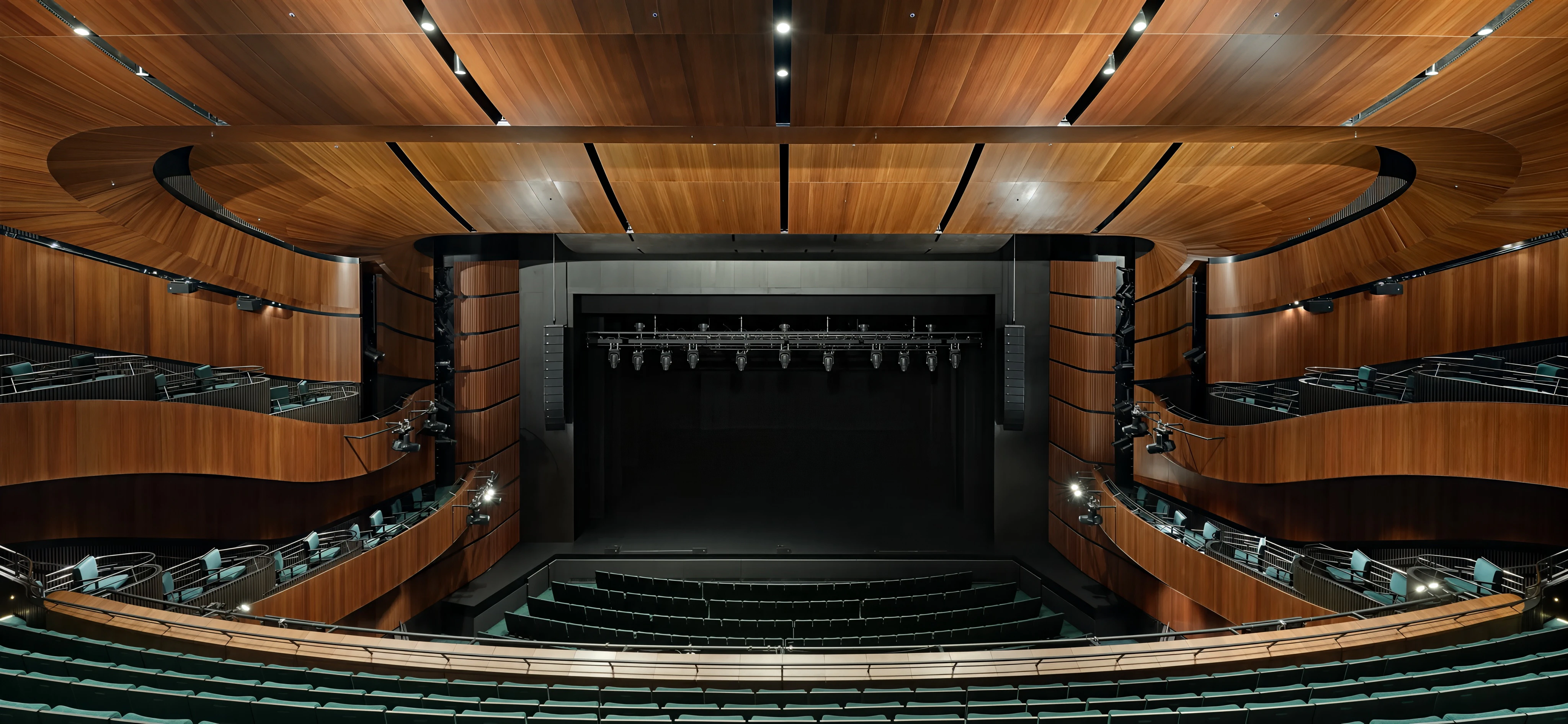
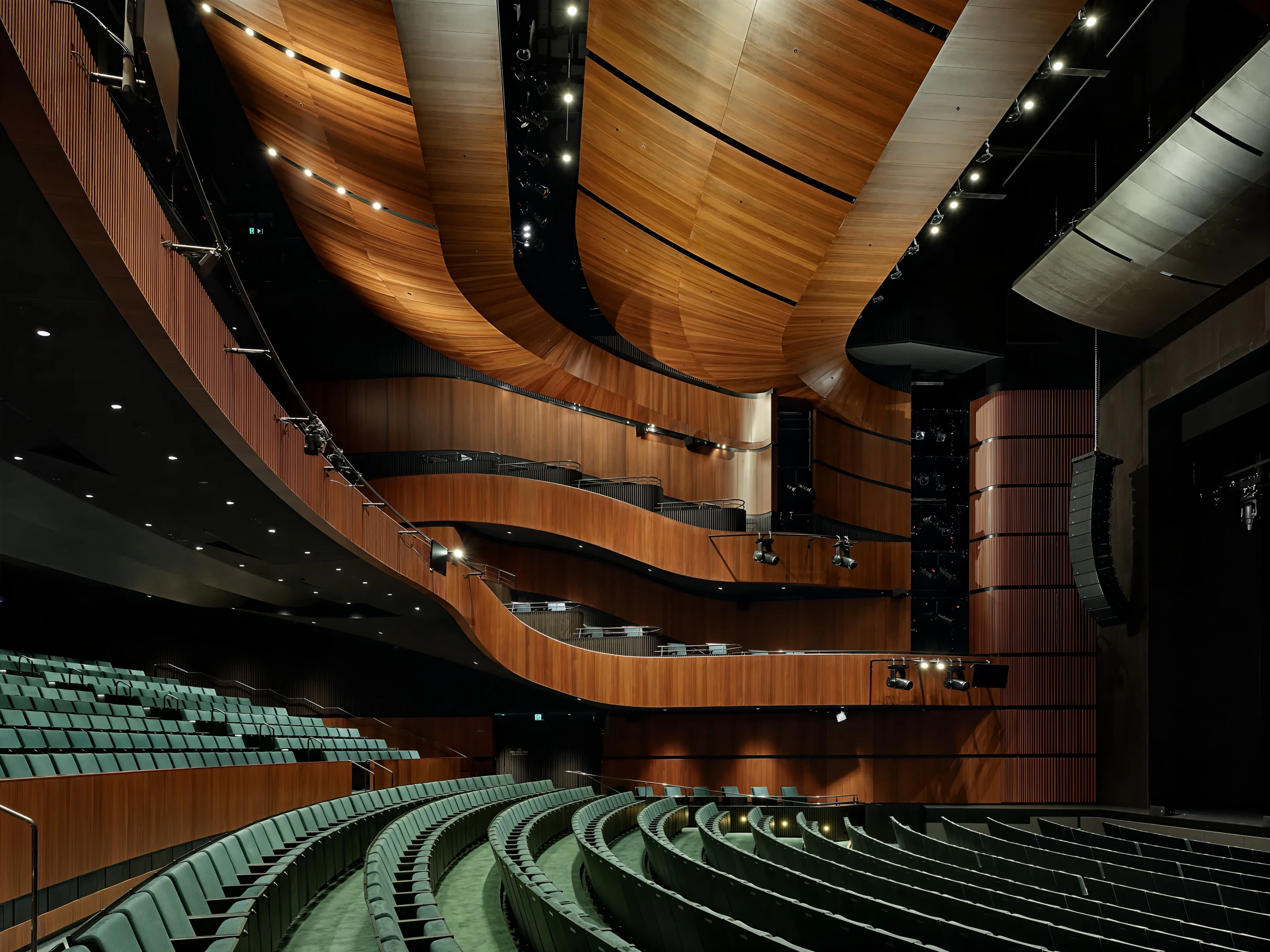
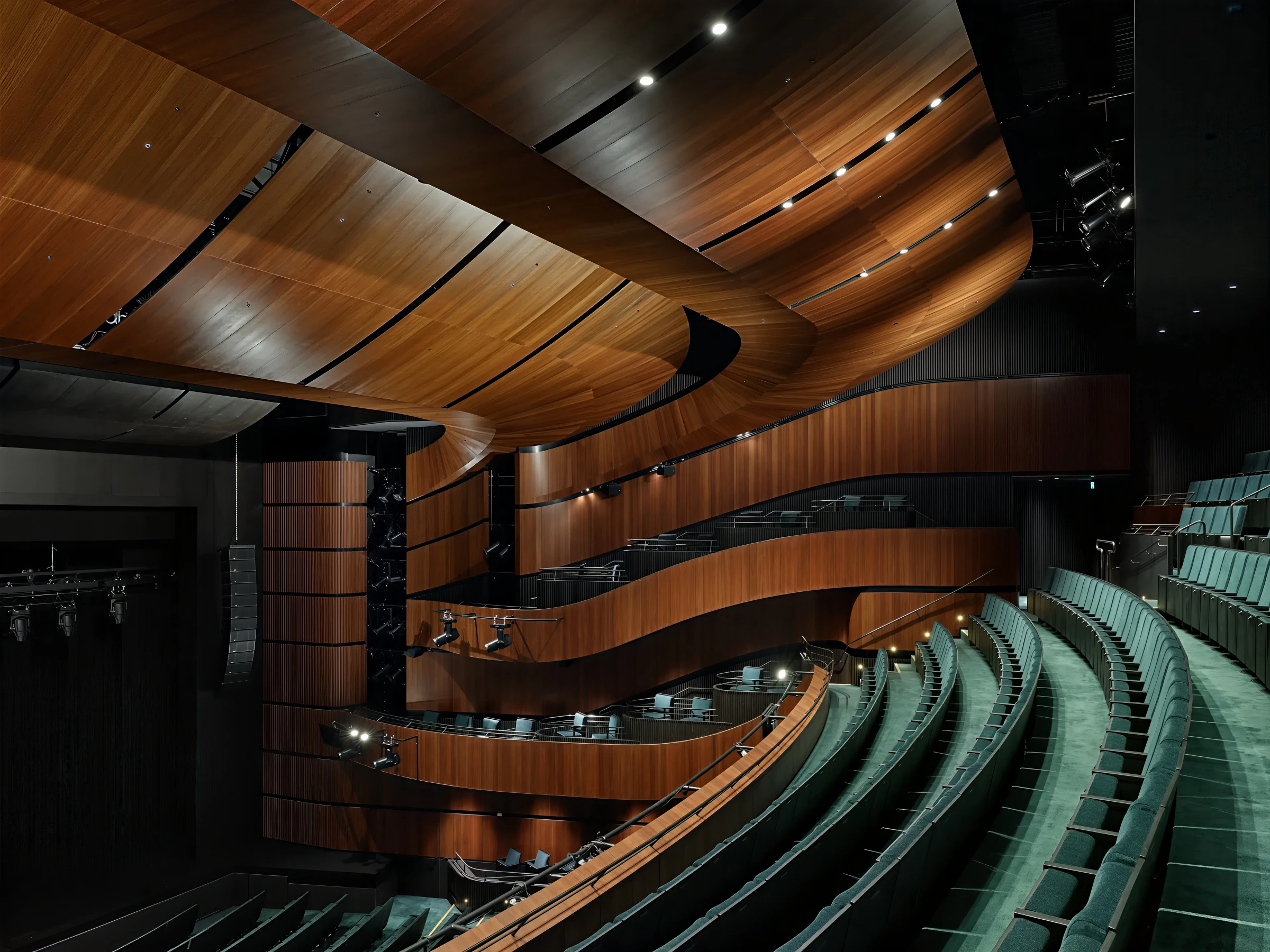
“Inspired by the qualities of stringed instruments, we have combined technical precision with atmospheric intimacy, enriched by layered timber ribbons that feel quintessentially Queensland.”Gumji KangManaging Director of Snøhetta Australasia
That technical exactitude continues onstage. Designed with theatre consultancy
The same can be said of the theatre’s broadcast capacity. An in-house digital suite enables 4K HDR livestream production with Dolby Atmos sound, extending the venue’s reach beyond the physical room. Environmental systems have been handled with similar care. Conditioned air is supplied from beneath the seats instead of from high above, reducing the inefficiency of cooling a large volume from the ceiling down. Here again, technical detail serves the core architectural ambition: to make a theatre that is both high-performing and genuinely usable across many kinds of production.
Completed in 2026 after a design and construction period stretching from 2018 and complicated by Brisbane’s 2022 floods, the A$184 million project does more than enlarge QPAC. Delivered by Lendlease for Arts Queensland, QPAC and the Queensland Government, it helps push the institution to the scale of Australia’s largest performing arts centre under one roof. Yet the significance of the Glasshouse Theatre lies less in size than in how carefully its different systems converge. The glazed veil, the acoustically tuned timber chamber, the automated fly tower, the watershed skylights and Robinson’s Floriate all work toward one idea: a major public theatre in Meanjin should begin with Country, open itself to the city and equip performance with the highest level of technical care. That is why the building feels both finely engineered and civically generous, a new stage for Brisbane whose performance starts well before the curtain rises.
QPAC New Performing Arts Centre is located on Meanjin Country of the Turrbal Peoples.
We acknowledge the Traditional Owners and Custodians of the lands on which we live and work, and pay our respect to Elders past, present and emerging.