Arthur Erickson’s Hilborn House
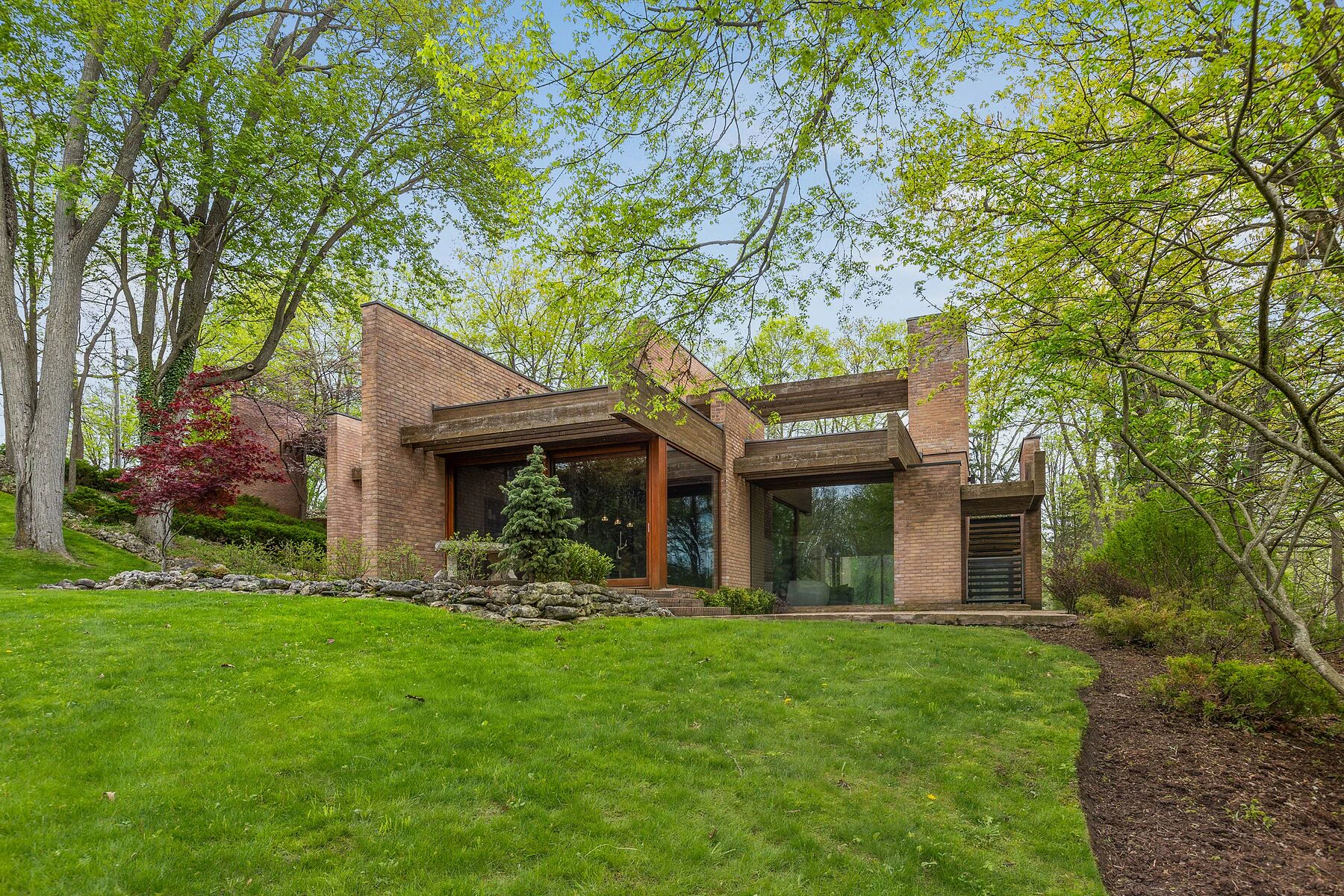
Among the rare treasures of Canadian modernism, Hilborn House stands as a testament to Arthur Erickson's mastery of spatial fluency and landscape integration. Completed in 1974 for the Hilborn family, this Cambridge, Ontario residence forms part of Erickson’s select Signature Collection—an elite group reflecting his deepest engagement with site, atmosphere, and material. Erickson, arguably Canada’s most celebrated twentieth-century architect, brought international acclaim to the nation with such landmarks as Simon Fraser University and Vancouver’s Museum of Anthropology. His work, with its devotion to the dialogue between structure and setting, continues to define the Canadian architectural imagination.
At Hilborn House, Erickson’s reverence for landscape and his immersion in Japanese design philosophy are inseparable. The architecture sits as if cradled by the land, its masonry core and cedar-clad expanses echoing both the solidity and flexibility of nature. The house’s layout—composed with meticulous geometry and profound consideration for seasonal light—demonstrates Erickson’s commitment to spatial harmony. This approach, celebrated throughout his career, is especially apparent in his rare residential commissions, where he explored the subtleties of dwelling as a mode of mediation between nature and family life.
Parallels naturally emerge with Frank Lloyd Wright, whose Prairie houses set an early standard for integrating the built environment and landscape. Like Wright, Erickson’s predilection for built-in furniture, extensive use of raw timber, and expressive brickwork shaped an aesthetic where utility and poetry converge. Both architects understood that material authenticity and organic design amplify the experience of home, not merely sheltering but inspiring those within.
Hilborn House reveals itself as a master class in serenity and connection
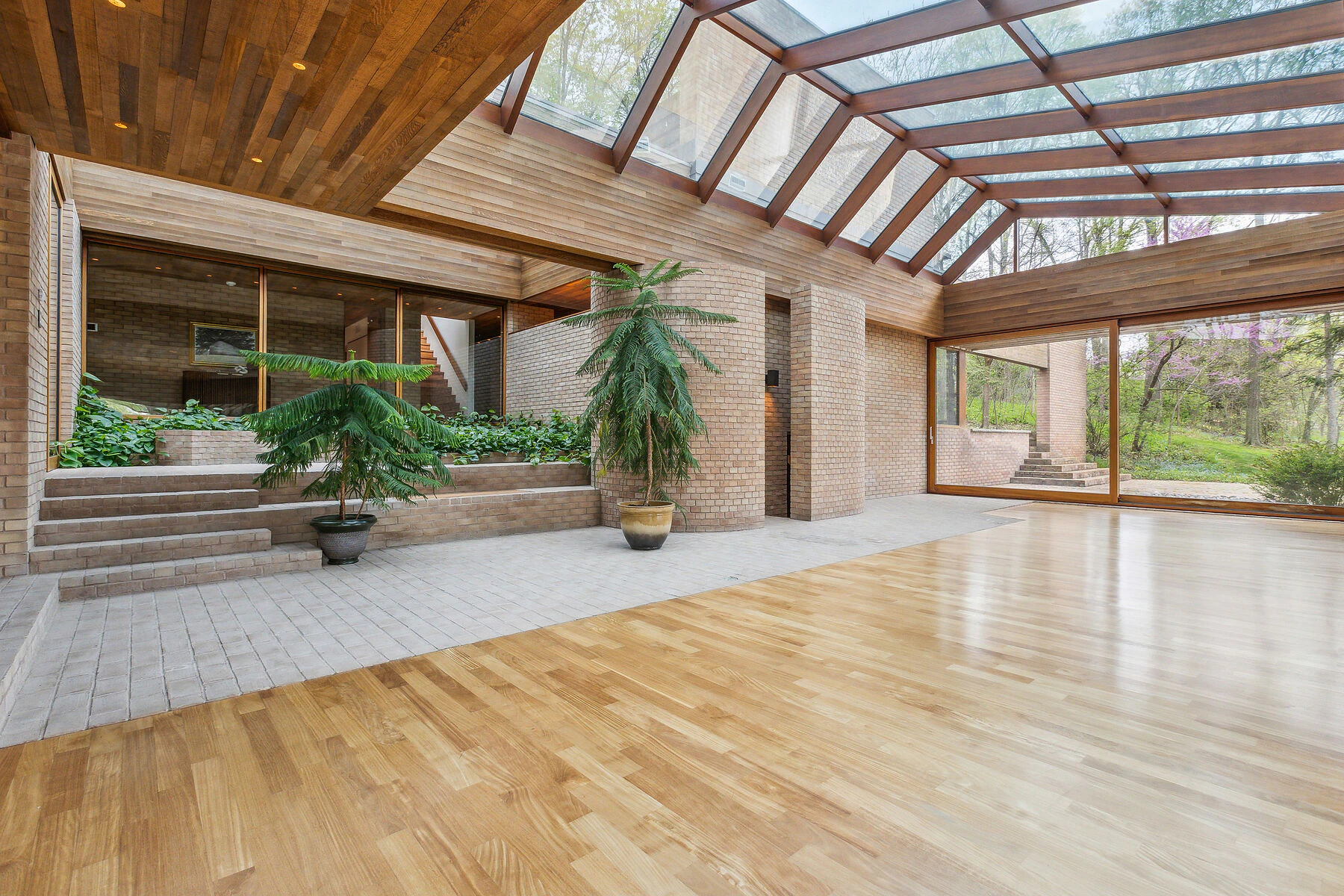
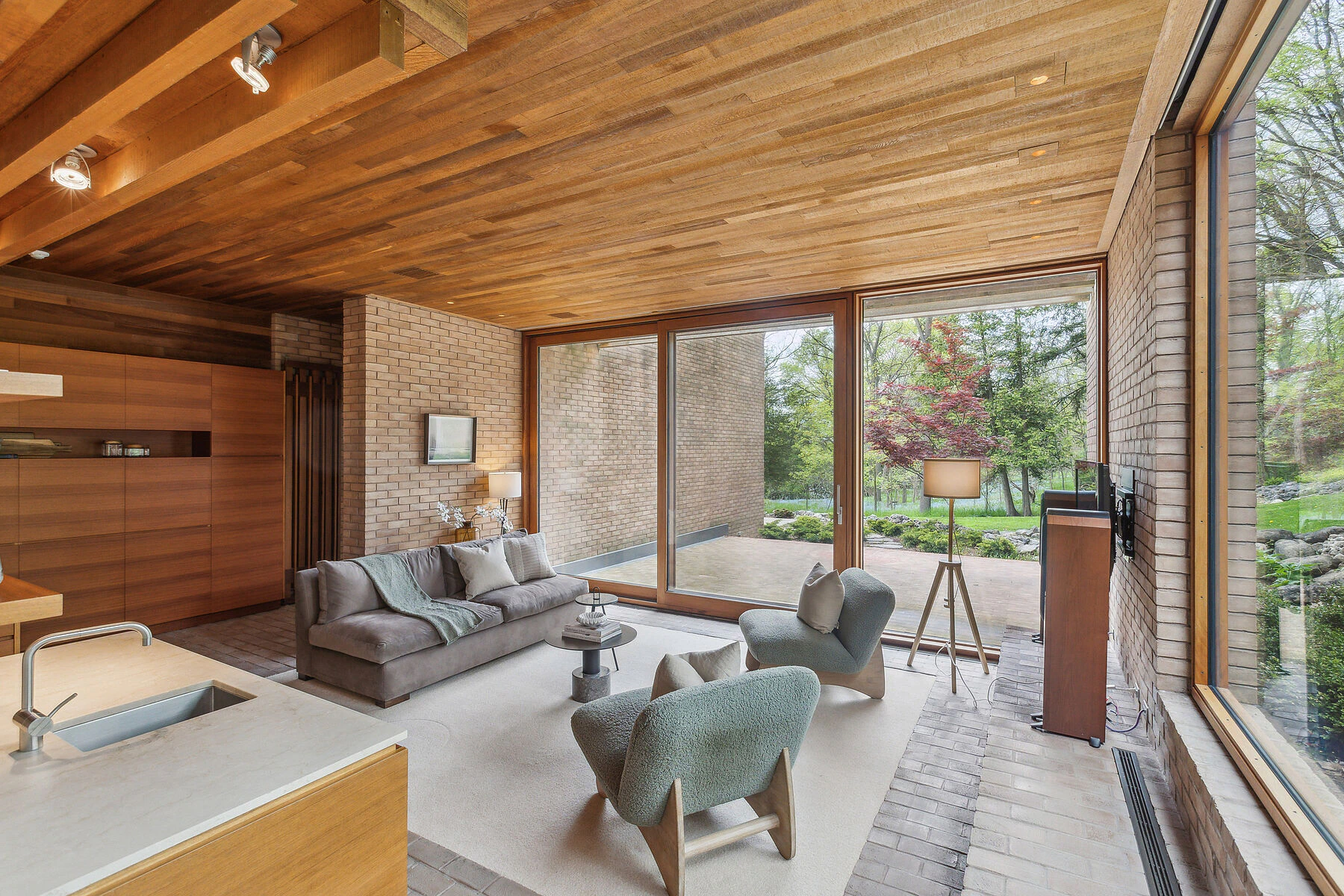
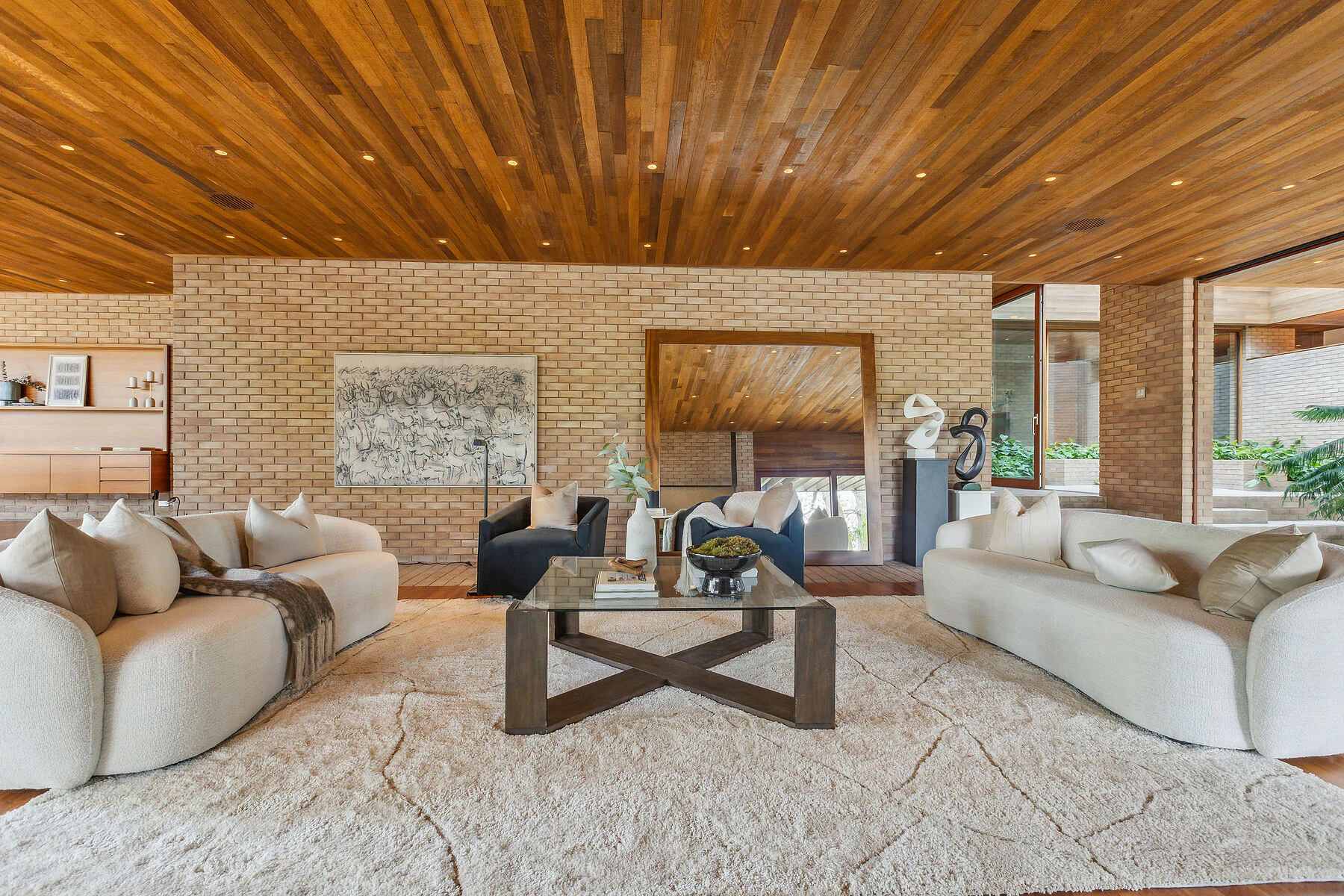
Moving through the interiors, Hilborn House reveals itself as a master class in serenity and connection. Generous light-washed spaces invite a careful examination of recurring themes: panoramic transparency, tactile warmth, and unobstructed flow between rooms. These spaces are not defined by their boundaries but by the layering of light and shadow, and the intricate play between openness and intimacy.
Ceilings clad in cedar, lofted on clean structural beams, stretch outwards almost effortlessly, their rhythm unbroken from inside to garden edge—a subtle gesture that confers both grandeur and shelter. The living areas, beneath these beamed expanses, provide not only a sense of volume but also an enveloping ambience. Built-in timber shelving and cabinetry hark directly to both Erickson’s and Wright’s visions, where the furnishings are not afterthoughts but essential continuations of the architecture itself.
Floor-to-ceiling windows punctuate every major room, drawing the lush exterior landscape deep into the visual and emotional experience of the household. The recurring motif of reflected greenery and changing sky reinforces the house’s role as a dynamic frame for the river, forest, and gardens beyond. Skylights thread subtle corridors of sunlight across the interiors, shifting through the day to animate the brick and wood surfaces with life and variation. At the centre, the chef’s kitchen is appointed with refined modernity—Gaggenau appliances and an integrated island—yet retains the warm, beamed character that roots the home firmly in its era and ethos.
A suite of more intimate spaces—bedrooms, meditation alcoves, a mosaic-tiled sauna with dual showers—offers seclusion while upholding the prevailing palette of natural finishes. The primary suite is particularly notable for its private garden aspect, with sliding glass doors opening directly to curated greenery, an immersive retreat balancing luxury and restraint. Whole-of-house systems, such as Lutron smart lighting and automated shade controls, introduce contemporary comfort without compromise to the original vision, further elevating daily life into an artfully managed experience.
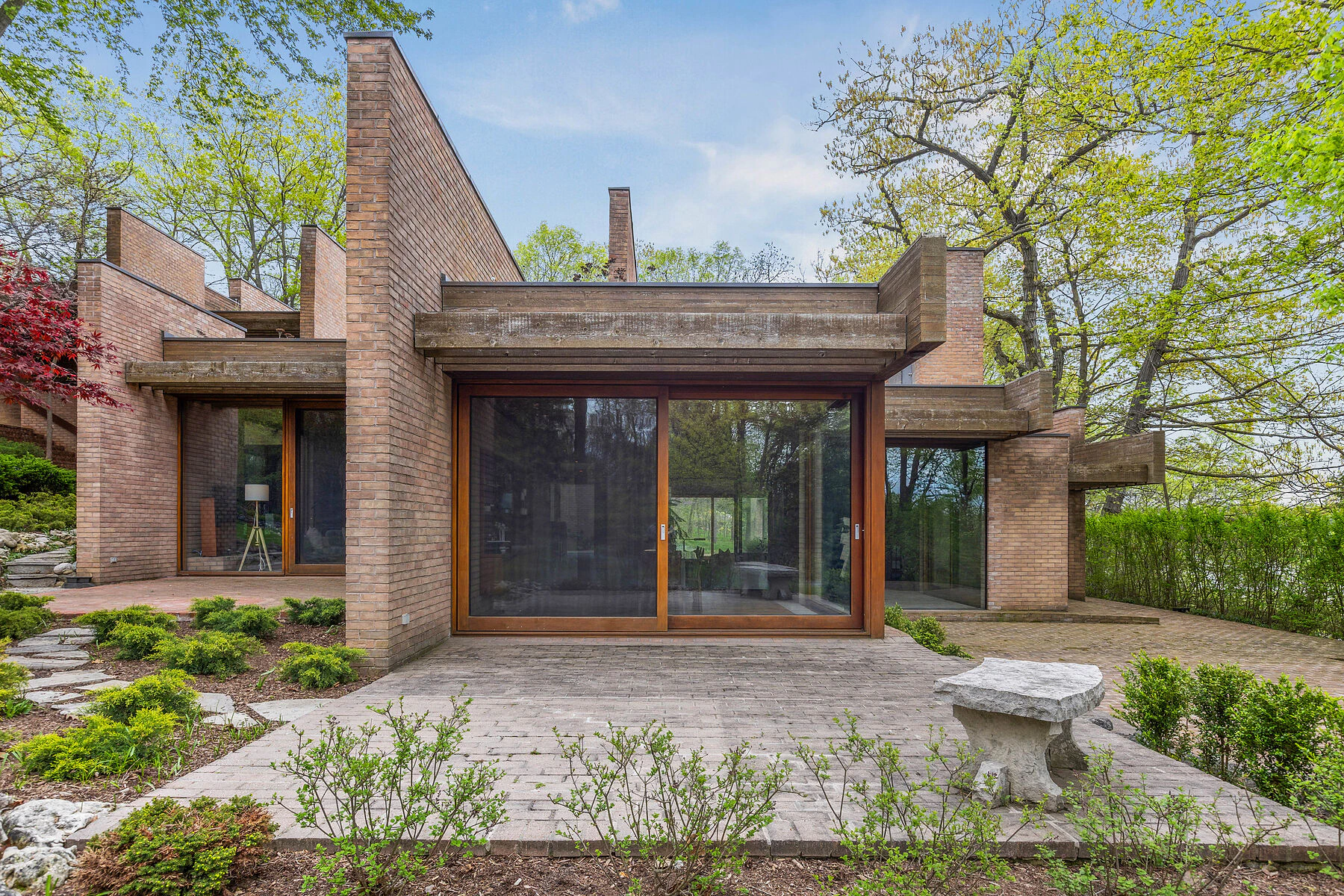
On the banks of the Grand River
Set upon 1.77 acres on the serene banks of the Grand River, the Hilborn House’s outward expression is as deliberate as its interiors. Tracing the site’s contours, the structure’s cedar deck roof and masonry volumes embrace their context, imbuing the residence with a sense of permanence and calm. The drawn-out horizontal lines of the architecture—which repeatedly surface through stepwise scrutiny of the gardens and terraces—mirror the languid flow of the river and the layered density of the adjacent woodland.
Garden spaces are meticulously curated, foregrounding native species and textures that both soften and underscore the architectural forms. These landscaped areas blend into open green swards and more densely planted groves, choreographing a walking experience that continually recasts the relationship between house, water, and forest. The soothing hush of the U-shaped heated drive, together with the subtle stance of the attached garage, offers a composed arrival that neither disturbs nor dominates its pastoral setting.
Throughout, Hilborn House encapsulates an ideal: that architecture, when sensitive and attuned, can become a lucid mediator between human aspiration and nature's infinite renewals. Such a residence is rare in any country—and, in the Canadian context, it stands as a living, evolving monument to Arthur Erickson's legacy and the timeless resonance of organic design.