
Arthur Erickson
Architect
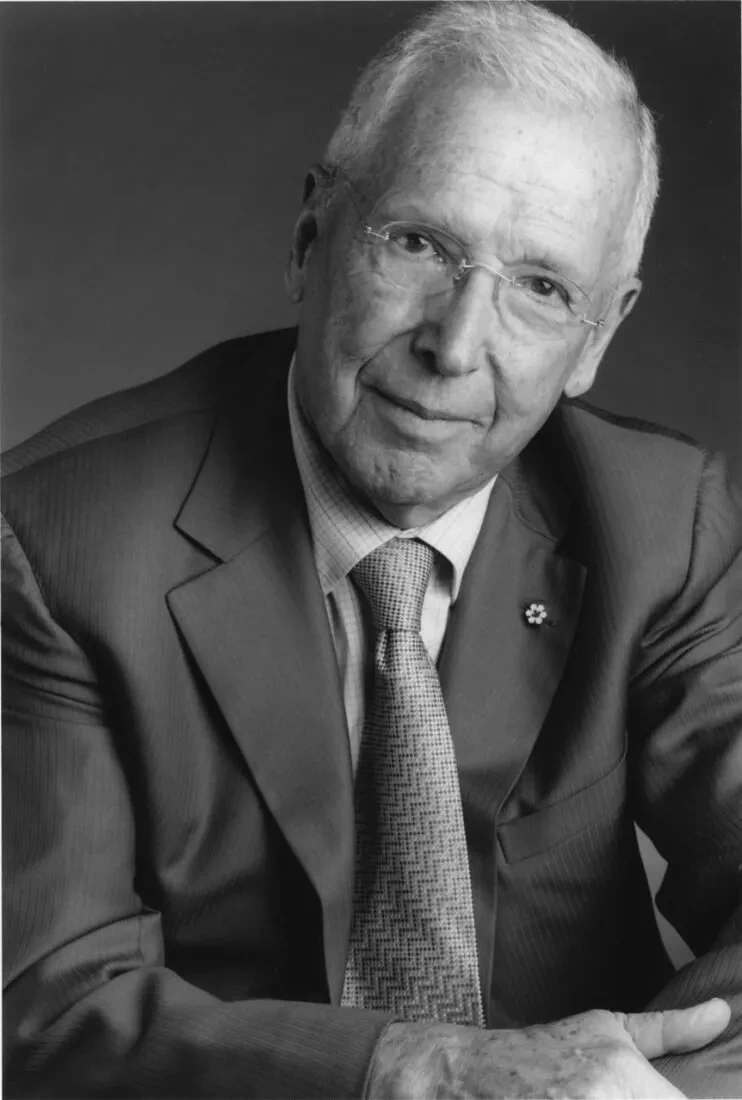
Arthur Erickson’s story unfolds as an enduring conversation between land, light, and culture. Throughout his influential career, the legendary Canadian architect viewed the landscape not as a backdrop, but as an active collaborator. Born in Vancouver in 1924 and shaped by the rugged beauty of British Columbia’s forests and coasts, Erickson’s sensibility was grounded in a profound empathy for site—a respect echoed in every sweep of his drawing hand. From his early days as a UBC architecture student, through mentorships in Europe and the Middle East, Erickson distilled a guiding philosophy: that “architecture must embrace the land, enhance it, and deepen the experience of place”—as scholar Adele Weder notes, “no other Canadian architect has so insistently insisted upon that principle.”
This approach matured into a formal language that fused Modernism’s clean lines with the humility and drama of the Pacific Northwest. Erickson’s buildings, from Simon Fraser University to Vancouver’s Museum of Anthropology, dissolve the binary of built and natural. Rather than dominating their sites, they frame vistas, channel sun and shadow, and gather communities within flowing, open spaces. Erickson did not merely conceive structures; he orchestrated spatial experiences, believing, as he told CBC in 2004, that “architecture, ultimately, is the art of reconciliation between ourselves and the world.”
His journey was not without tension. Tasked with monumental commissions—including Toronto’s Roy Thomson Hall and Riyadh’s King Faisal Mosque—Erickson constantly wrestled with the demands of public life and the pursuit of architectural truth. Yet recognition followed: he was appointed Companion of the Order of Canada, received the AIA Gold Medal, and was lauded by peers for evolving a uniquely Canadian architectural idiom. Even as he faced personal and professional adversity, Erickson championed architecture’s responsibility to serve the spirit and the land alike. In doing so, he left a legacy as Canada’s poet of concrete and terrain—a master who transformed the act of building into an act of profound belonging.

