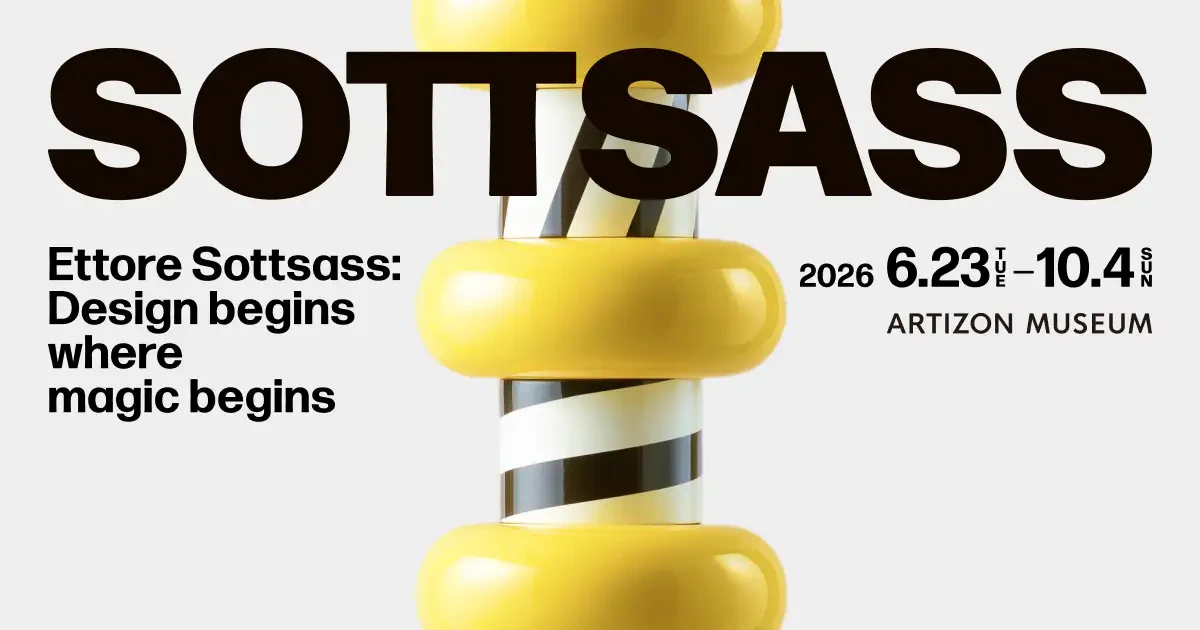
Ettore Sottsass: Design Begins Where Magic Begins 2026
1-chōme-7-2 Kyōbashi, Chuo City, Tokyo 104-0031,
Details
Ettore Sottsass: Design Begins Where Magic Begins is Japan’s first major retrospective devoted to Ettore Sottsass, a central figure in 20th-century Italian design. The exhibition examines the full scope of Sottsass’s career, from early to late works, and presents him as a designer whose practice consistently challenged conventional ideas of function, rationality and modernist form.
The exhibition brings together more than 100 works by Sottsass, alongside works by close associates, including Kuramata Shirō and Michele De Lucchi. It draws particular attention to the Ishibashi Foundation Collection, presenting the foundation’s Sottsass holdings in full with related materials. This also marks the museum’s first design-themed exhibition and the first public presentation of the foundation’s complete Sottsass collection.
Key themes include the relationship between design, magic, colour, form, material experimentation and cultural exchange. The exhibition considers how Sottsass approached design as a field shaped not only by utility but also by imagination, symbolism, emotion and perception. His links to Radical Design, Pop Art, East Asian art and the Memphis movement are positioned as important contexts for understanding his work and influence.
The works represented span furniture, ceramics, office equipment, glassware, photography and drawings. Highlighted pieces include Carlton, Valentine, Superbox, Casablanca, Mobile, Sirius, Erinna, Acropolis, Cabinet No. 8, Cabinet No. 71 and Vase no. 17. Organisations and producers associated with the works include Memphis Milano, Olivetti, Poltronova, Design Gallery Milano, Gallery Mourmans, Gino Cenedese e Figlio, Van Tetterode Glass Studio and Toso Vetri d’Arte.
The exhibition is most relevant to audiences engaged with design history, architecture, furniture and product design, modern and contemporary art, museum collections and postwar visual culture. It also addresses wider questions about how designers disrupt established conventions and reframe the purpose of designed objects.
By presenting iconic works alongside broader material from Sottsass’s practice, the exhibition frames his career as an evolving inquiry into what design can do beyond practical function. Its significance lies in showing how Sottsass expanded the language of design through experimentation, cultural reference and a sustained interest in the imaginative possibilities of objects.