Templestowe Luxury Home
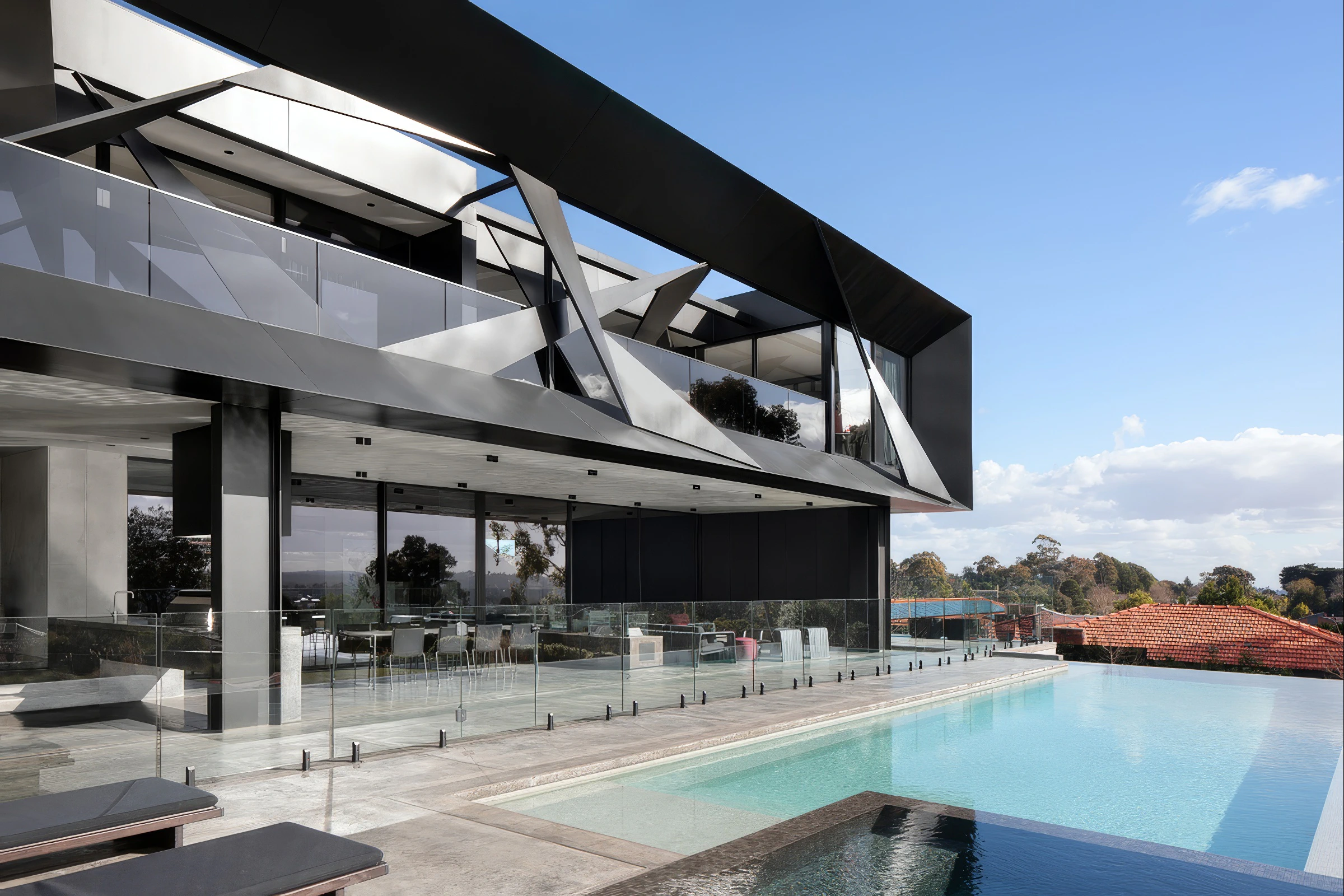
The residence completed in 2022 in Melbourne’s Templestowe begins with a clear brief and an equally clear tension. The clients, Ersan and Emel Gülüm, wanted a contemporary family house informed by an earlier project, yet not a repetition of it.
“The result is a domestic interior with the spatial drama of a gallery...”
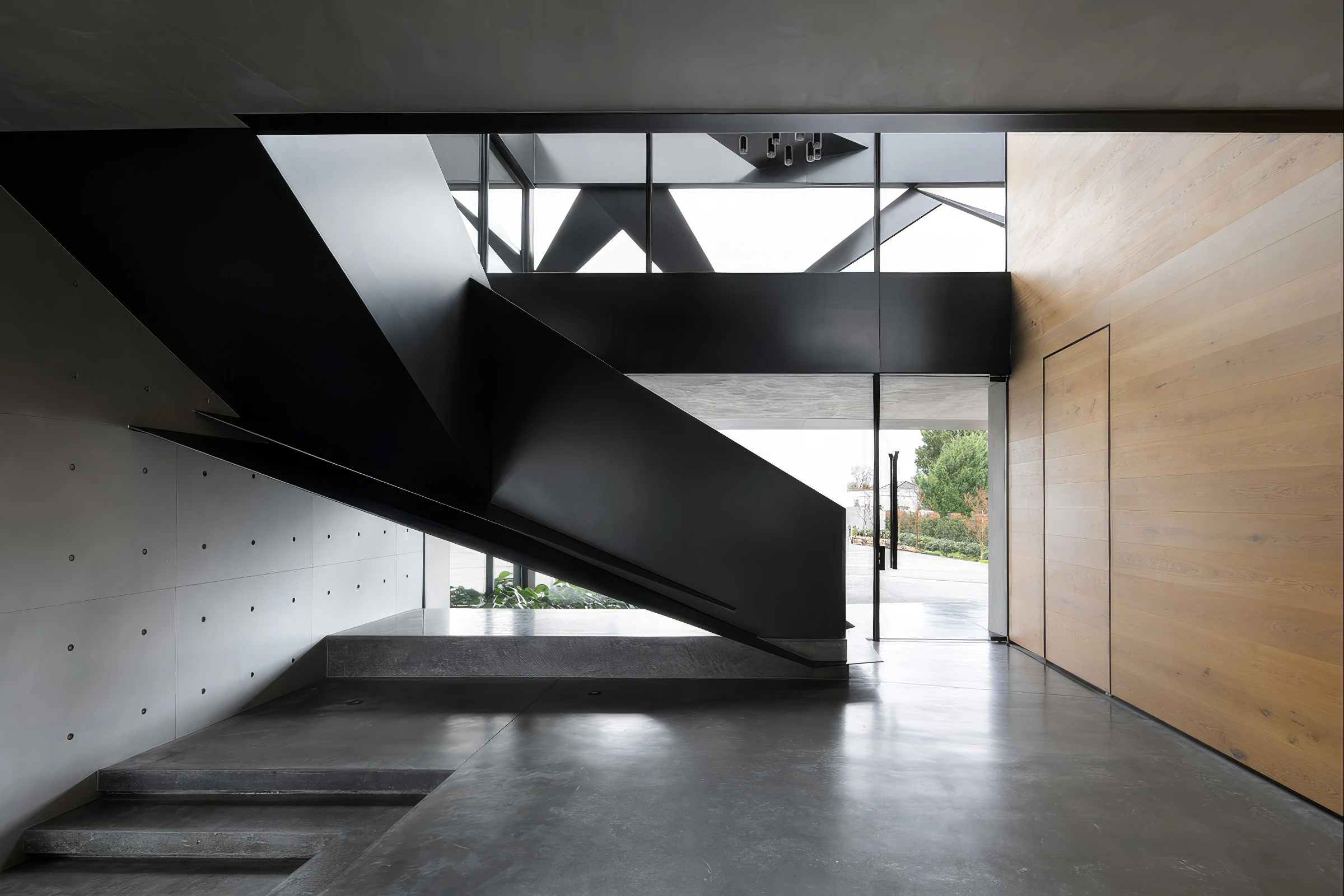
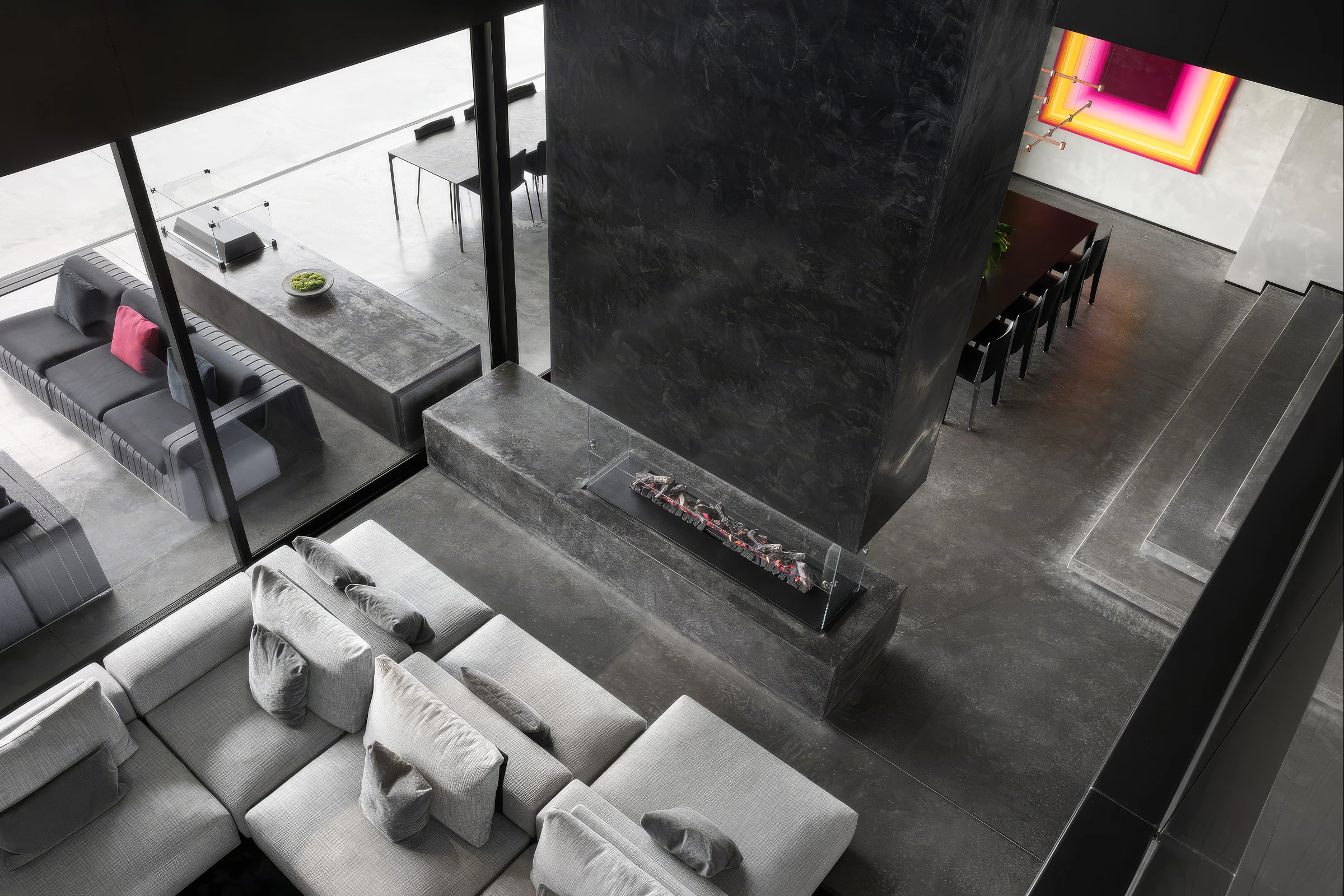
That balancing act becomes legible through the way the interiors are organised. A folded black stair slices diagonally through pale concrete surfaces; a dark, almost monolithic central volume anchors the main living zone; level changes are used not as obstacles but as cues that slow movement and frame views. From those decisions, the underlying logic emerges: the house is planned less as a sequence of enclosed rooms than as a set of connected platforms gathered around sculptural elements. The result is a domestic interior with the spatial drama of a gallery, yet one still calibrated for everyday occupation.
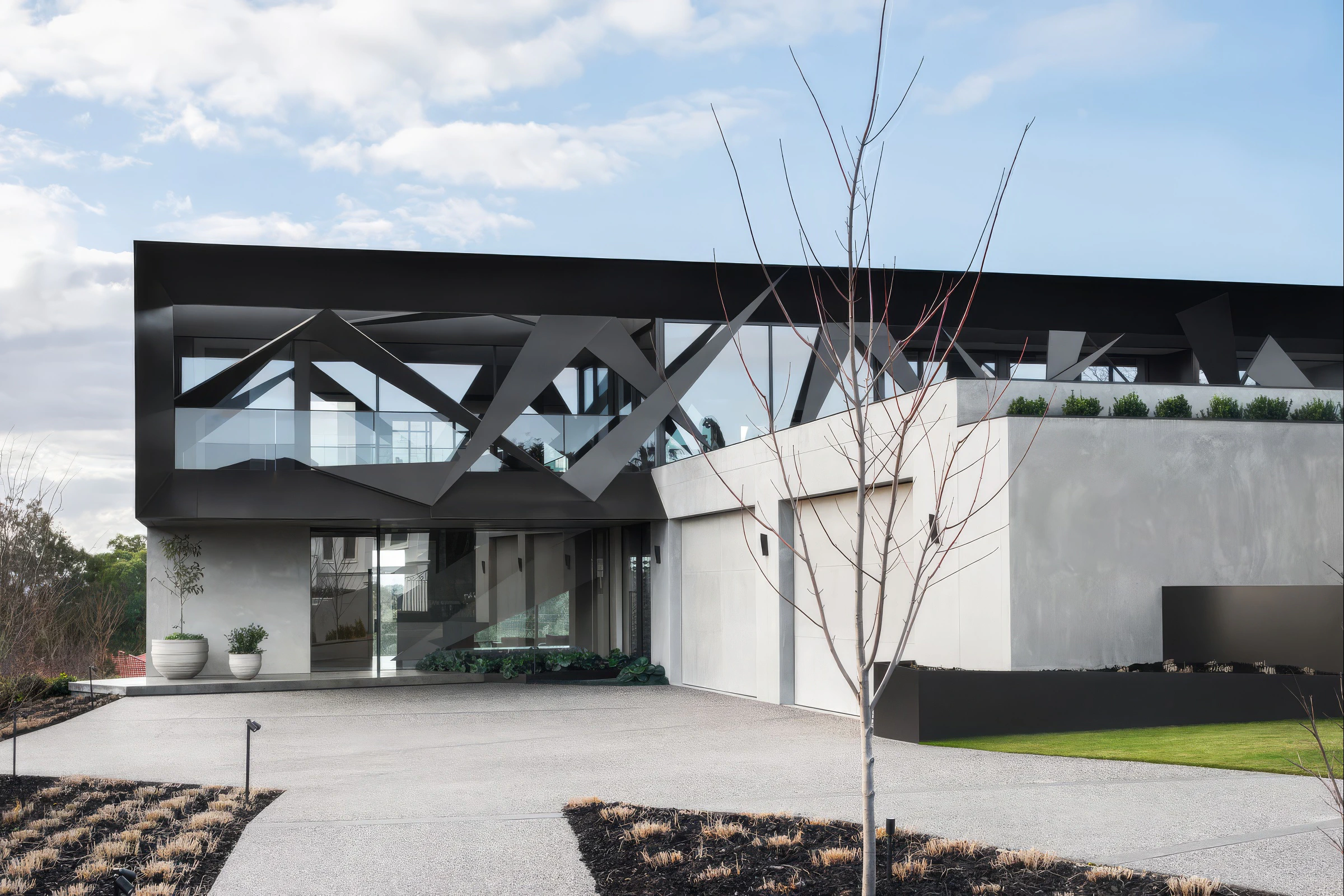
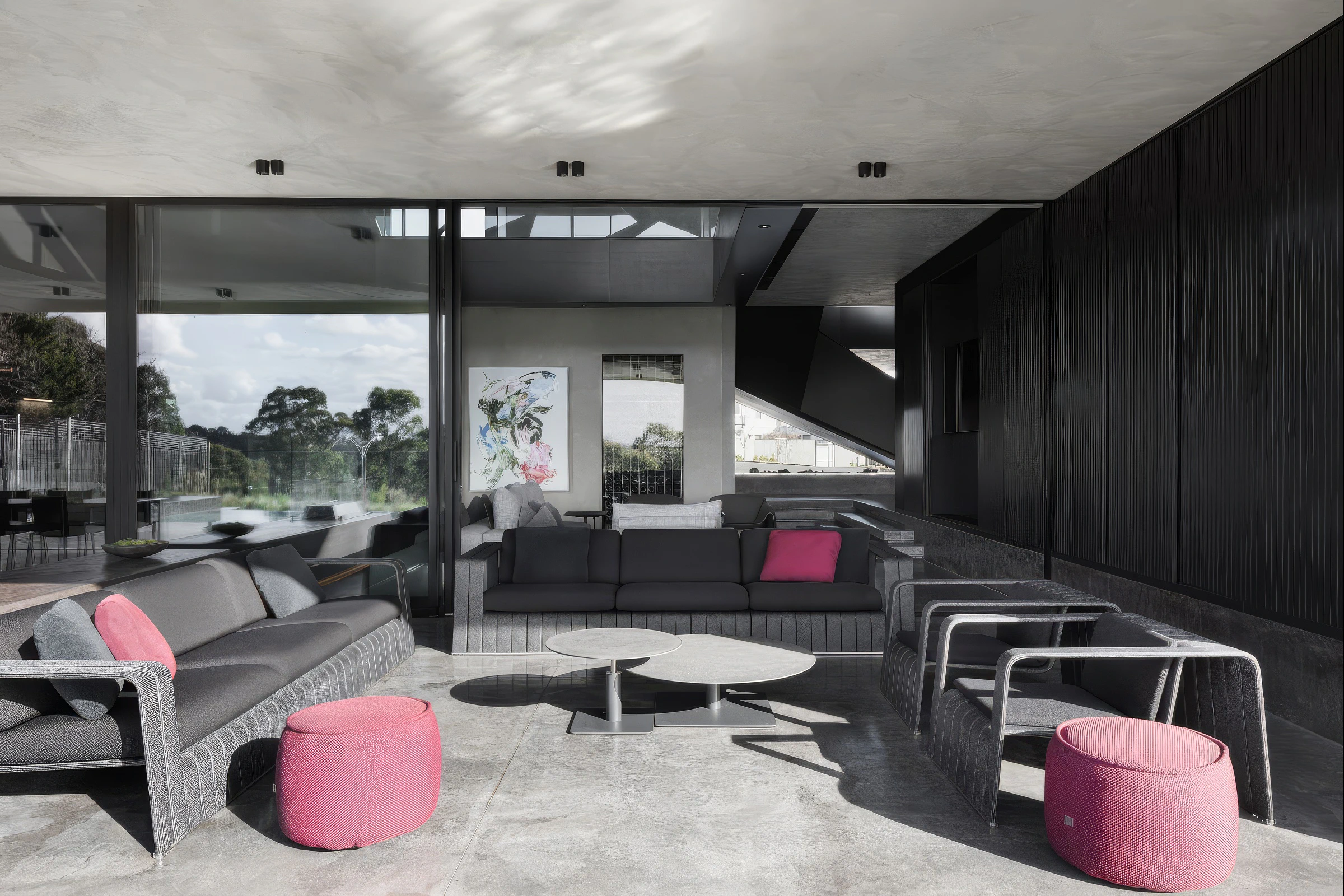
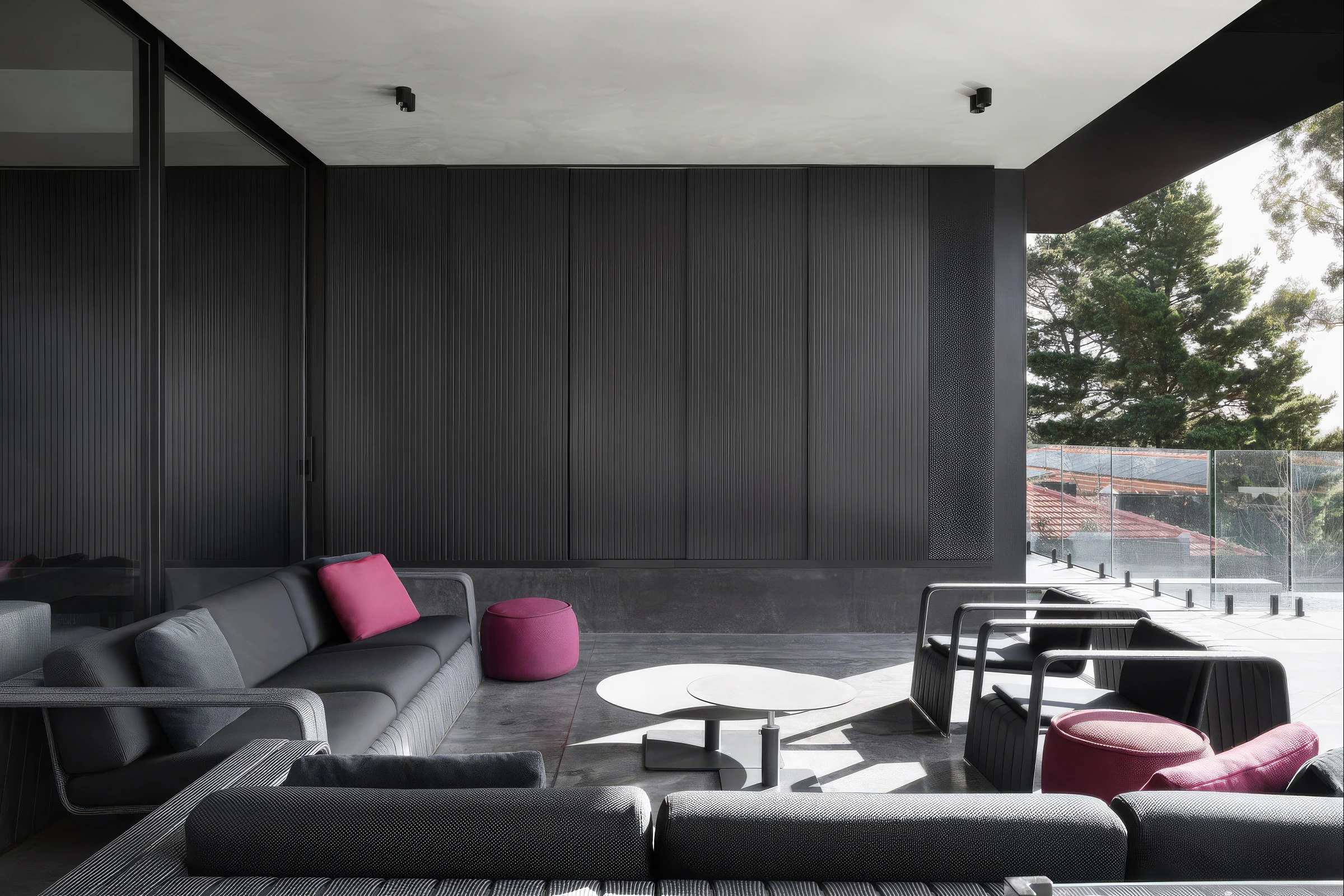
The material language reinforces that reading. Concrete floors run continuously through major spaces, black steel is used not merely as trim but as mass, and large glazed openings are treated as full-height cuts through the envelope. Because the details are spare and joinery is often concealed, luxury here is conveyed by precision, scale and custom fabrication rather than ornament. That is especially evident in the entertaining spaces, where a faceted black bar and a glass-lined wine display turn storage and service into architectural events. Janine Carter Design’s interiors understand that such a disciplined palette could become severe, so softness is introduced selectively: deep upholstered seating, subtle tonal variation in walls and rugs, and occasional flashes of saturated colour in art and loose furniture. Those interventions do not interrupt the house’s restraint; they make it habitable.
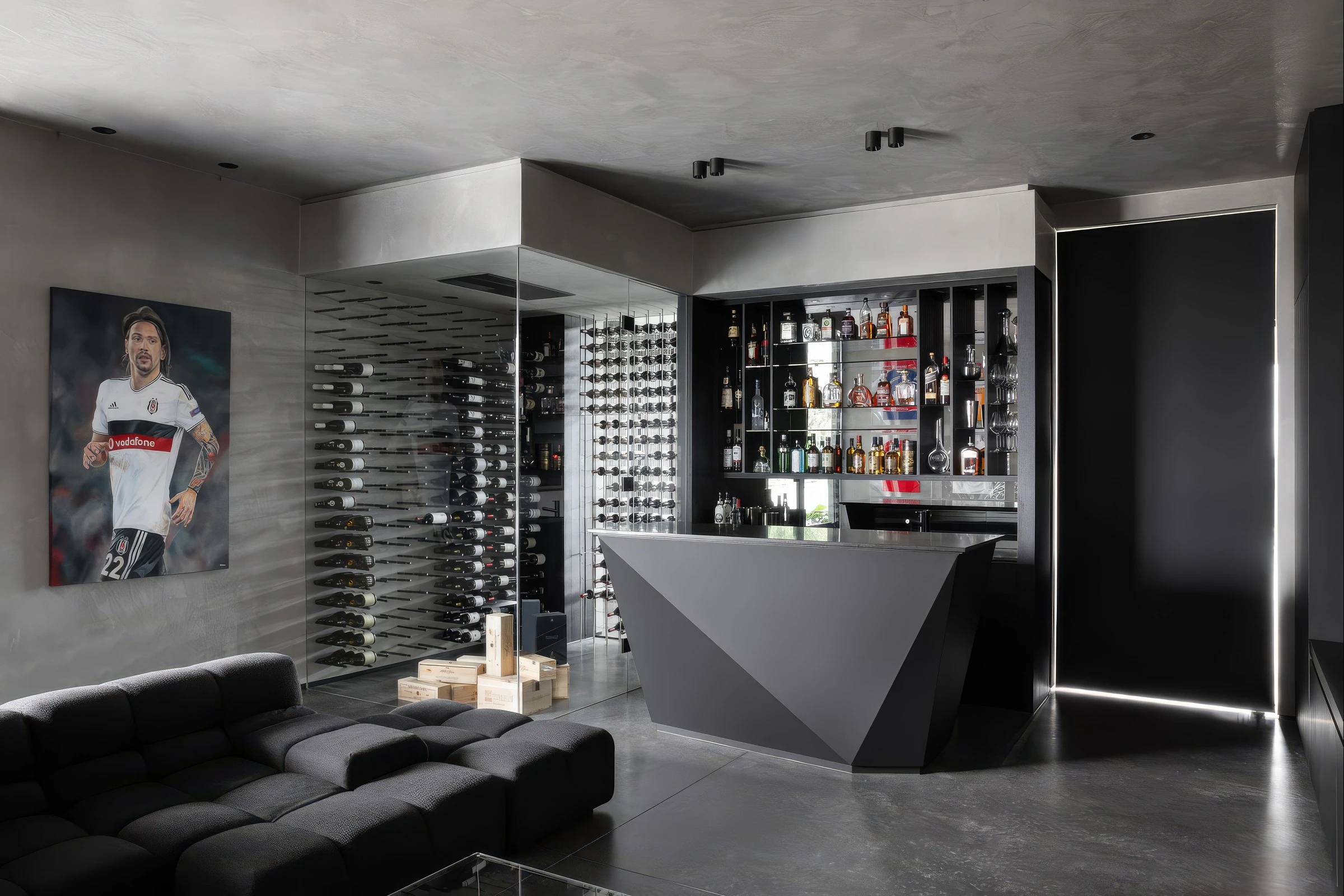
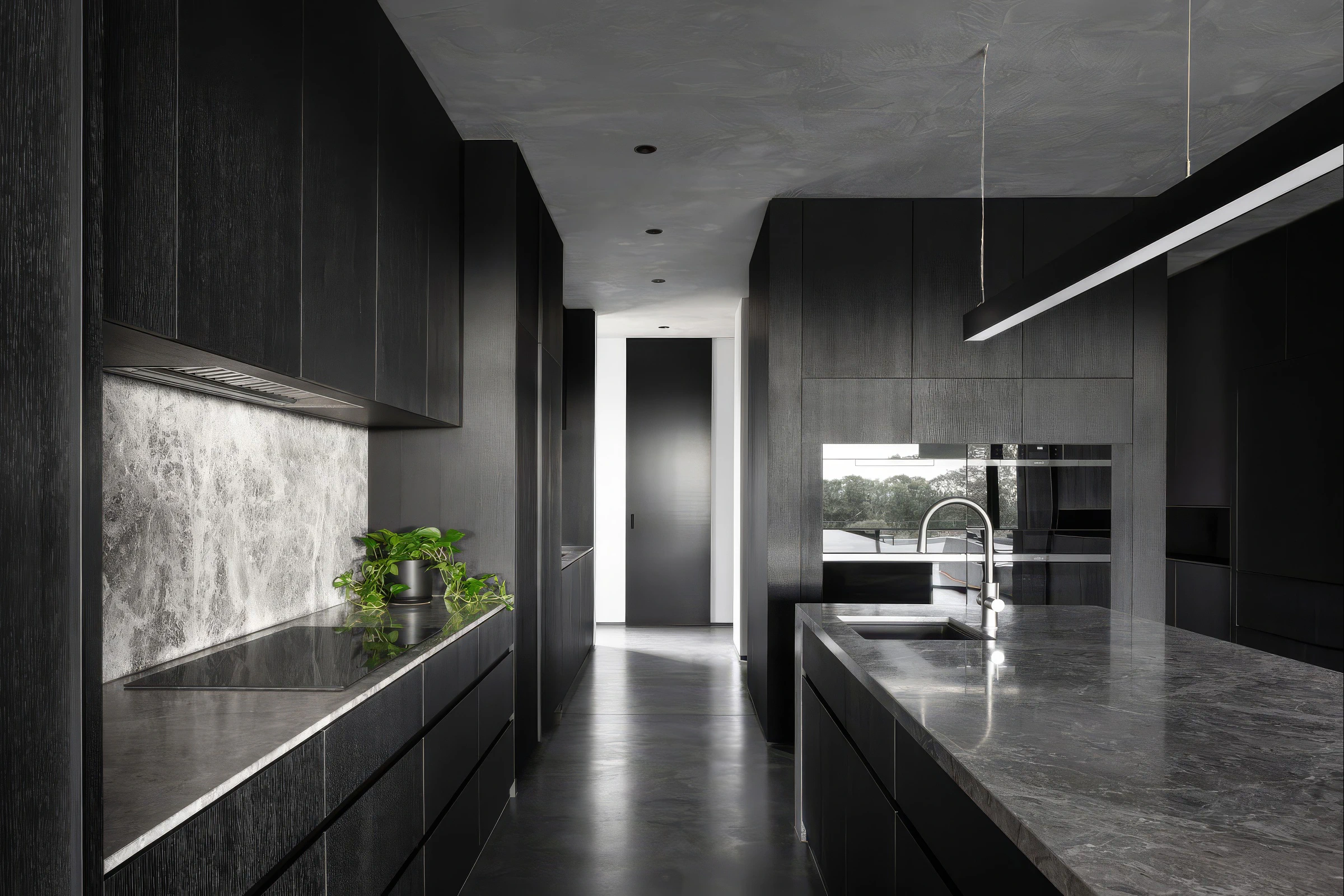
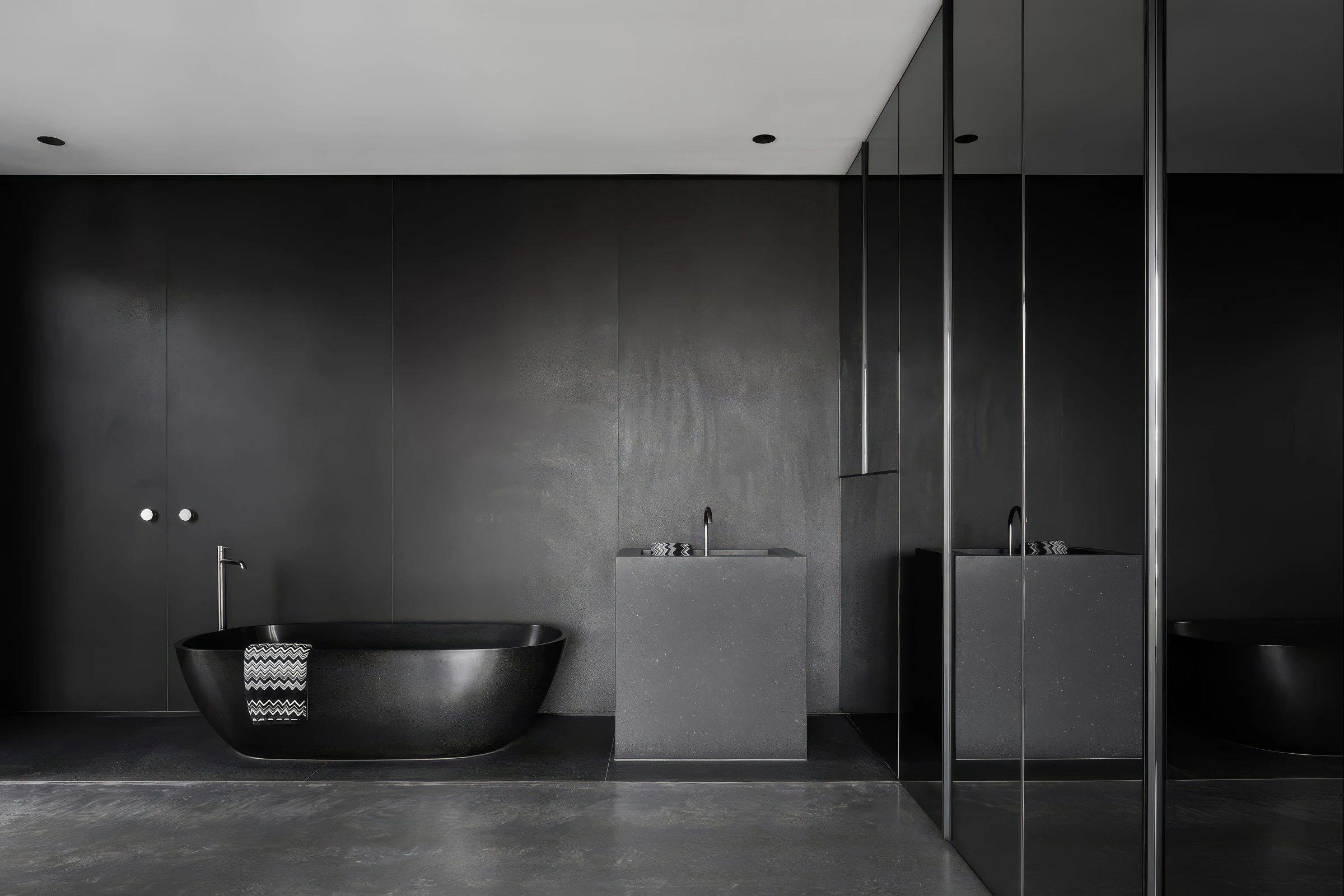
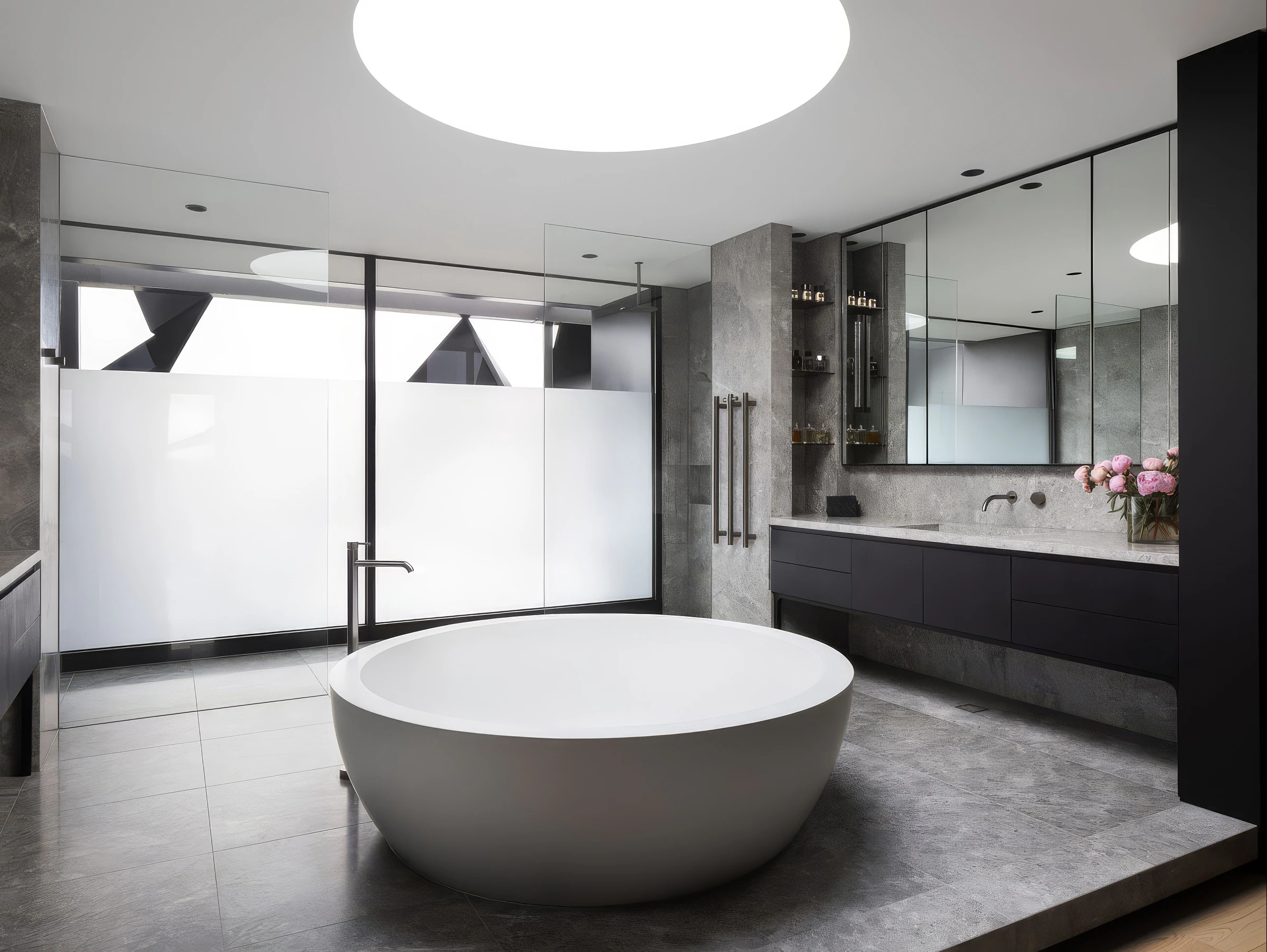
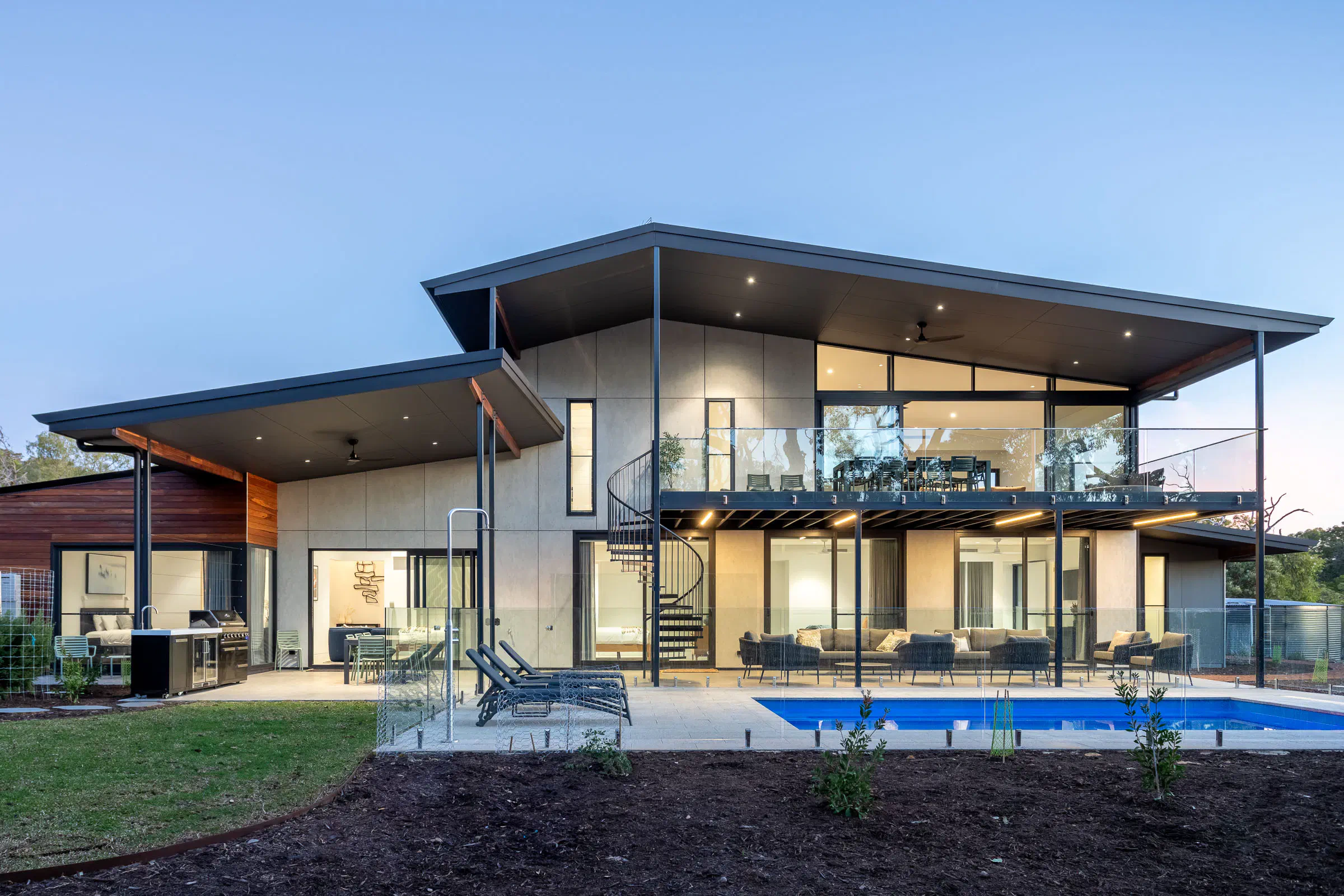
The same logic shapes the relationship between inside and out. Full-height glazing and wide sliding openings allow living areas to spill directly onto covered outdoor rooms, while the continuation of dark ceilings, robust floors and low, linear furnishings reduces the sense of threshold. Because the exterior spaces are not treated as decorative afterthoughts but as extensions of the interior geometry, the project succeeds in blurring the line between shelter and landscape.
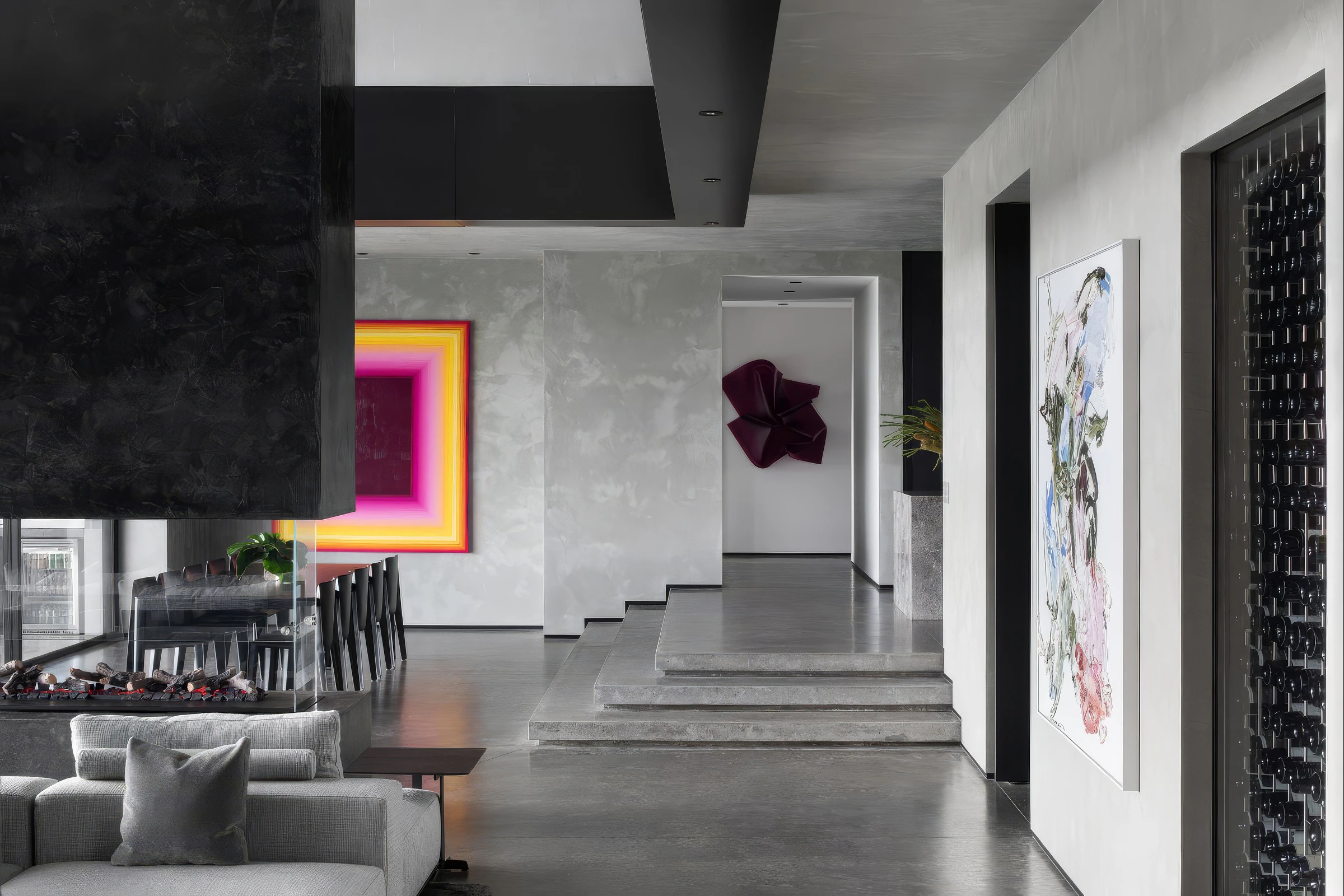
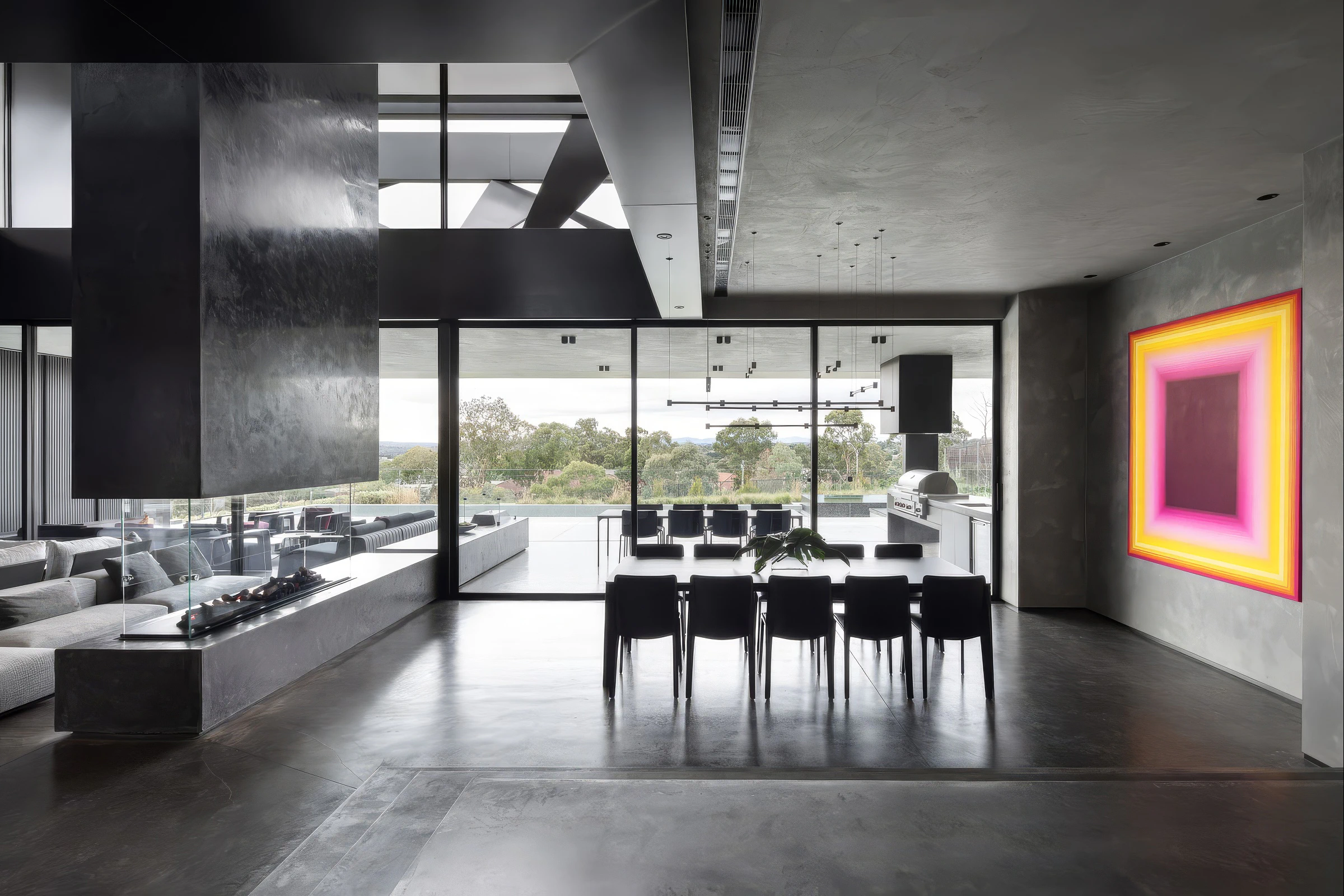
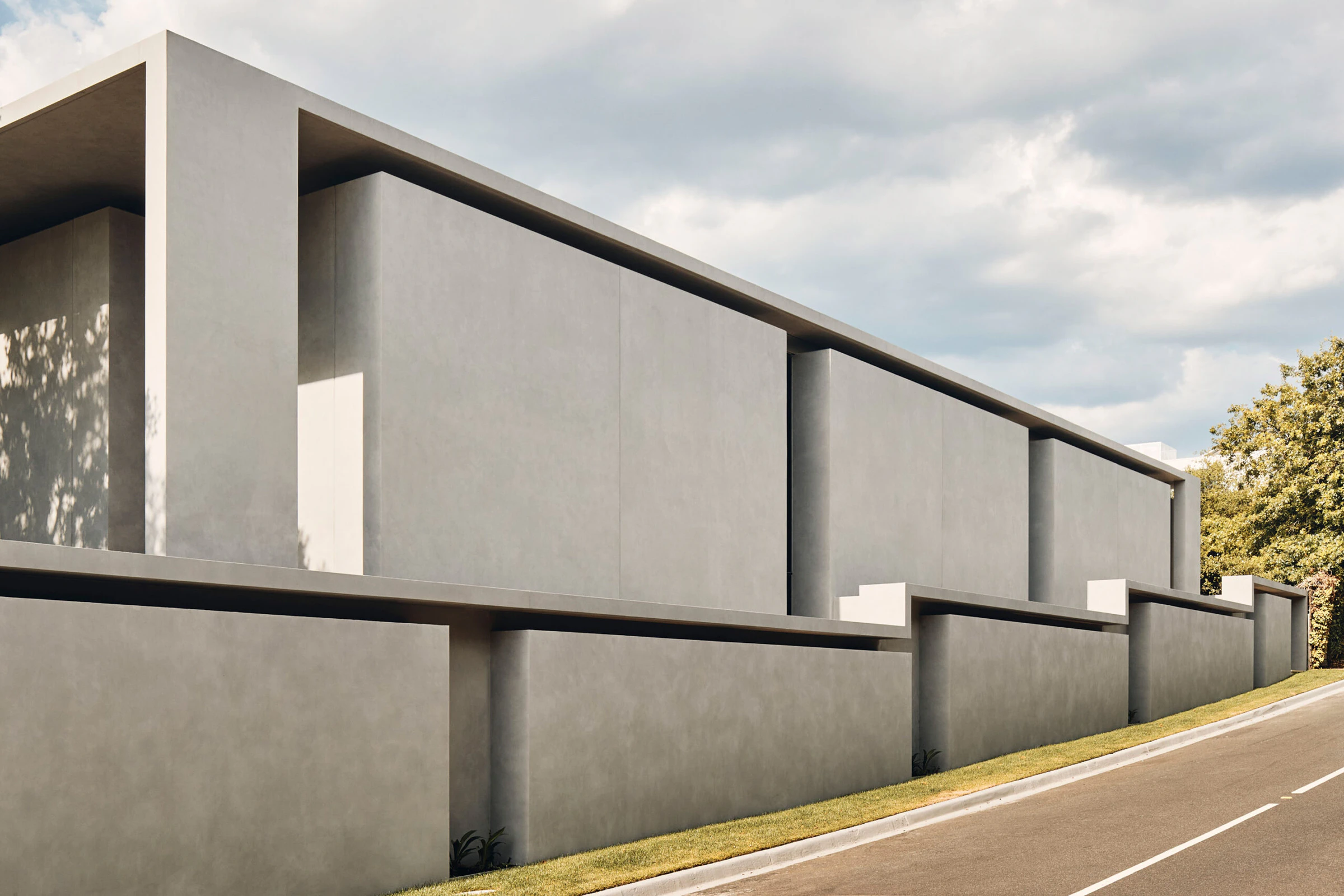
There is also a useful contradiction at work in the project’s visual identity. The fractured steel planes wrapping the façade, as outlined in the project brief, suggest motion, impact and a certain masculine force. Yet the internal experience is more nuanced. Light is softened across matte surfaces, circulation is choreographed rather than rushed, and the most memorable moments come from compression and release: a dark passage opening to a double-height room, a heavy stair hovering over a pale wall, a sombre material palette relieved by a single luminous artwork. For that reason, the residence does more than perform luxury. It shows how a contemporary family house can be both assertive and composed, using minimal means to create spaces that feel cinematic without losing their livability.