Cottage Roots, New Rhythms
A cottage front, a new heart
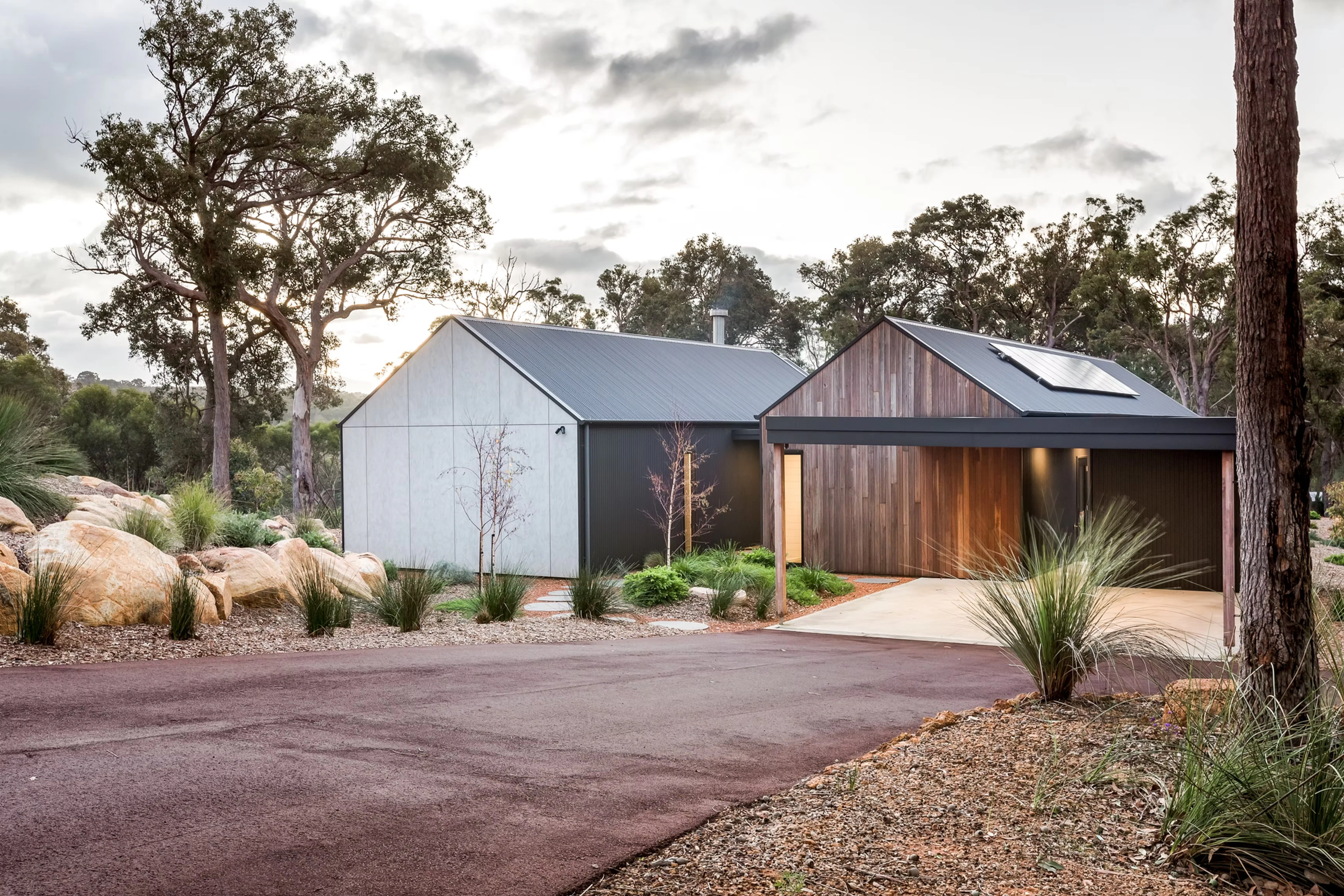
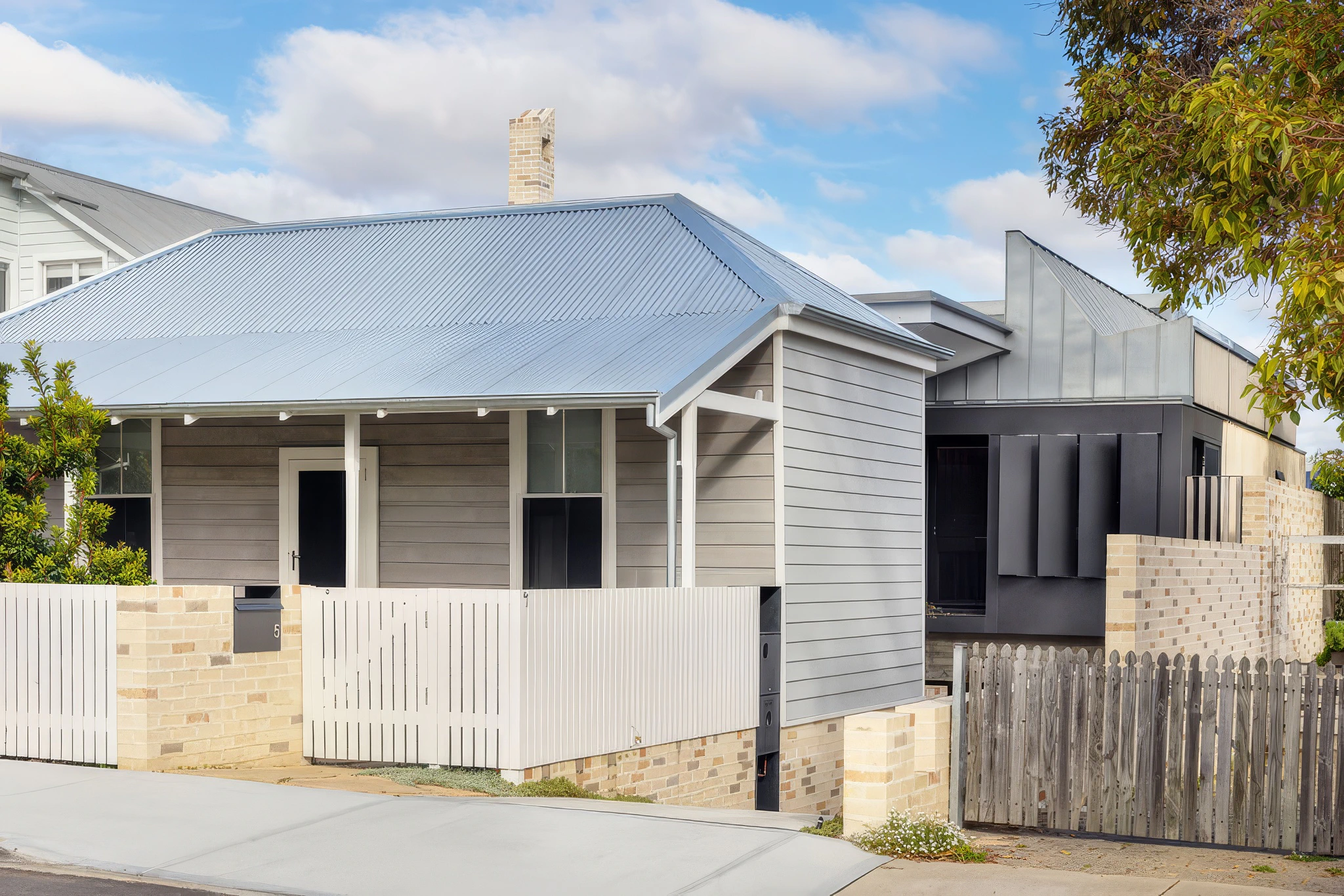
North Fremantle’s tight-grained streetscape is defined by modest weatherboard cottages: corrugated roofs, verandahs, and crisp fences that hold the line between footpath and garden. Here, that familiar profile is carefully maintained. You read the place first as a 1920s worker’s cottage—low, pale, and domestic—then, by looking a little longer, you notice a second language tucked to one side: a darker, more solid volume and a recessed drive that hints at the steep fall of the block and a home that has been reworked beyond its polite frontage.

That measured double-reading is central to

Levels, light and lookout
Further in, the house begins to explain itself through a sequence of thresholds and level shifts. First, the materials do the work: polished concrete and richly toned timber meet crisp cabinetry, while operable screens and louvres introduce a repeating geometry of slats and shadows. Then the planning takes over—spaces wrap, overlap and step, making circulation feel like discovery rather than a corridor. Stejskal has described the approach as allowing “the home to engage with its sloping site and ensure it is well embedded in its context”, and the section becomes the project’s quiet engine: the fall of the land is not flattened out, but used to stack rooms, tuck storage and create a generous undercroft.
The site topography allows "the home to engage with its sloping site and ensure it is well embedded in its context".Philip StejskalArchitect
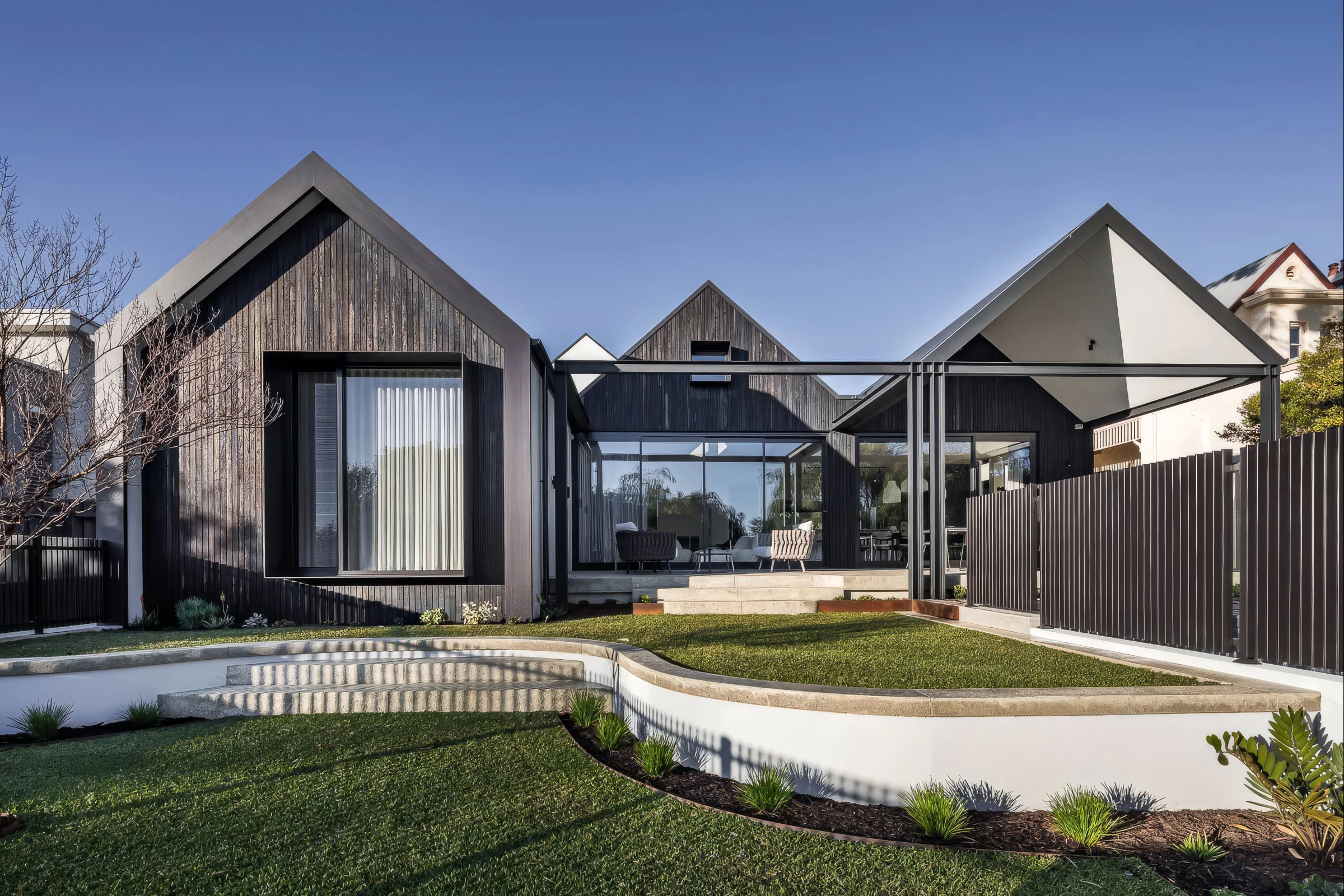
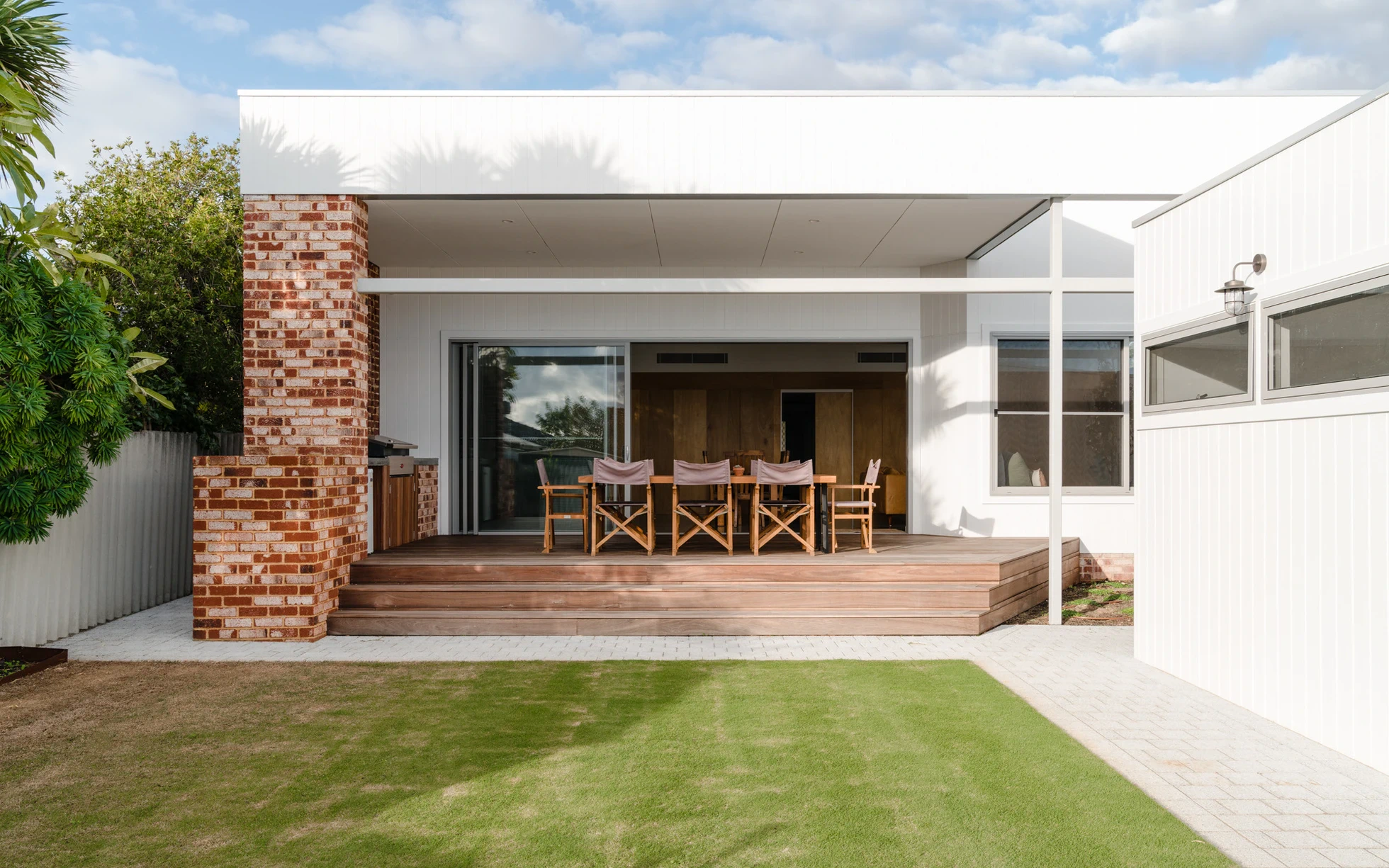
The garden-facing living areas clarify how this sectional strategy supports everyday life. A deep opening to the rear yard—softened by full-height curtains—lets the room operate as both retreat and verandah, with the lawn and trees pulled visually into the interior. It’s a contemporary version of the Fremantle habit of living half outside: the boundary is thickened with shade, screens and timber-lined soffits rather than erased.

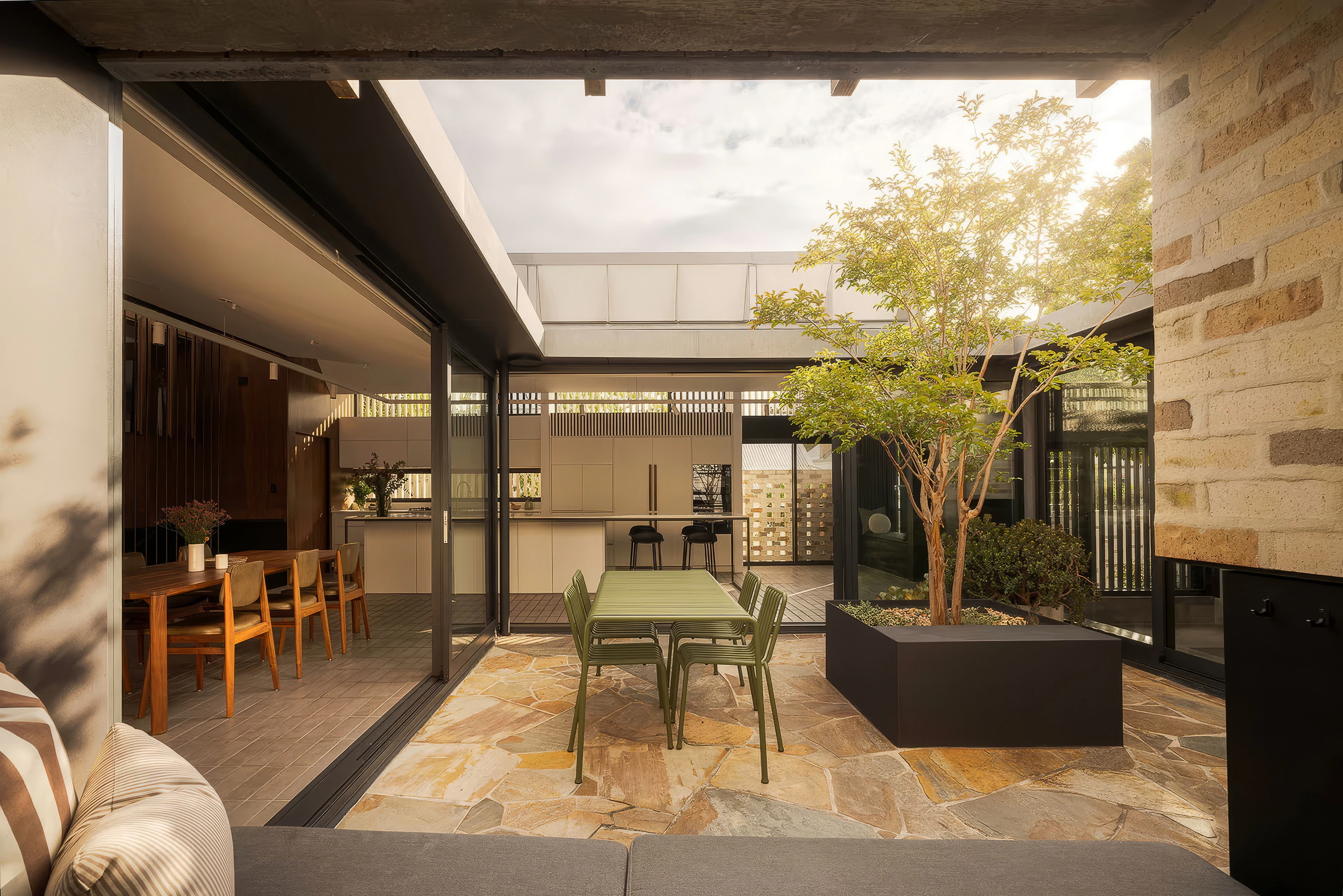
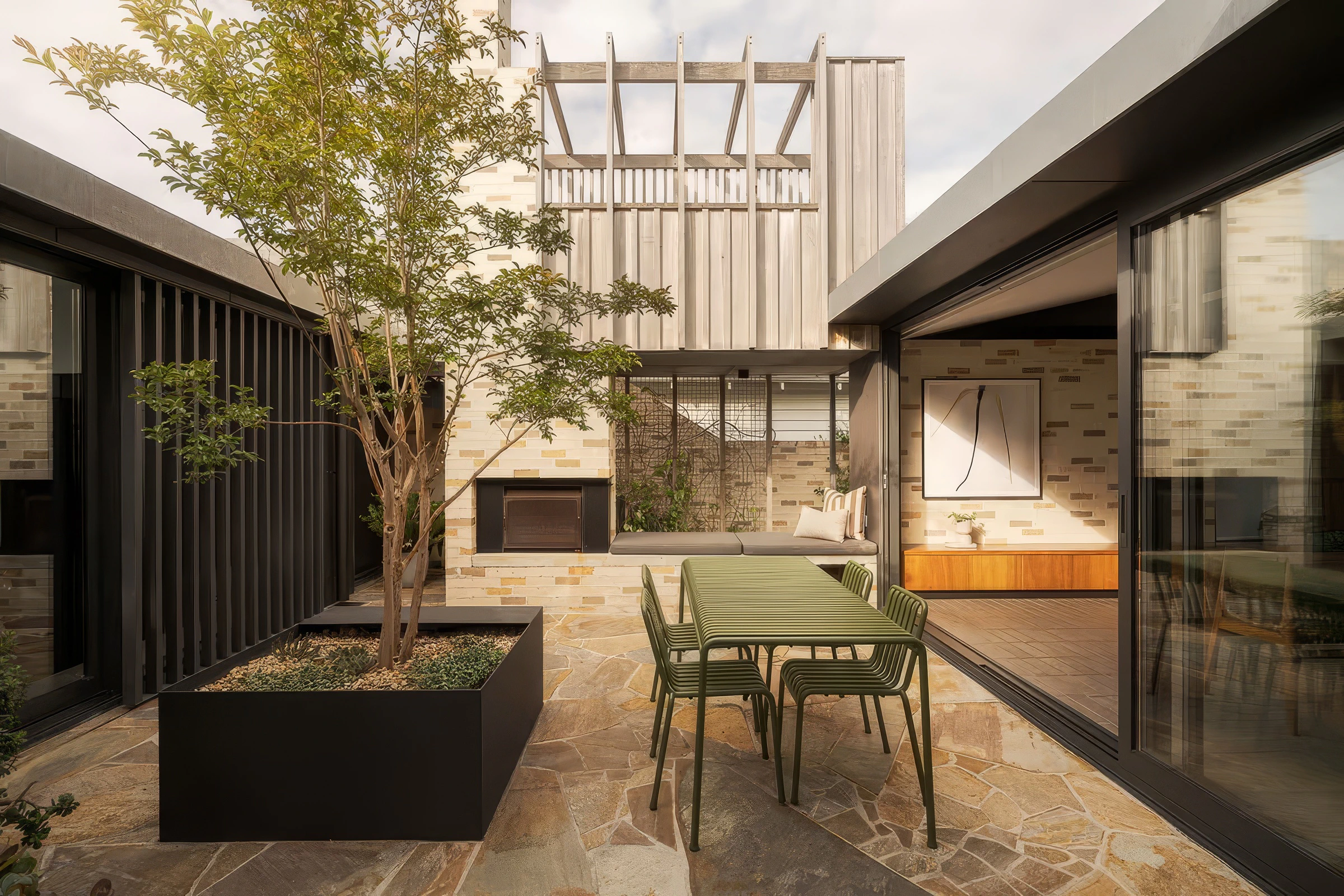
The same logic intensifies around the home’s open-air centre, anchored by a crepe myrtle and built-in seating. A courtyard is held close to the kitchen and dining spaces, turning light and breeze into organising elements rather than afterthoughts. Above, an “observatory” perch and a tall chimney-like element register on the skyline: not as a decorative flourish, but as orientation devices that lift your attention towards the river, port and the broader neighbourhood canopy.


Inside, the fit between robustness and warmth is especially clear at the dining level. Timber-lined walls, black steel balustrades and a stair that threads through a void make the house feel carved and assembled at once—an architecture of framed views and controlled transparency. Below, the mood shifts again: darker, quieter rooms nest into the slope, including a cocooning study and a laundry treated almost like a utilitarian grotto in concrete—an intentionally muscular counterpoint to the lightness of the courtyard and upper rooms.


What makes this reimagined cottage persuasive is not a single gesture, but the way its parts agree: the old frontage stays neighbourly, while the new work—screened, stepped and deeply habitable—turns topography, shade and timber grain into the home’s everyday pleasures.

Recognised with major honours at the 2022 AIA Awards and the ArchiTeam Awards, the renovation’s achievement is its balance: a modest cottage frontage, a complex sectional interior, and a contemporary envelope that manages climate, outlook and family life without losing the street’s worker’s-cottage rhythm.


Arquidyne Haus recently featured another restoration by Philip Stejskal Architecture, the