Stealth Farmhouse. by Lurie
local context. sustainability. healthy living
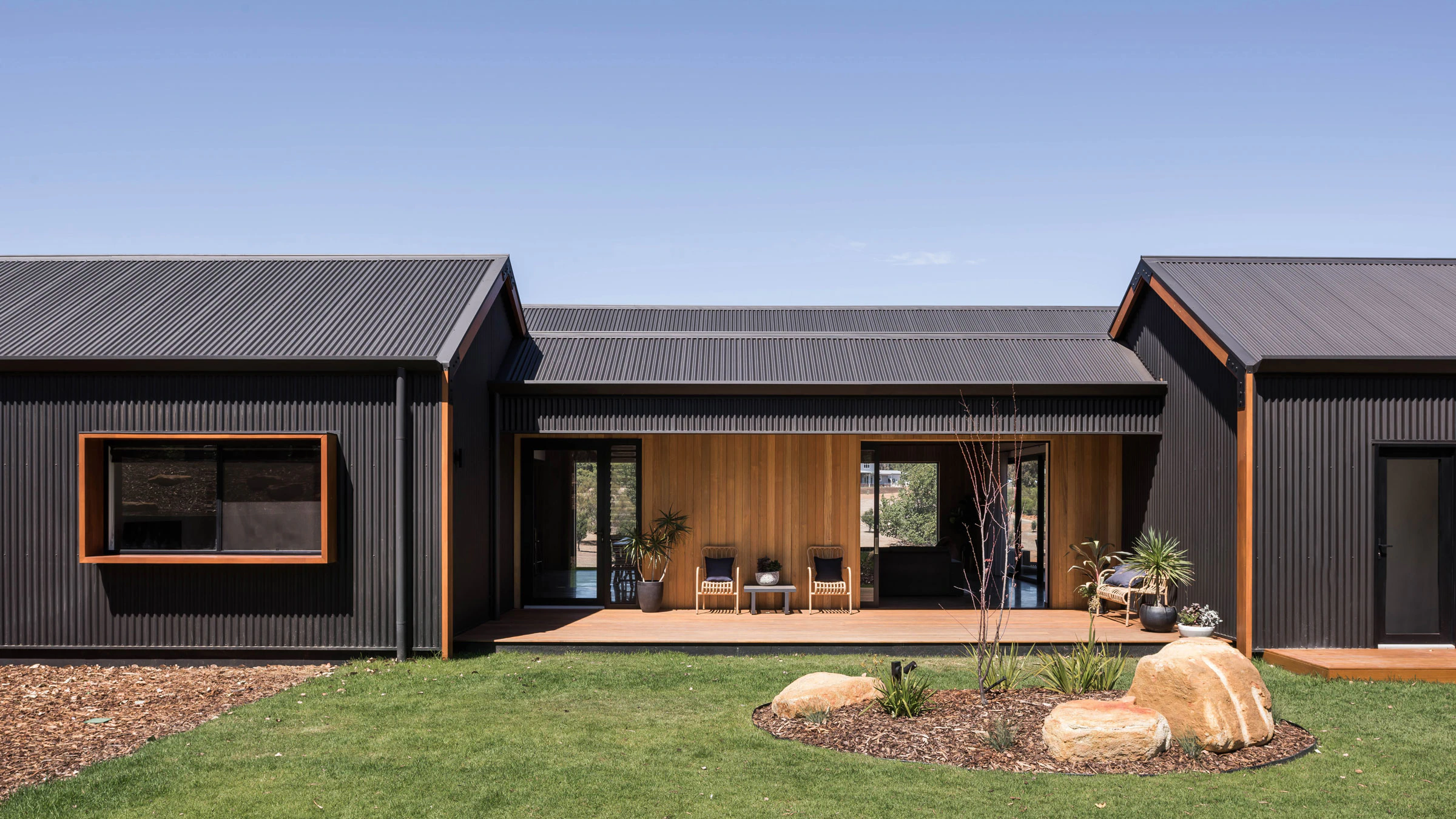
For a tranquil site in Yallingup, Western Australia, the brief called for a flexible four-bedroom home that could serve as a serene holiday escape, a short-stay rental, and a permanent residence. The brief called for an elegant, timeless farmhouse that draws on the archetypes of rural dwellings while sitting comfortably within its rolling hillside context.
This flexibility required a thoughtful plan with two to three bathrooms, zoned living, and private retreats—all delivered with an insistence on low-maintenance, locally available materials. The sloping site demanded meticulous orientation, ensuring uninterrupted views across the hills and optimising the northern aspect to maximise natural light and passive thermal performance.
A Modern Dwelling with a Farmhouse Aura
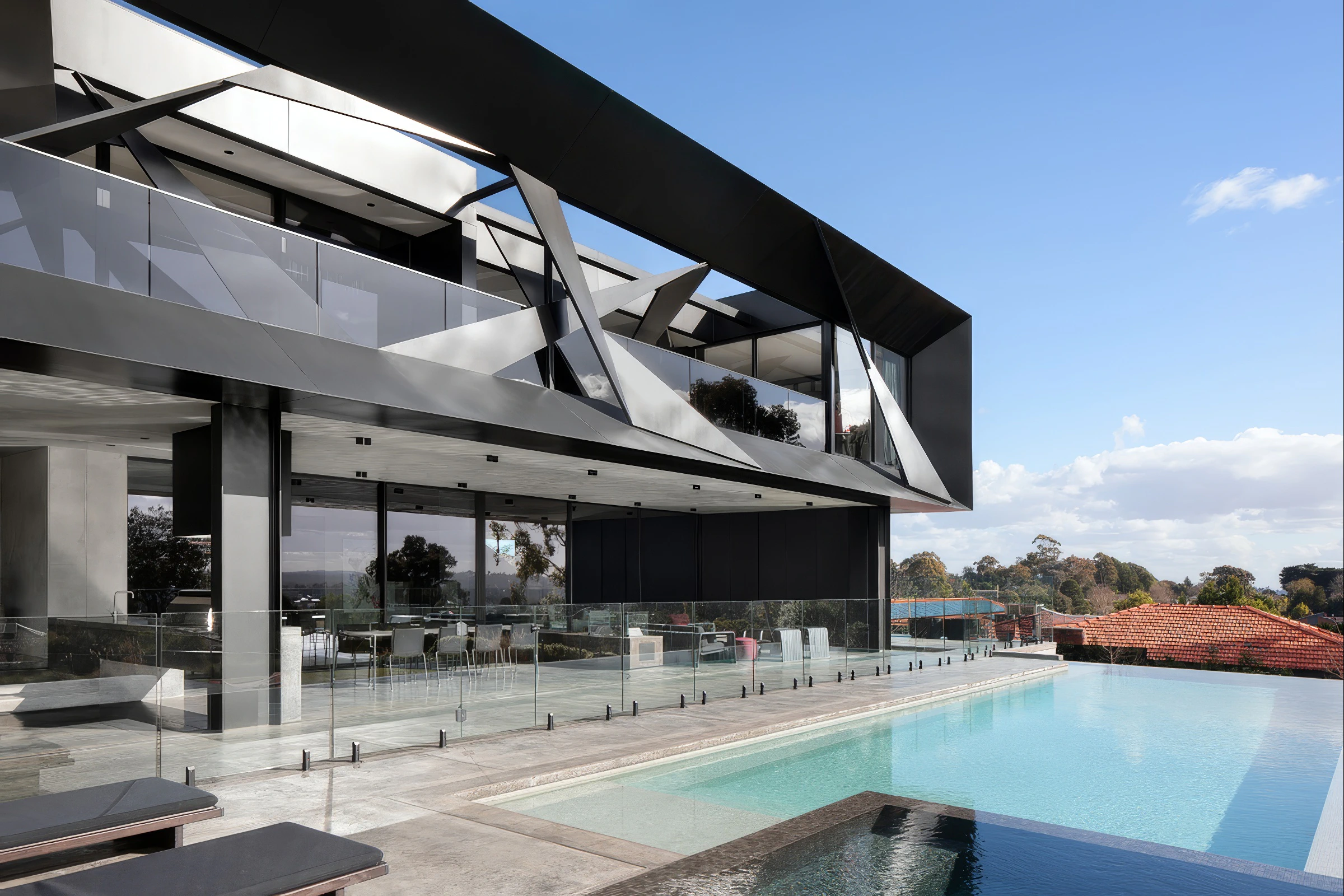
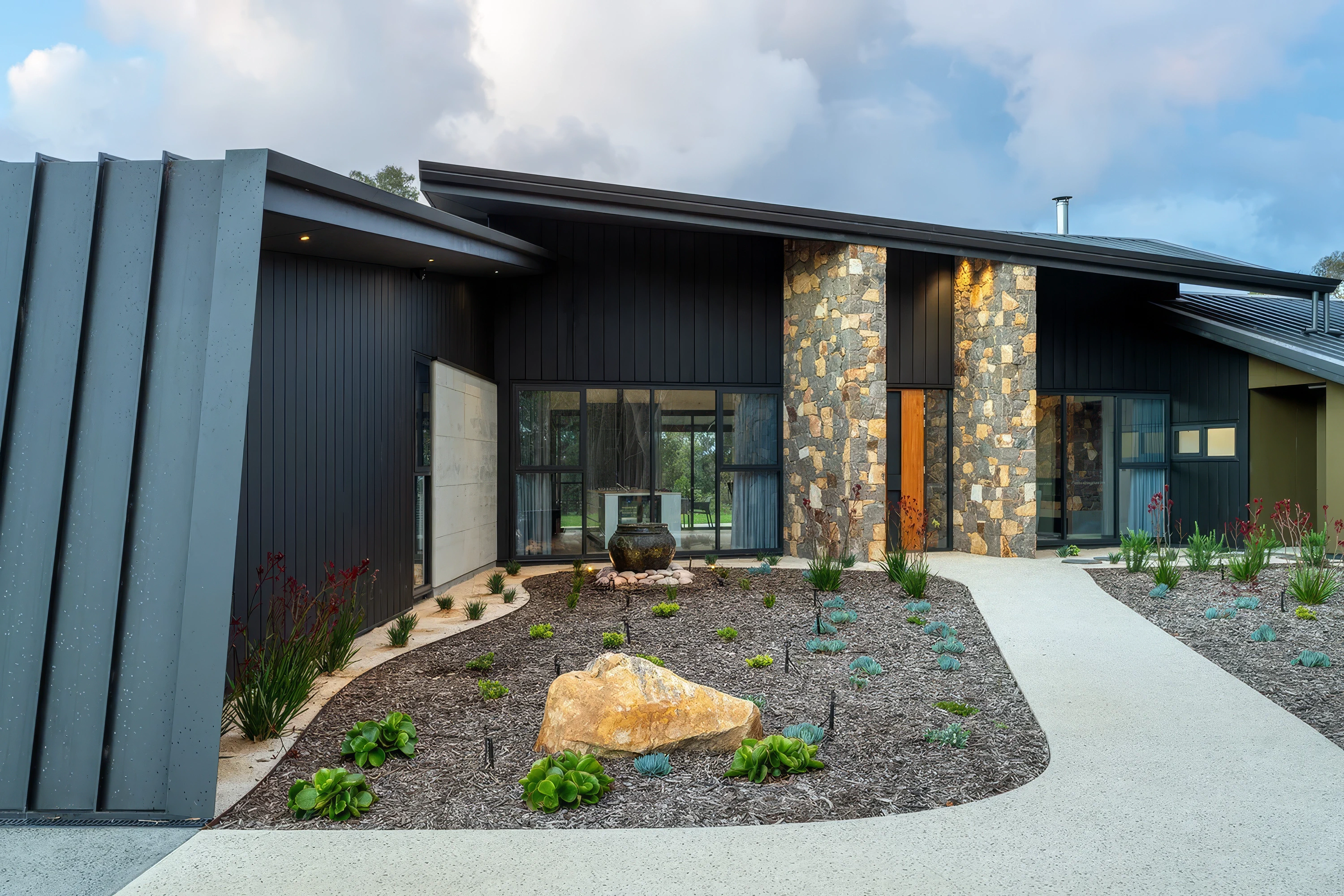
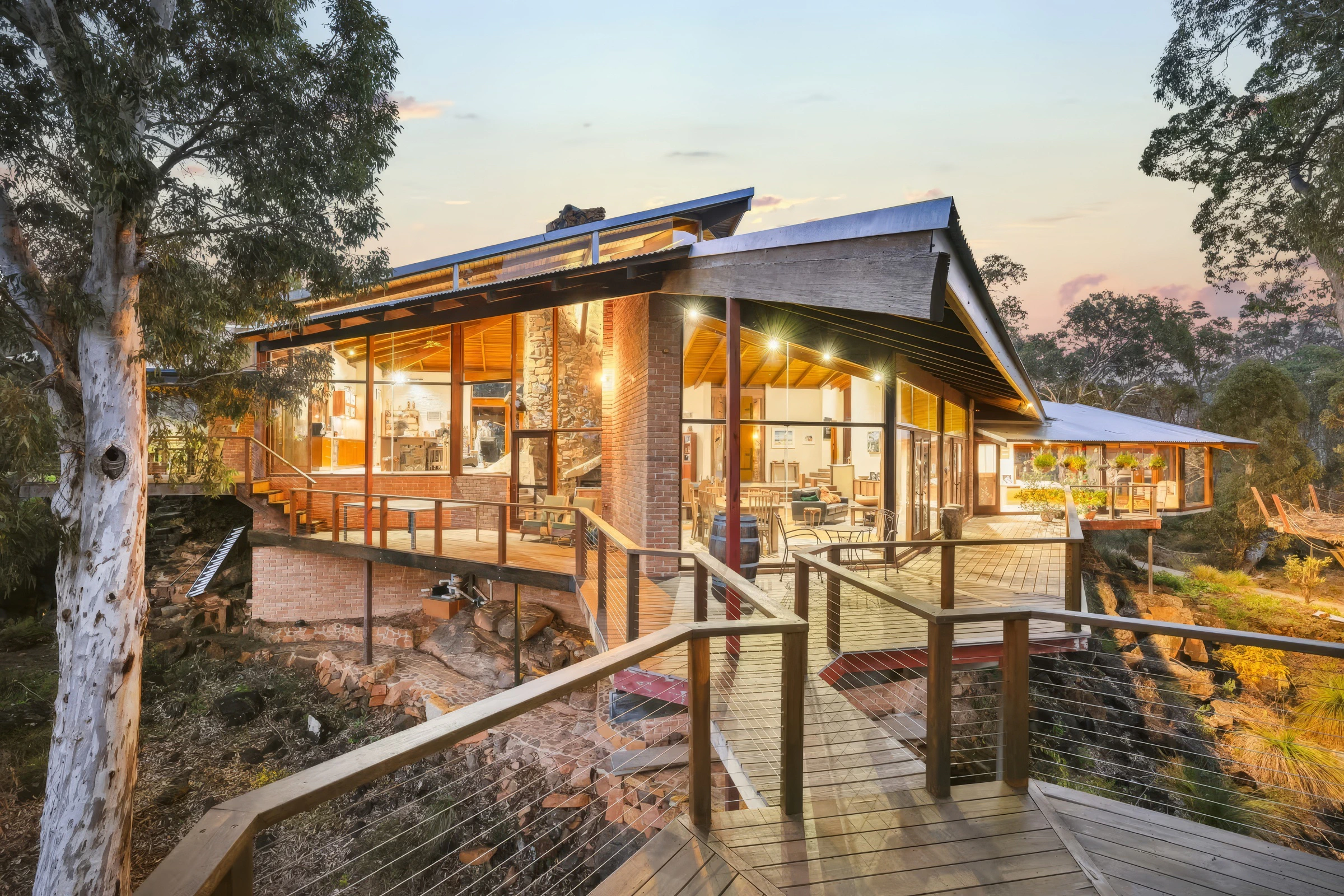
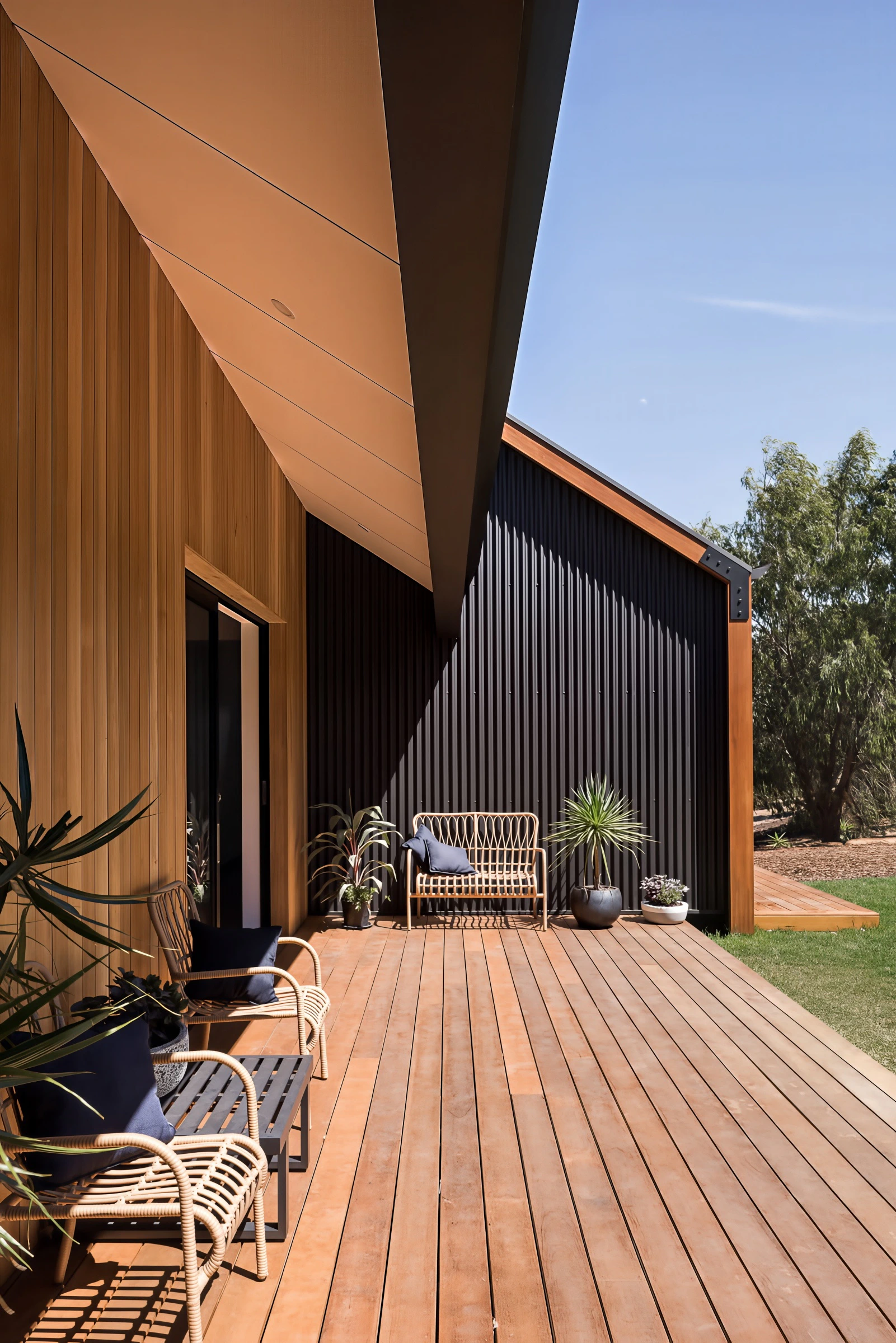
The design responds as a contemporary interpretation of the rural shed, using an elongated, barn-like form to nestle into the land’s contours. The exterior, composed of robust corrugated steel and teak, presents a clear, purpose-driven material palette while naturally recessing into the landscape. The interplay between rich timber and industrial steel is immediately apparent and establishes a recurring visual dialogue throughout the project. This is evident in the exterior framing and slender gable ends, which contrast with the deep black metal cladding. The landscaping stays honest and local, with natural stone and low-lying native vegetation grounding the built form.
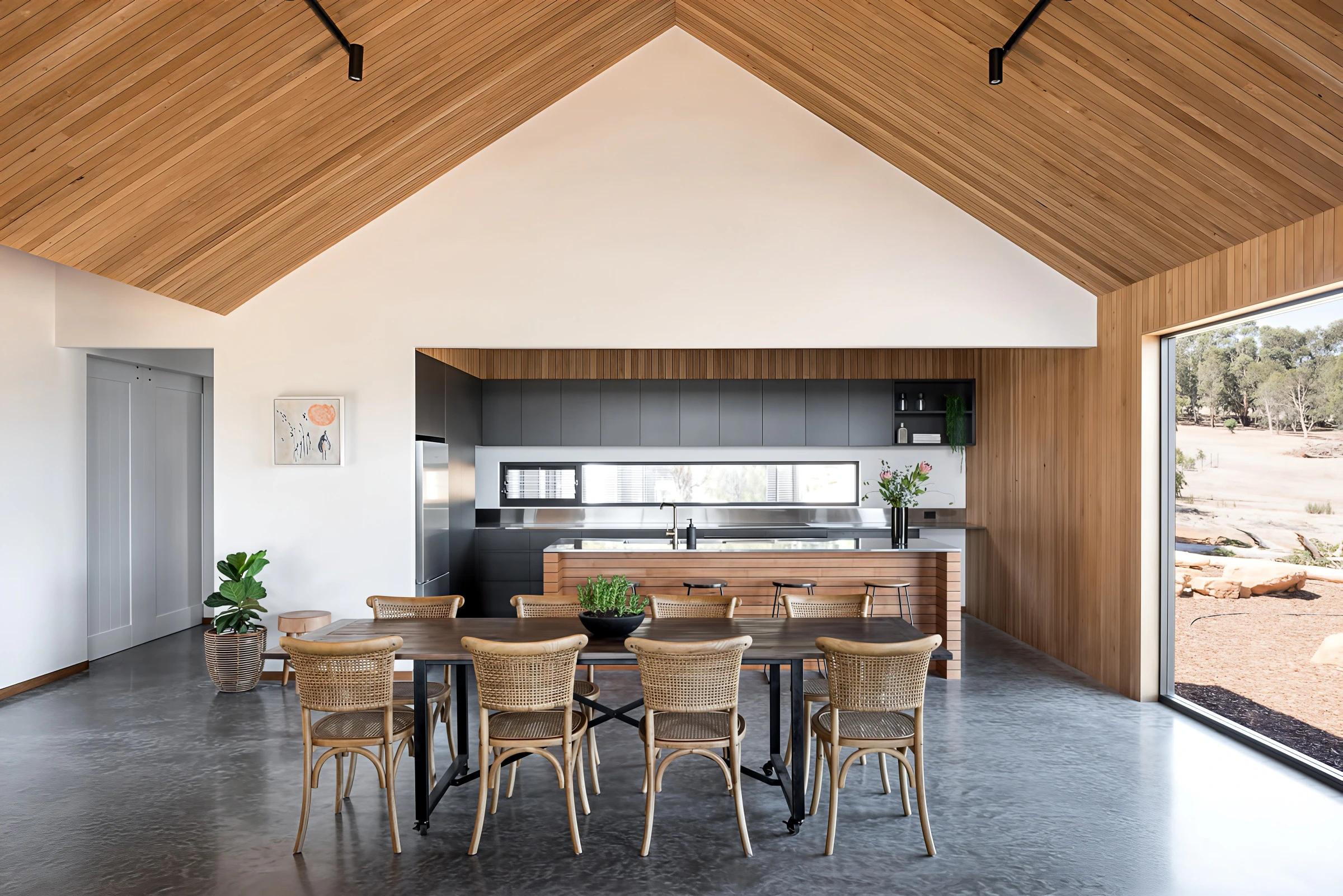
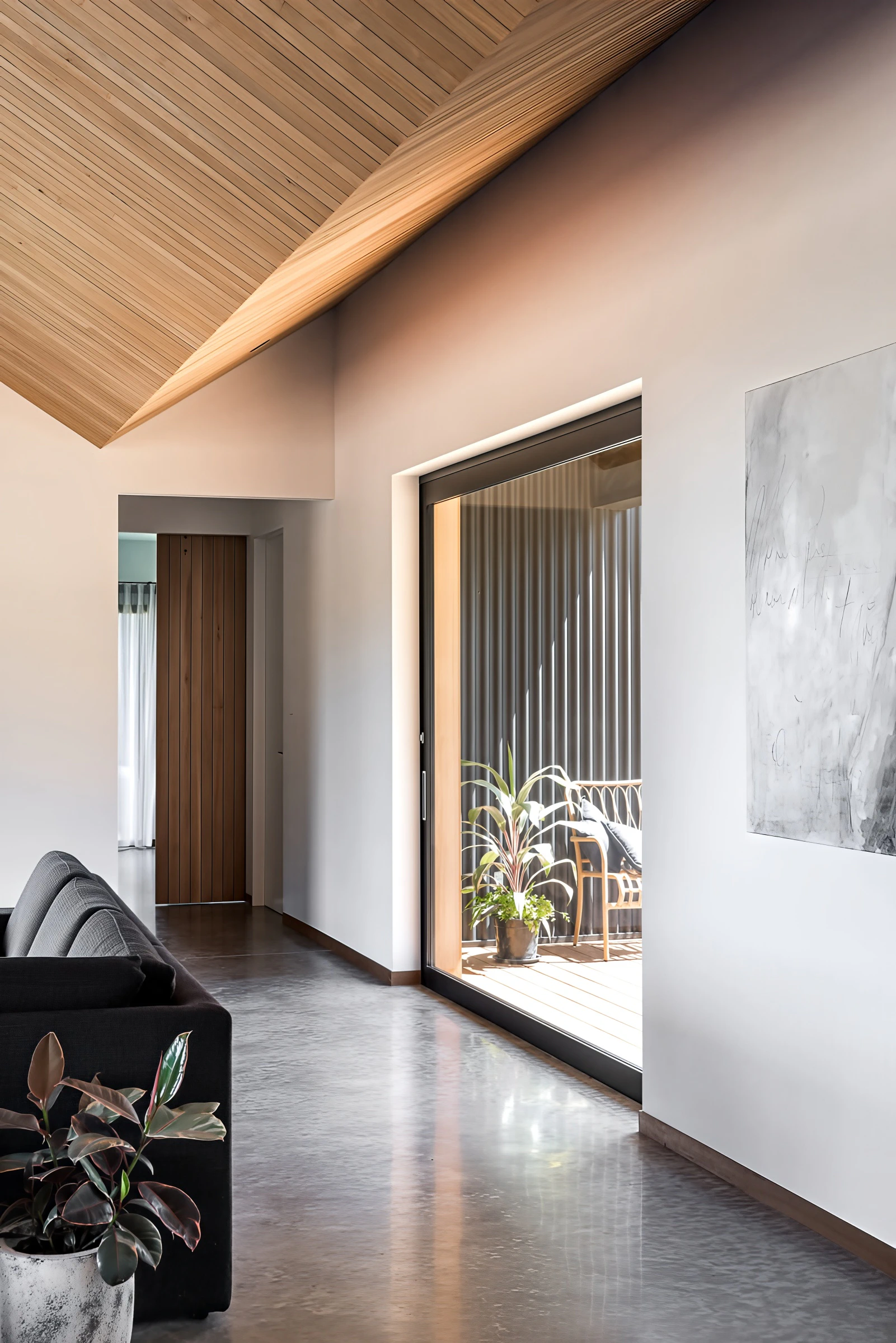
Inside, the farmhouse sensibilities become even more palpable, as shown by the tactile qualities of exposed timber. The main living area features a striking double-vaulted, timber-lined ceiling, creating a generous sense of openness and warmth that echoes the simplicity and grandeur of classic rural spaces. Expansive glazing draws in elevated views to the distant horizon. Polished concrete floors—known for their durability and ease of care—flow between interior and exterior spaces, reinforcing a seamless transition and underpinning the home’s robust functionality. The interior and exterior living zones are seamlessly linked; broad verandahs and sheltered courtyards serve as gathering points, while timber decking continues the interior's organic language.
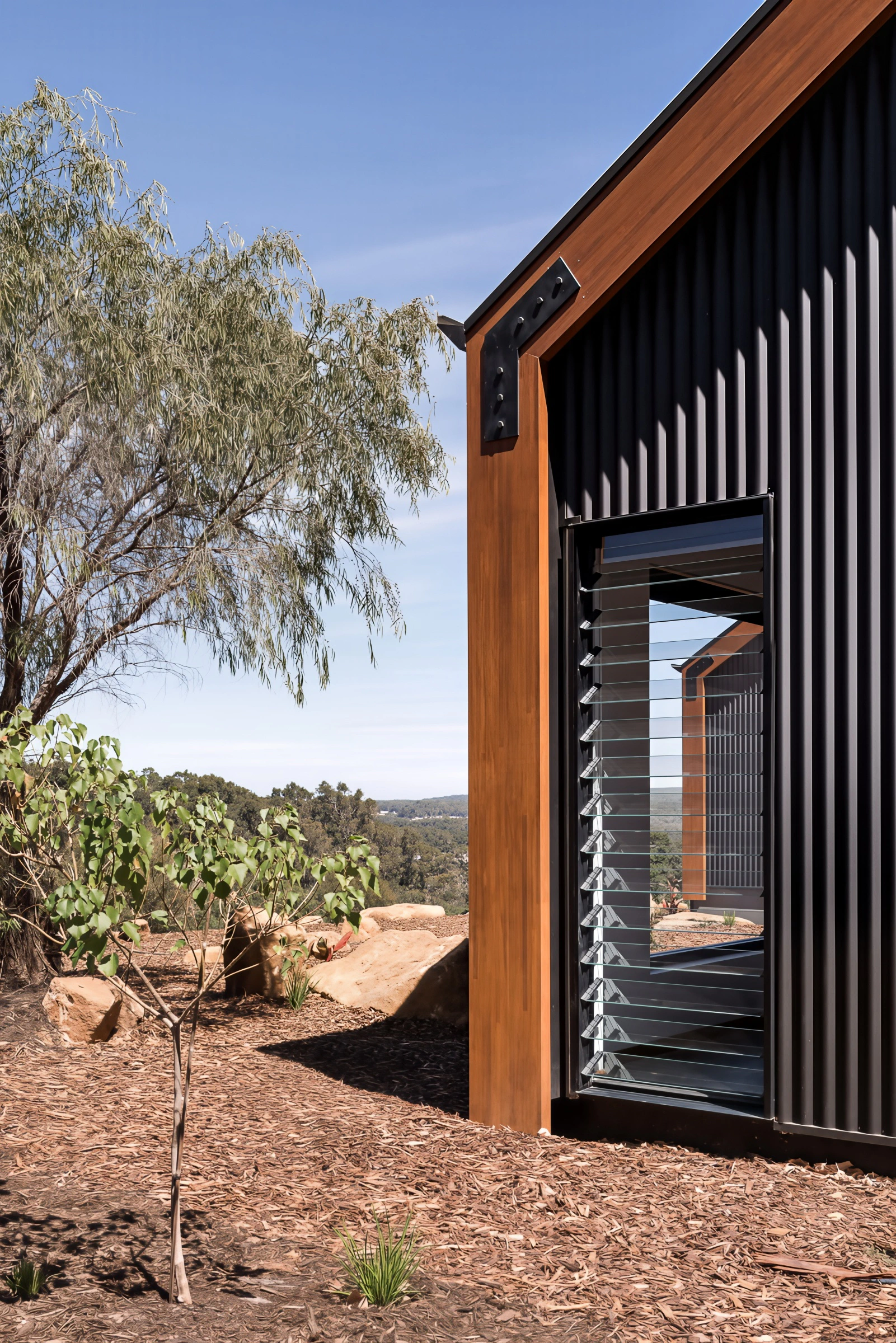
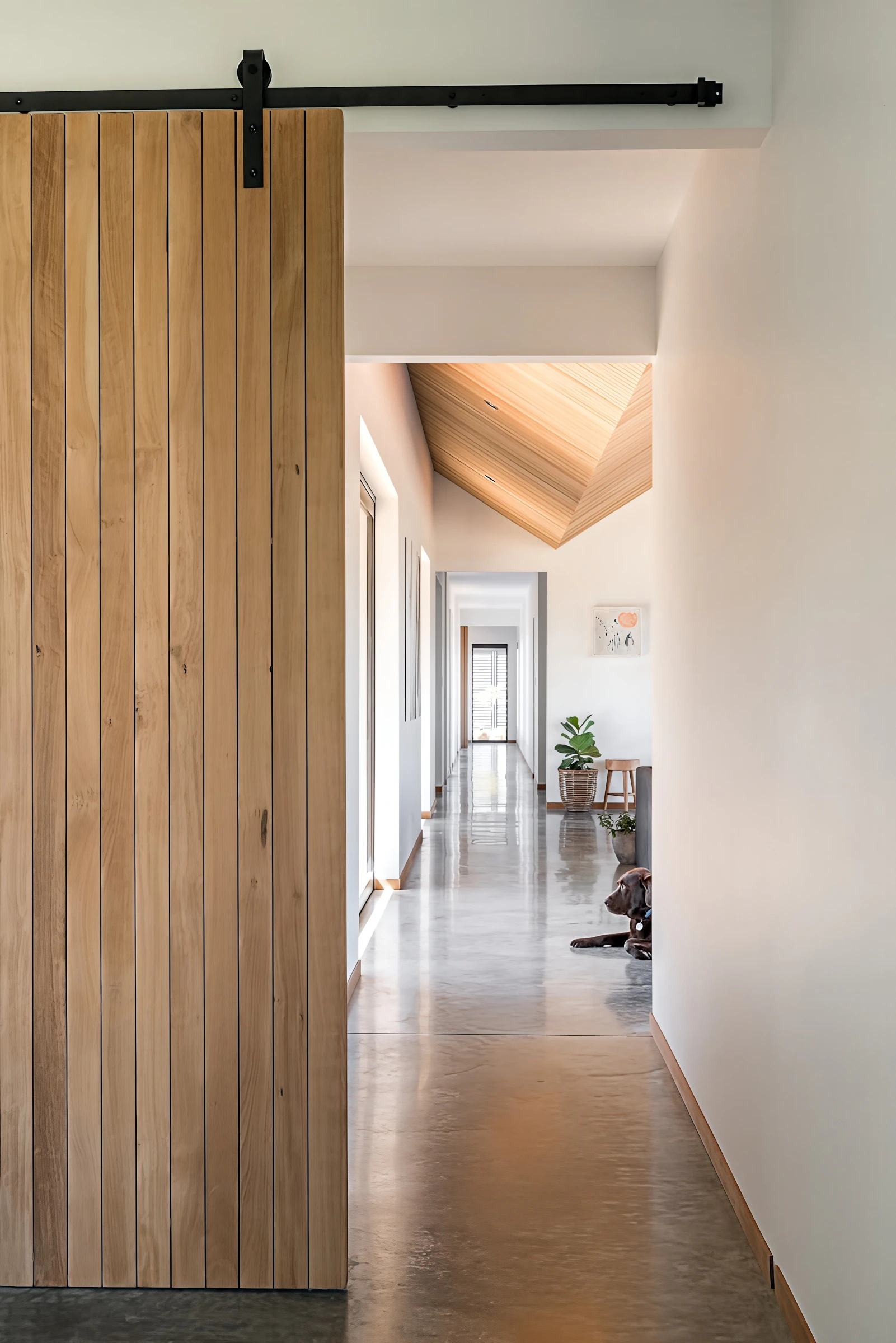
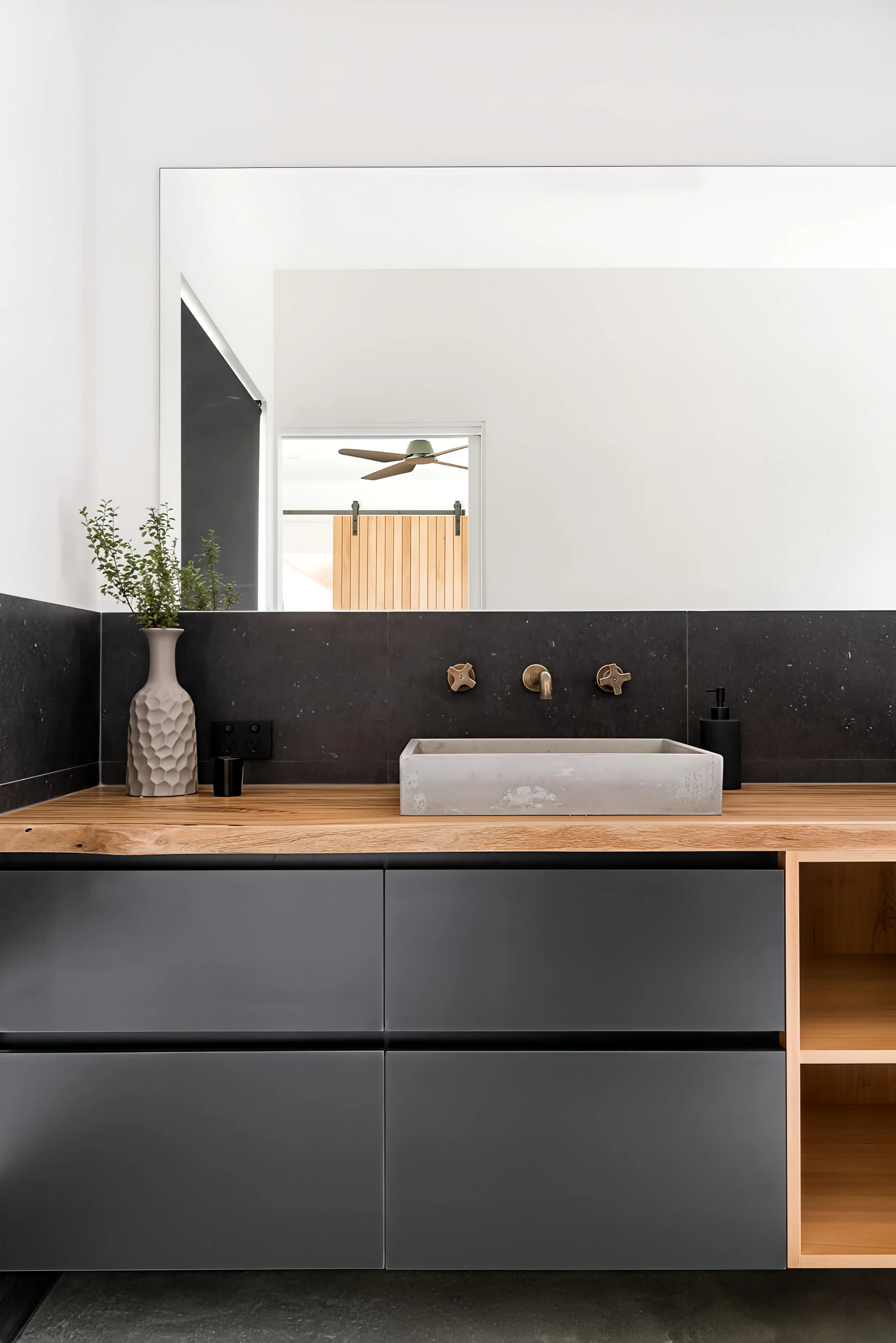
A long, straight circulation spine anchors the dwelling, aided at either end by louvred openings that harness breezes and enable cross-ventilation. This careful spatial arrangement helps the home respond intimately to both its site and the changing needs of future occupants. The interiors are unified through the repetition of timber—lining ceilings, structural gables, and cabinetry—establishing harmony and a sensory connection to place. Such exposed timber references local farm architecture, while the low-sheen, burnished concrete floor maintains the rural context narrative, offering a resilient surface for day-to-day life.
Sustainability in Mind
The home’s orientation and form actively engage environmental sustainability. Thoughtful alignment with the sun’s passage maximises solar gain during winter and shading in summer, providing passive thermal performance without reliance on mechanical intervention. The choice of readily available cladding and decking materials minimises ongoing maintenance, ensuring the dwelling can be enjoyed equally well as a lock-and-leave short-stay rental or a year-round family residence. Openings and louvres encourage cross-ventilation, while large windows invite natural light deep into the living spaces, reducing the need for artificial illumination during the day.
These practical, considered features are woven seamlessly into the dwelling’s architectural language, contributing to both liveability and longevity. The burnished concrete floors, beyond their unmistakable aesthetic, provide a functional surface that better regulates internal temperatures and echo the project’s commitment to materials that age gracefully and require minimal upkeep.
A standout example of sensitive, robust rural design, the project was recognised with the 2018 BDAWA Design Award for Best New Residential Design in the $500k–$1M category, a testament to its exemplary response to brief, setting, and contemporary Australian living.