Orient Street House
Reimagining of an 1890s limestone stable and a 1924 clay brick cottage
Fremantle architect
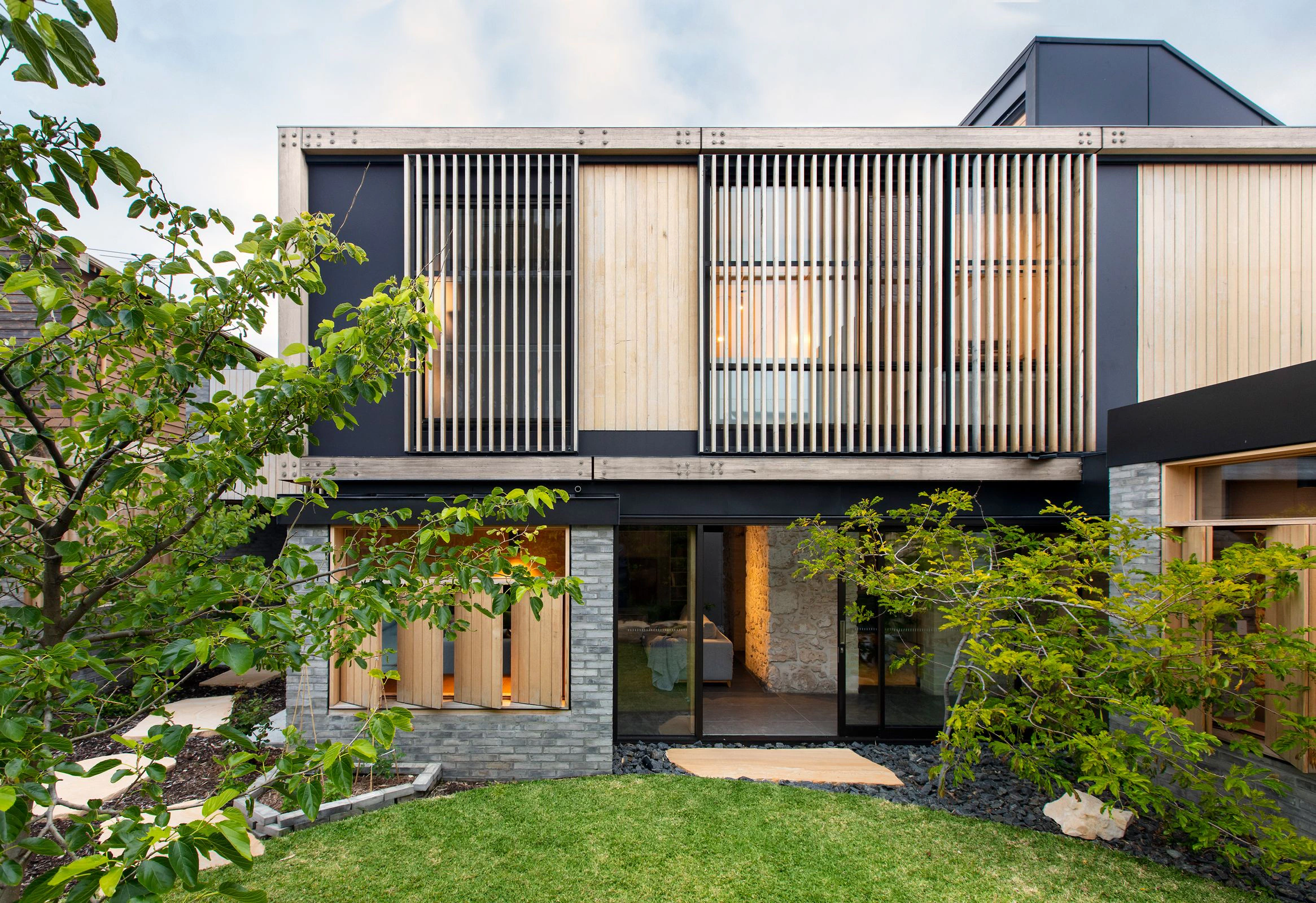
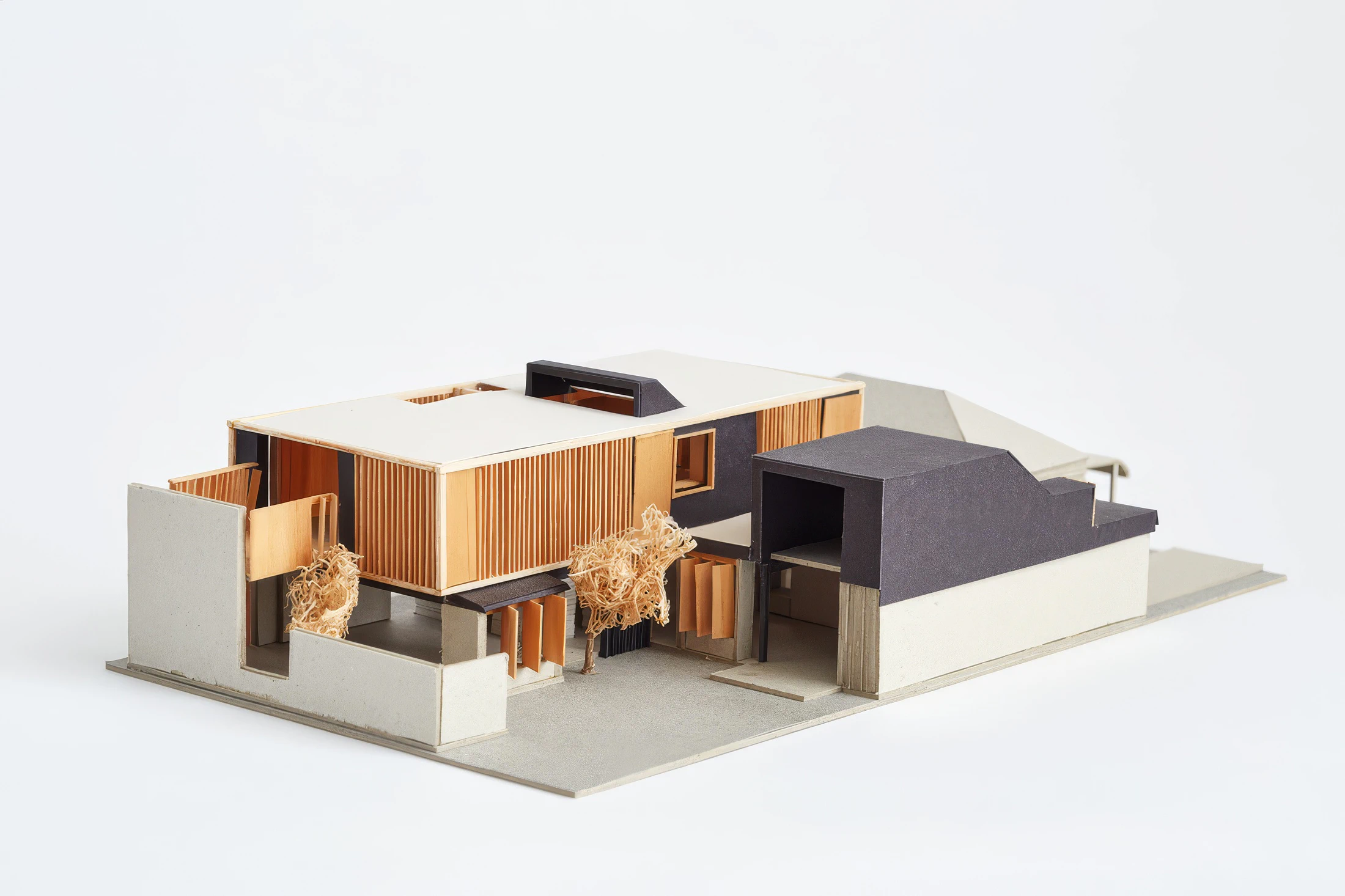
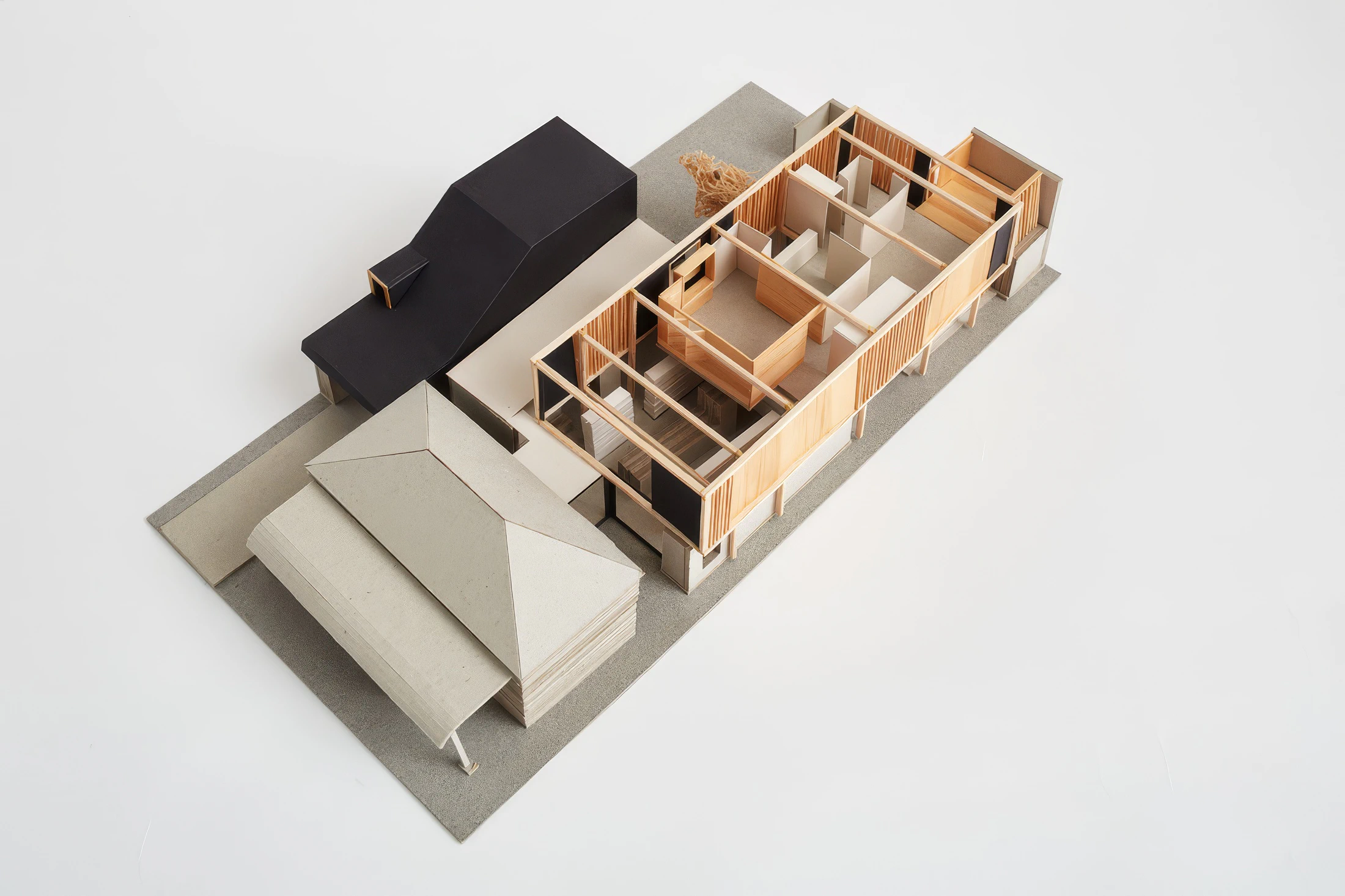
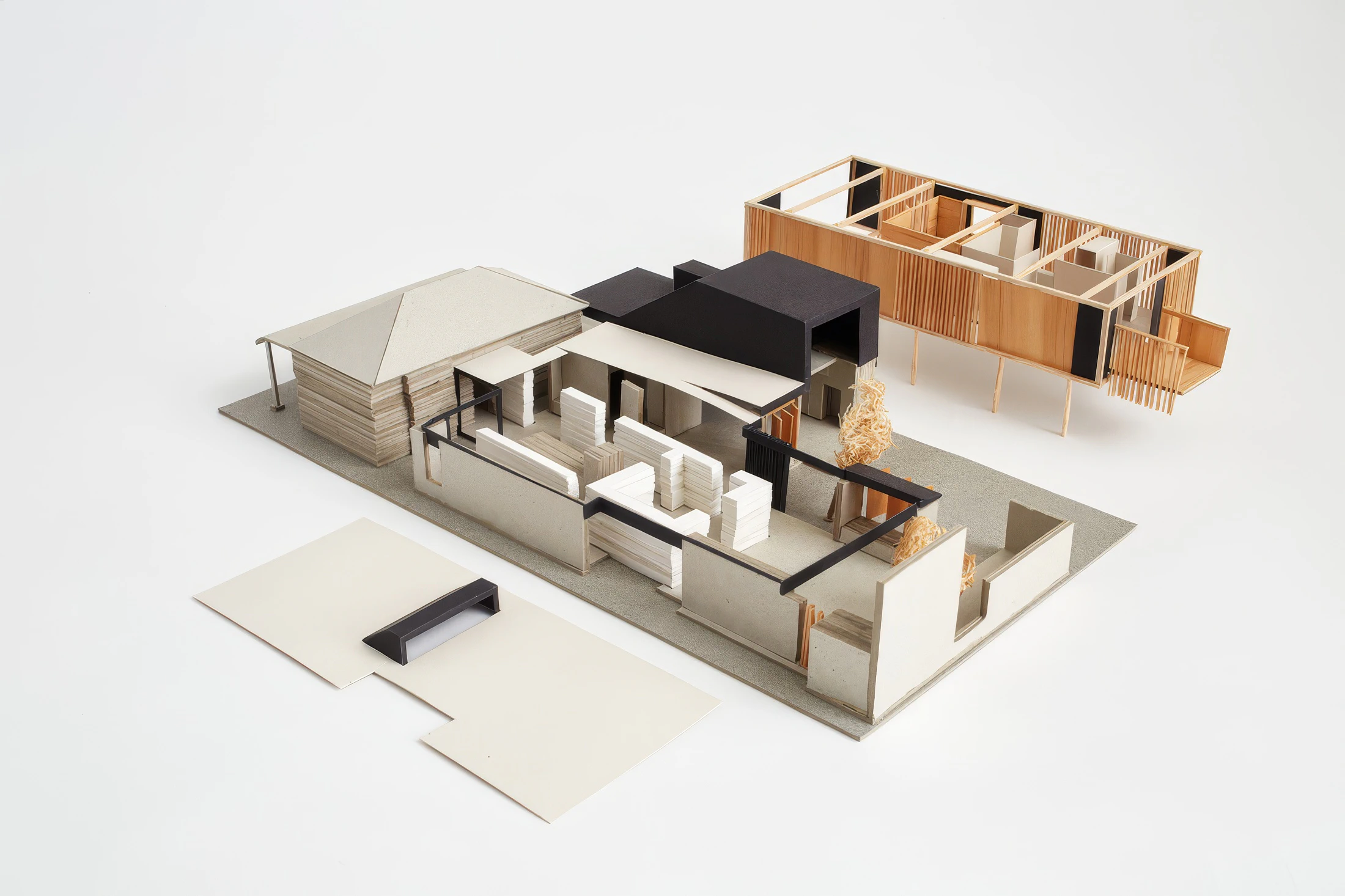
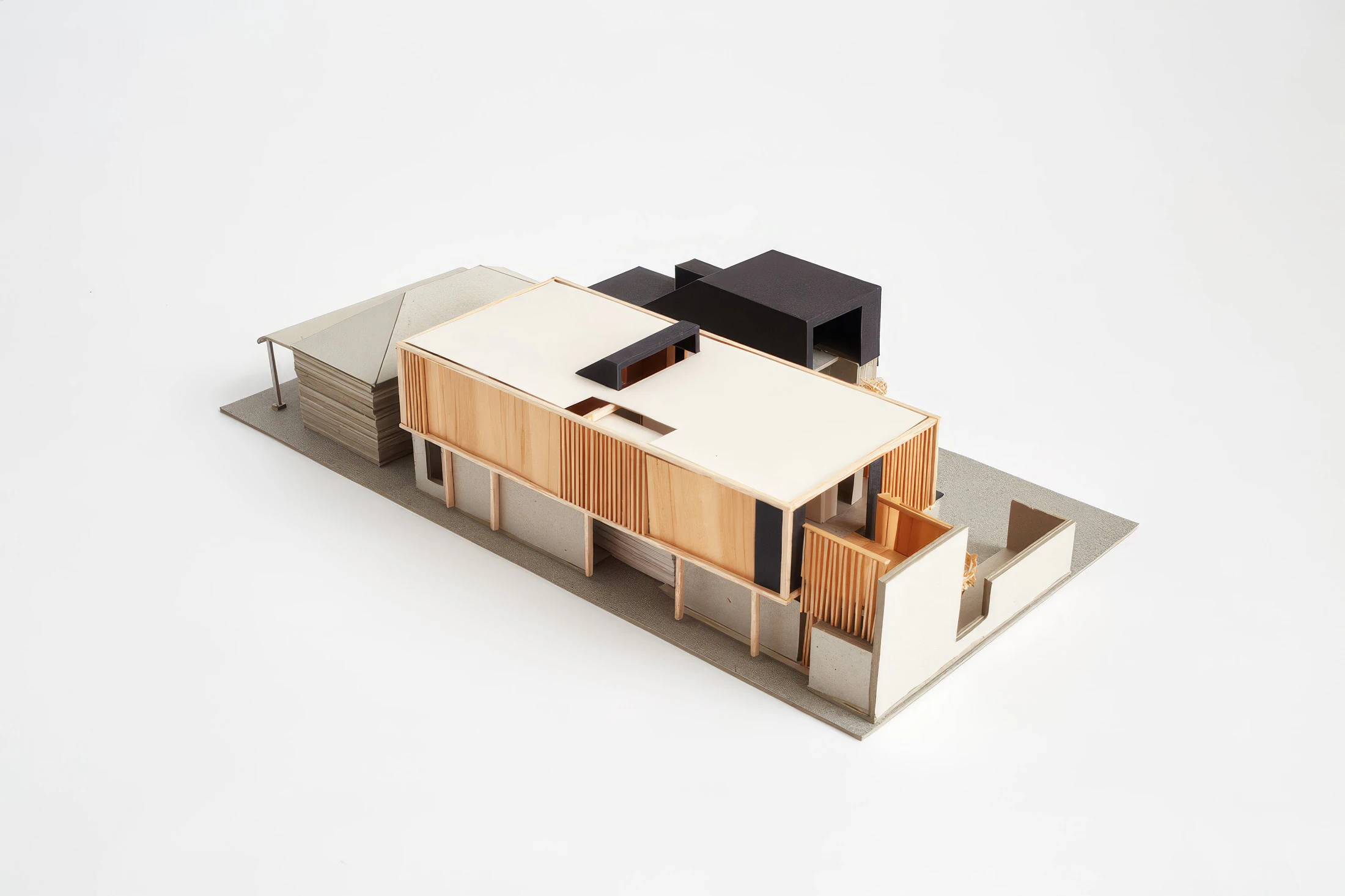
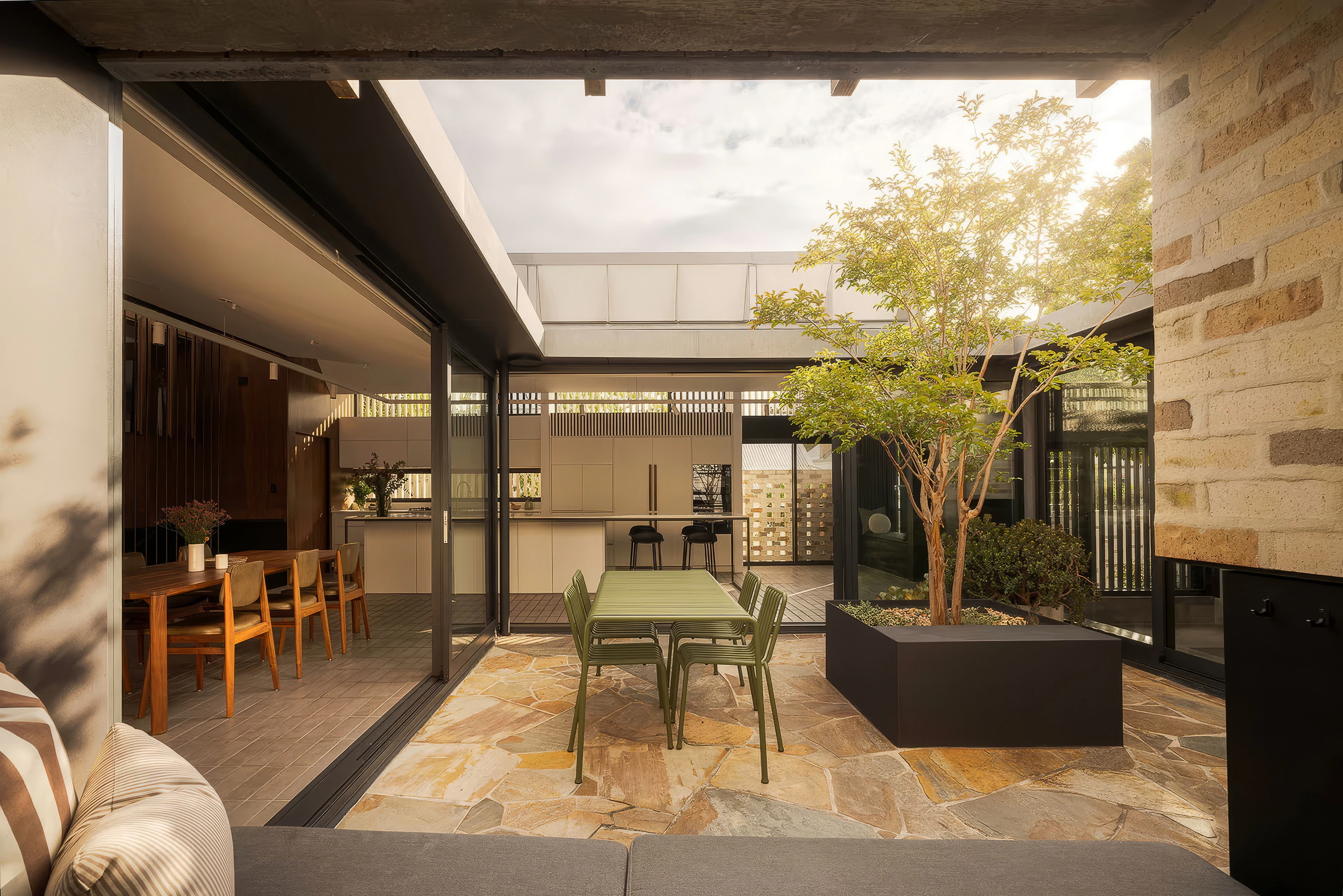
The contemporary additions were carefully designed to sit around the old stable walls, creating a protective enclosure. The architectural style blends
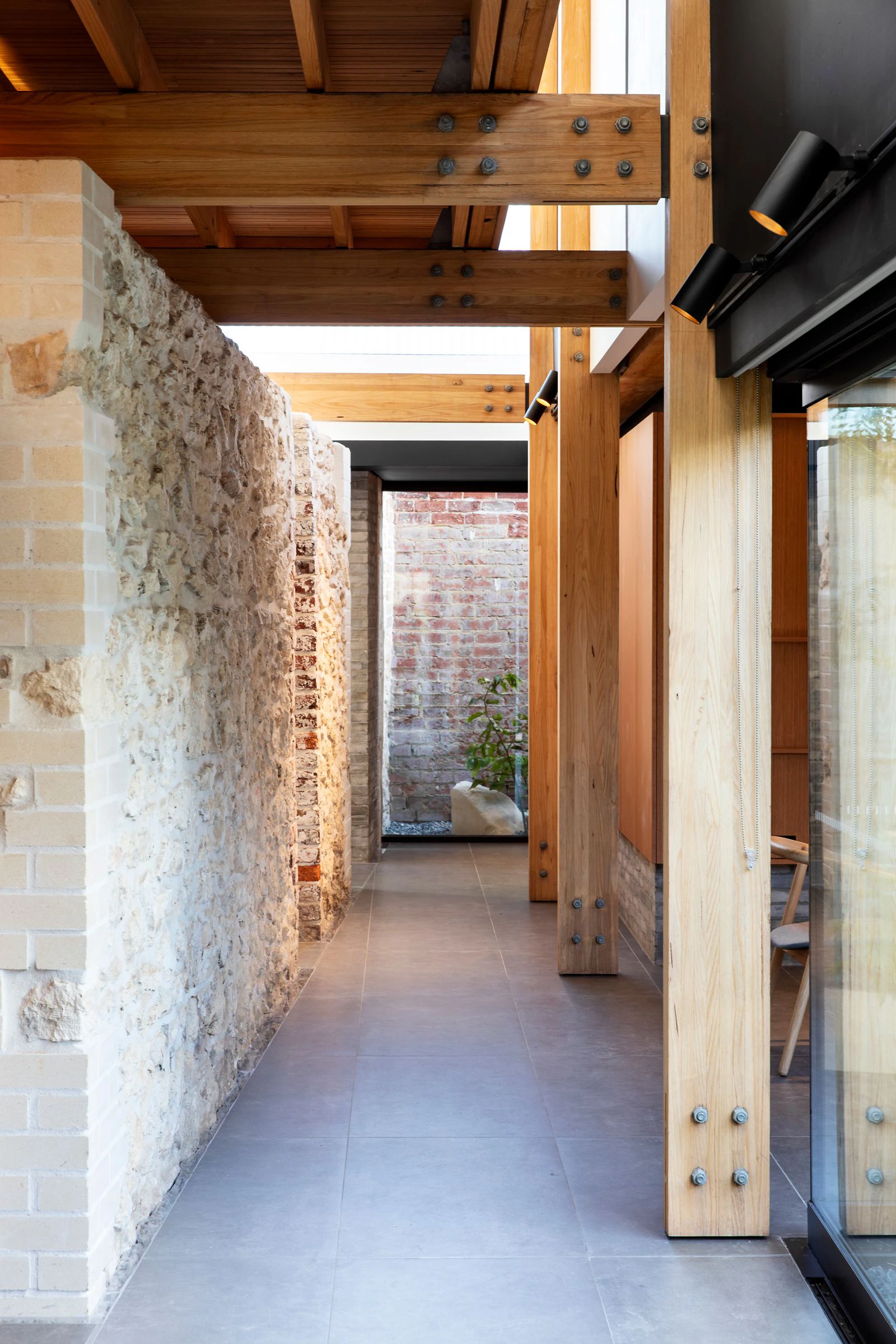
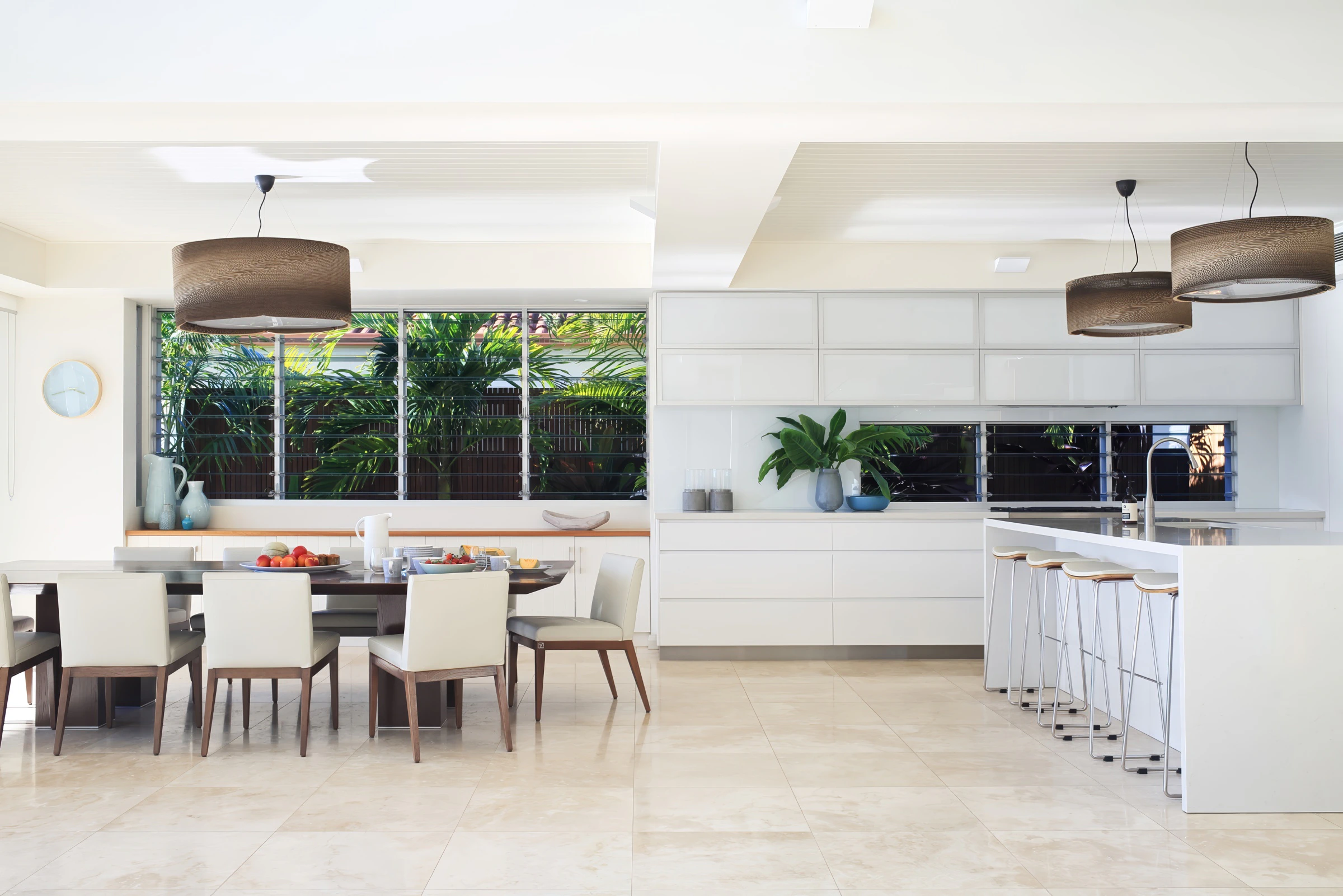
At the heart of this semi-enclosed space lies the kitchen—a deliberate design choice that allowed it to take a front-and-centre role in the home. “Putting the kitchen here allowed us to co-locate it with views to the old stove in the courtyard,” Stejskal explains. The design ensures that the kitchen plays a pivotal role in blending history with functionality, emphasising connection to the past while catering to modern needs.
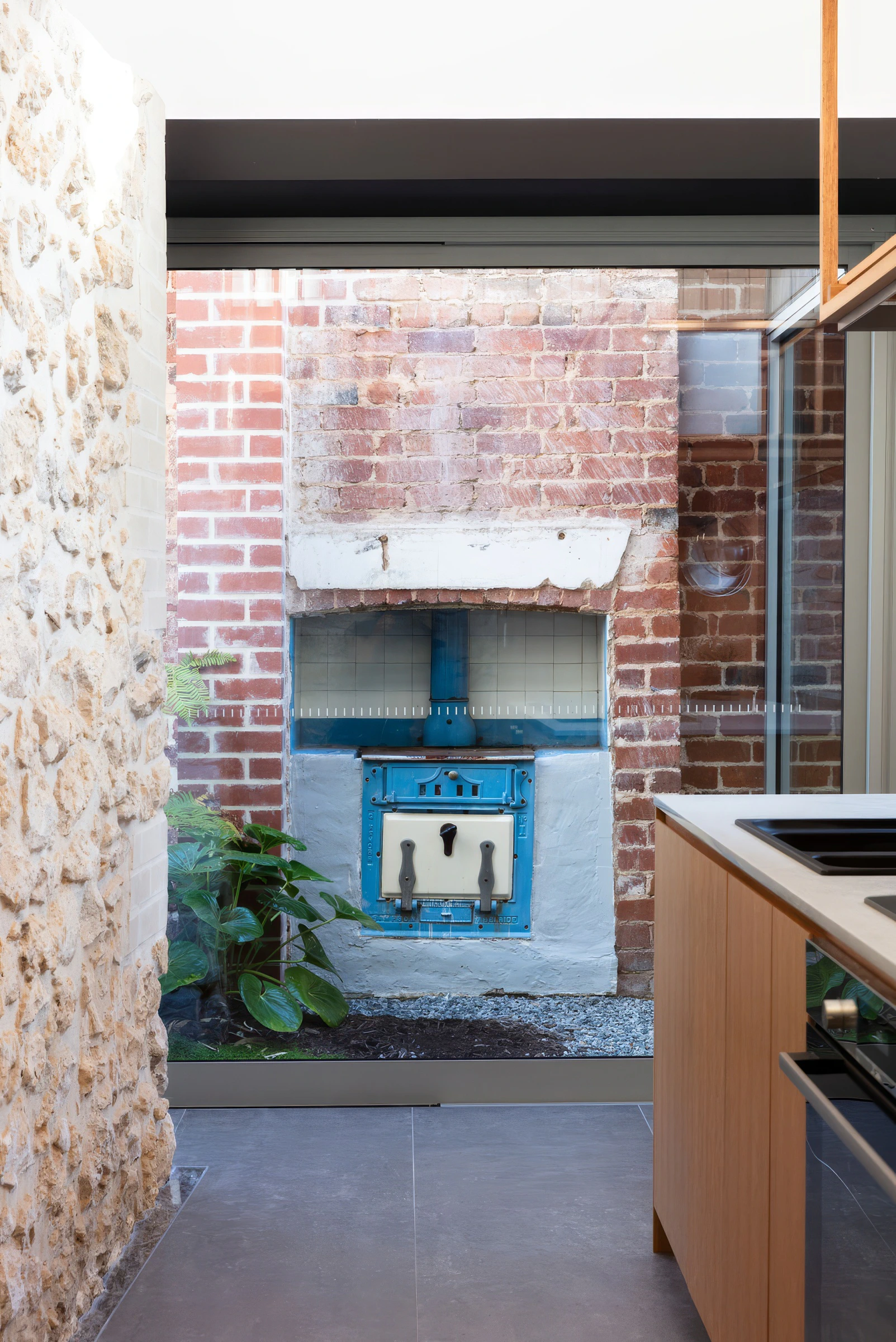
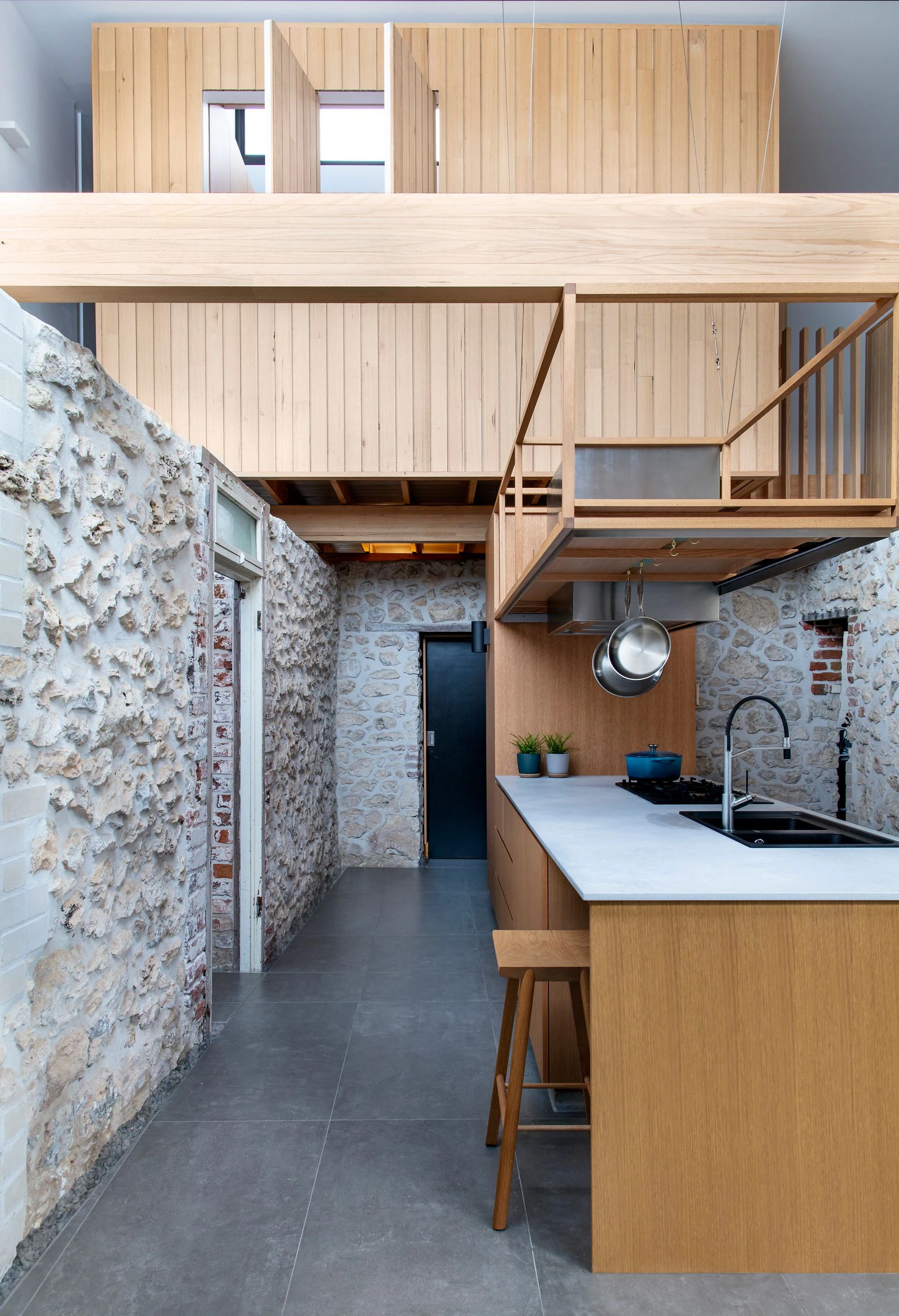
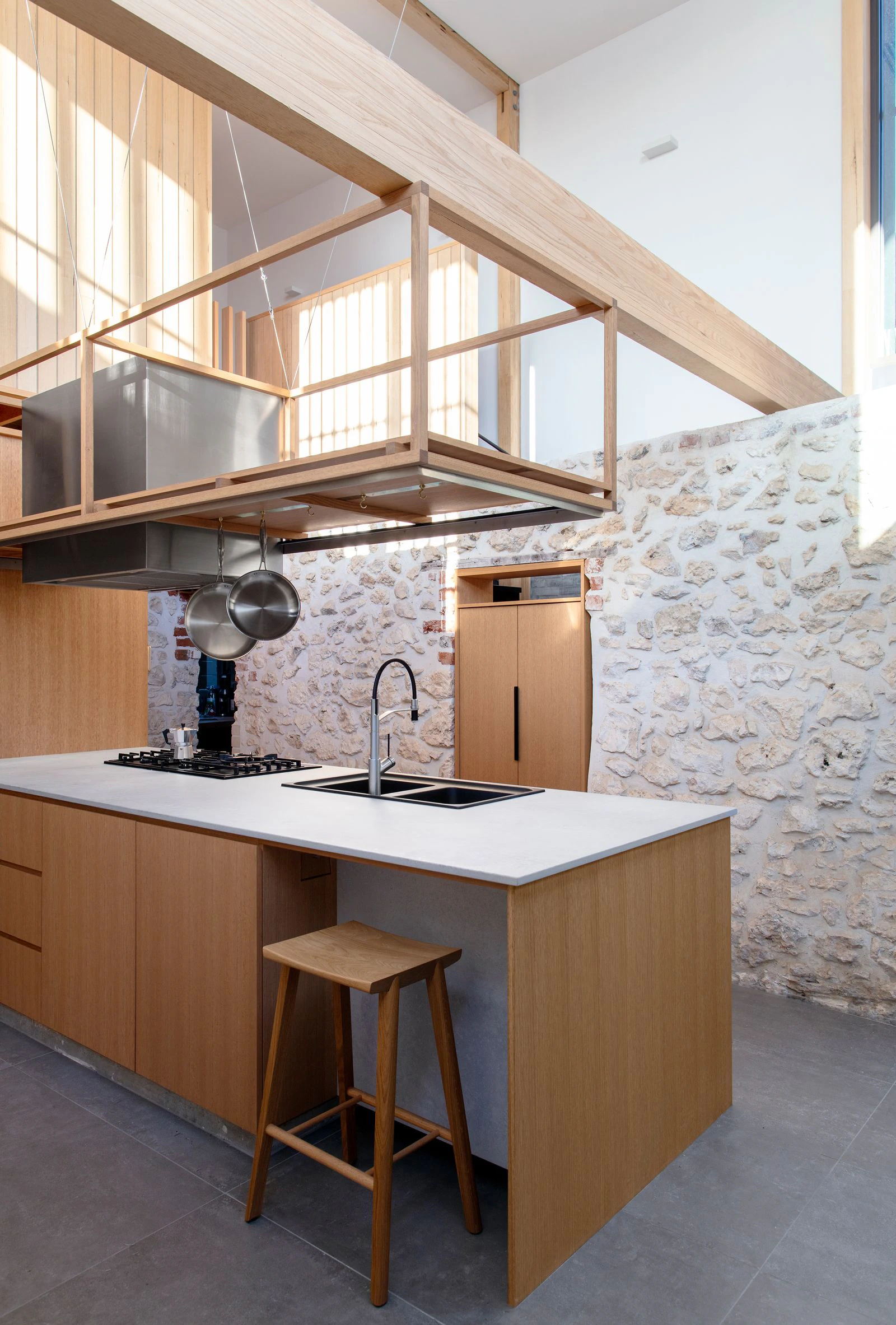
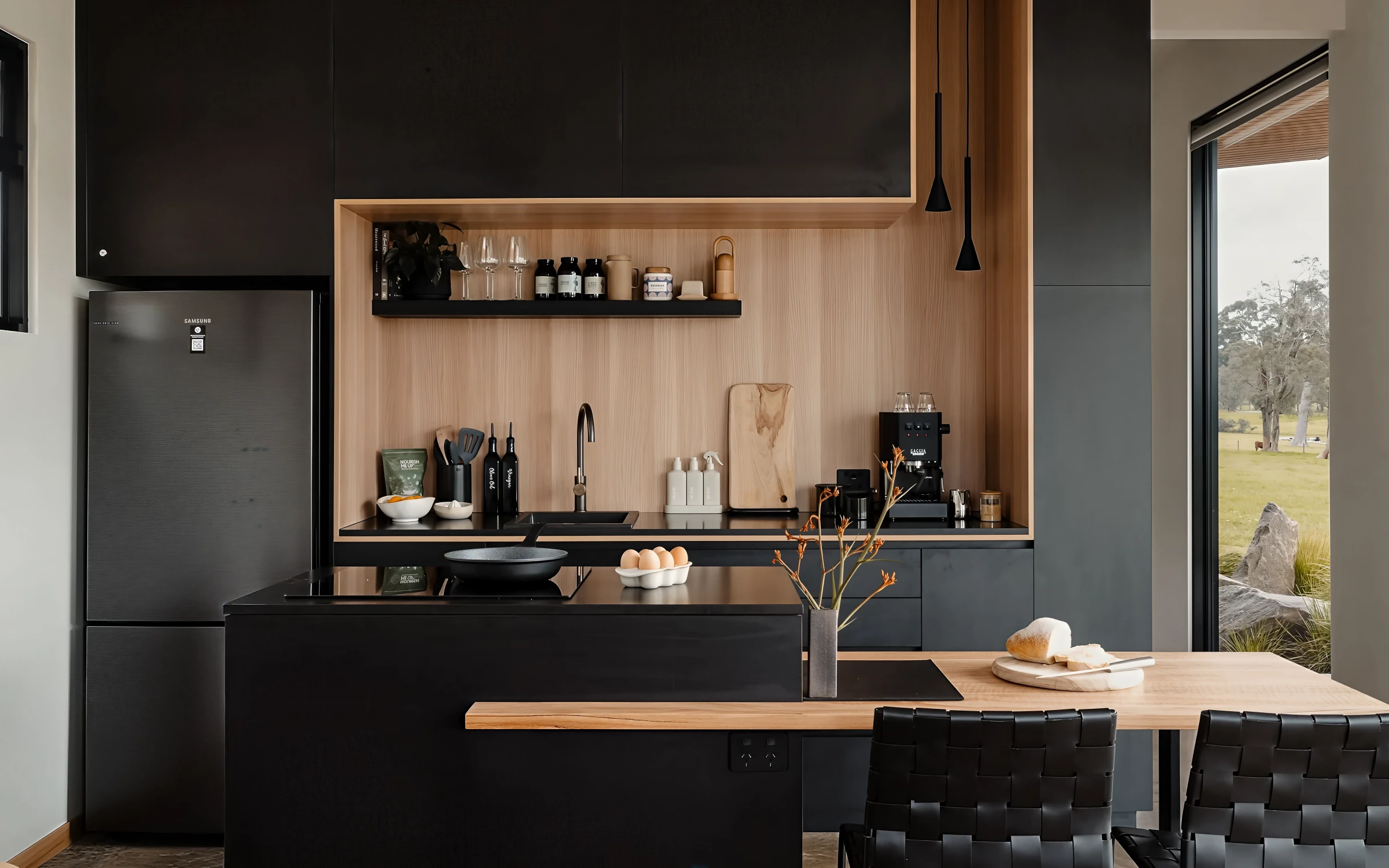
The kitchen itself is a model of efficiency and understated elegance. Functional elements are grouped into a single Tasmanian oak joinery unit that houses the cooktop, sink, fridge, drawers, and cupboards. The benchtop, made from reconstituted stone, streamlines cooking and cleaning tasks, while overhead storage and extraction systems are suspended to avoid disturbing the historic limestone walls. Two doorways cut into the limestone lead to a scullery and pantry, using existing openings to enhance functionality while maintaining the structure's integrity. Natural sunlight from above highlights the kitchen’s compact yet striking design, keeping the limestone’s texture in full view and celebrating its historical significance.
A new staircase, positioned just outside the stable walls but enclosed within the modern structure, links the ground and upper floors. The upper level serves as a private retreat for the homeowners and reflects the architectural language of the lower floor with a sleek, minimalist design. The sleeping chamber and ensuite maintain a contemporary sensibility, with simple, natural materials that complement the earthy textures of the limestone below. The ensuite’s shower, wrapped in timber battens, creates an oasis of privacy with views extending across the suburb. The vertical wooden slats add a sense of warmth and shelter while echoing the exposed beams found throughout the house.
An archival search and on-site investigation revealed a story worth preserving and telling. The project evolved around what we discovered. It is the ultimate sustainability and privilege to re-use and adapt existing structures.Philip Stejskal Architecture
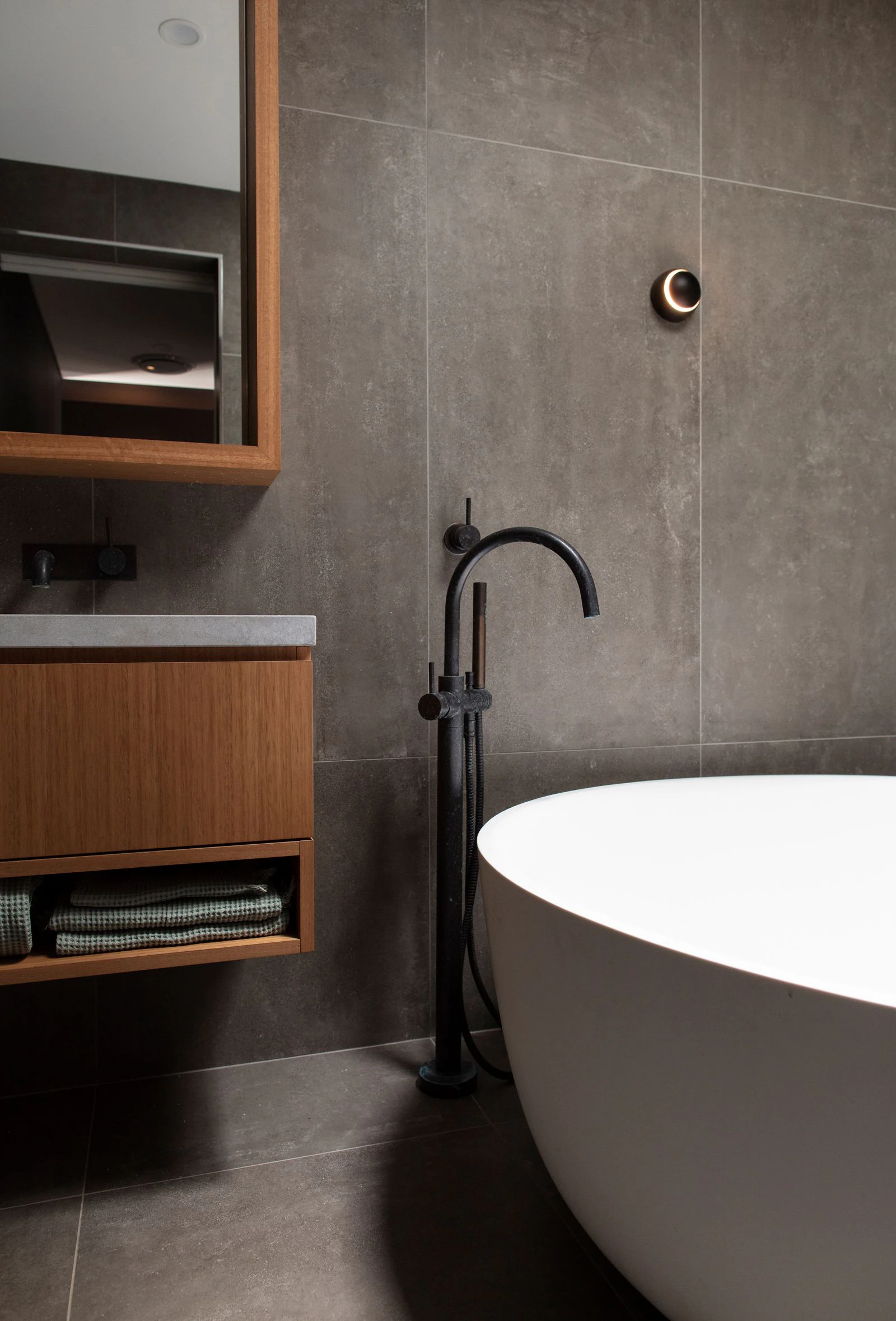
Downstairs, the children’s bathroom reflects the home’s modern aesthetic with its dark tones and dramatic lighting. A circular bath serves as the centrepiece, providing a tranquil spot for relaxation. The freestanding faucet and ceiling-mounted rain showerhead enhance the room’s spa-like feel, emphasising restoration and introspection within the home’s contemporary setting.
The design successfully blends old and new, transforming a historical site into a home that honours its past while embracing contemporary living. By preserving and celebrating the stable’s relics, Stejskal’s design ensures that the site's history remains integral and visible to future generations, while the thoughtful modern additions provide comfort, functionality, and timeless beauty.