The Hills Opera House
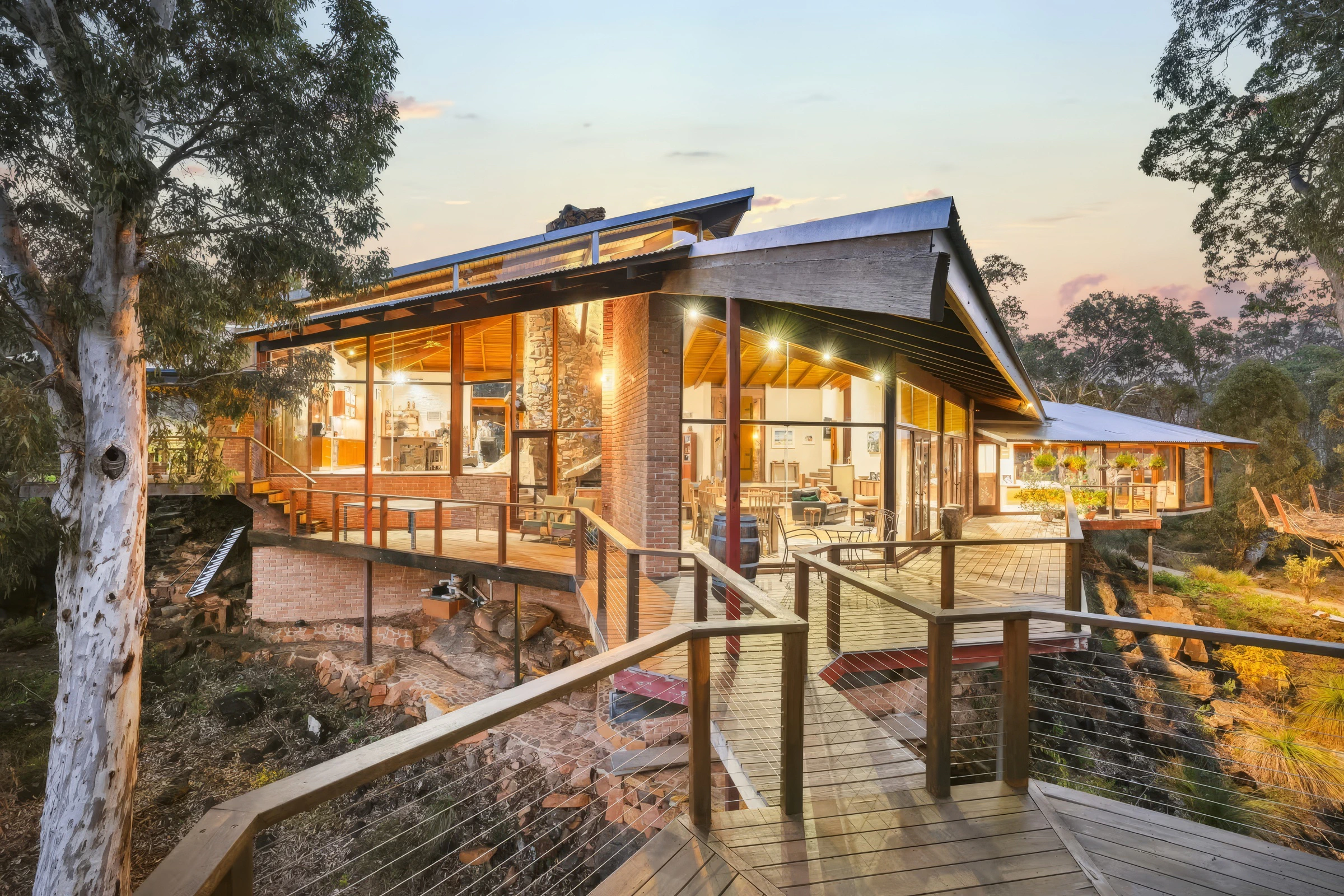
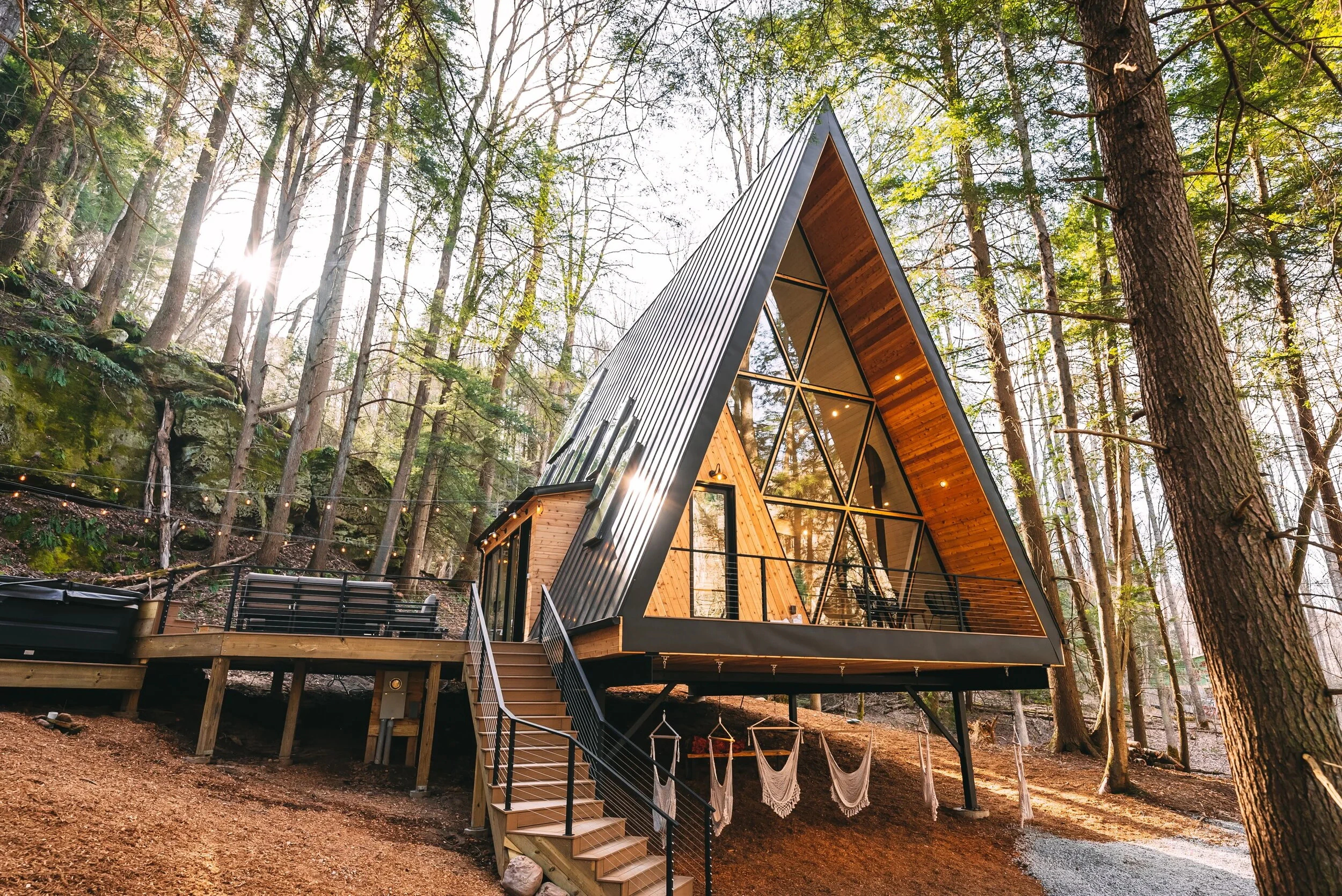
Approached from the valley, the building first appears as a set of horizontal planes slipping between trunks and granite outcrops. Reading the scene, the eye tracks the line of the ridge, then the decks that project from it, before registering the brick volumes behind. Only after that sequence does the house distinguish itself from the bush, revealing how deliberately it has been threaded through the 7.1‑hectare site above Bickley.
Designed in the early 1990s by Perth architect Lynthorne (Lin) Matthews, the two‑storey home belongs to Western Australia’s bush‑modern tradition, but it pushes the language towards theatre. Long, low roofs echo the contours of the hillside while steel “tree” supports lift circular platforms clear of the slope, setting up a suspended promenade at canopy height. From oblique angles, the warm brickwork and timber cladding recede into the colour of marri and jarrah bark, so the building reads less as an object and more as a clearing folded into the forest.
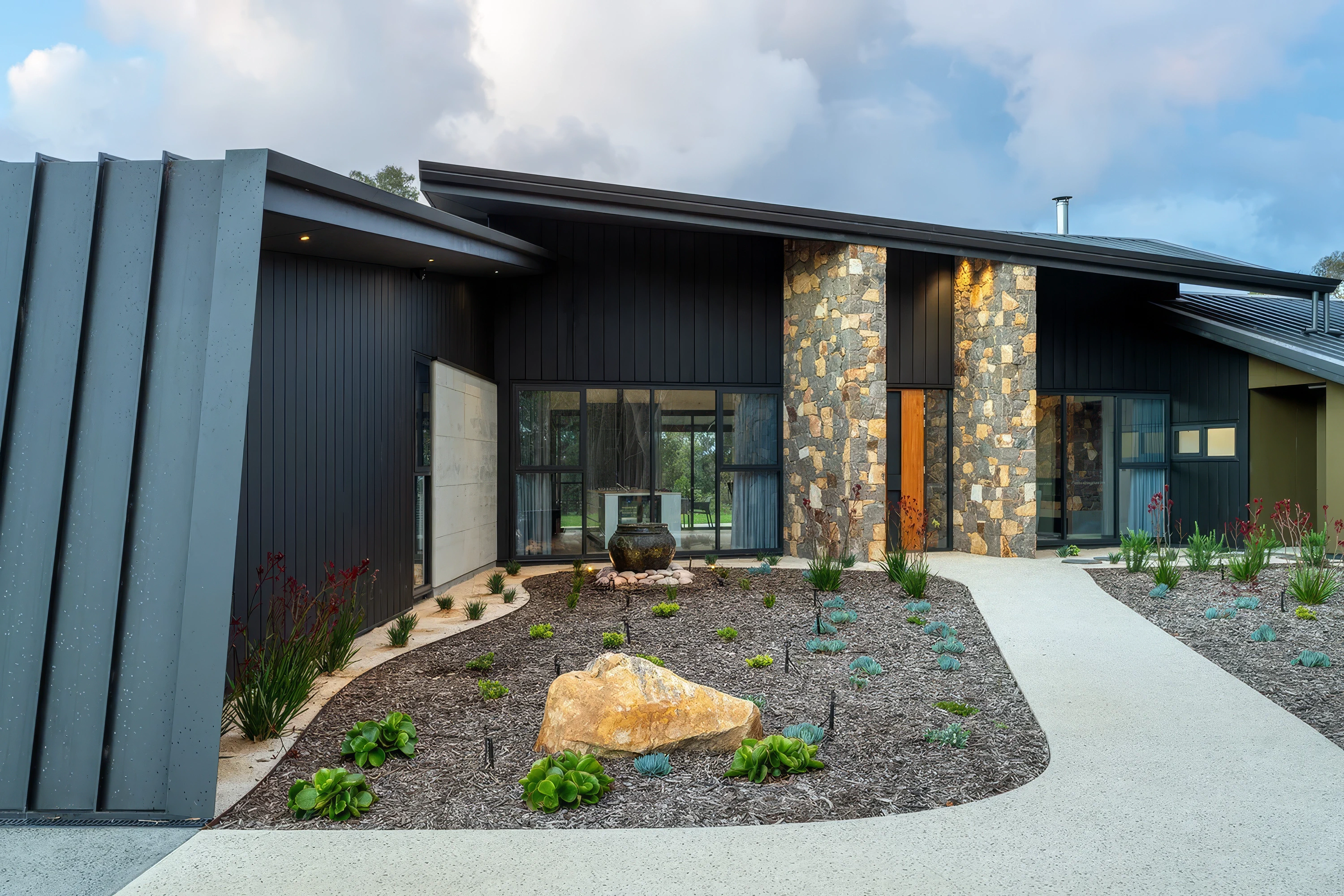
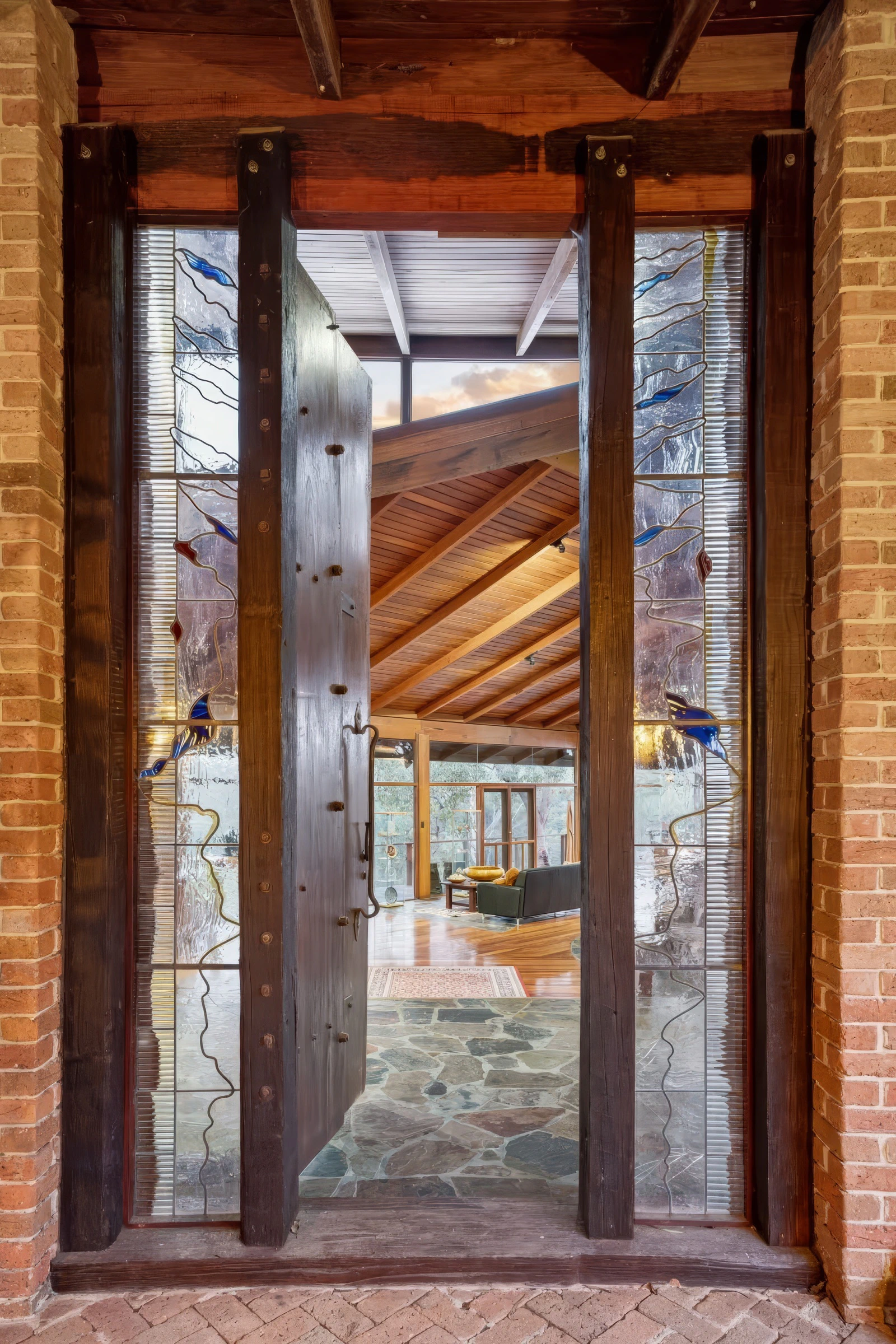
At the entrance, the heavy timber door is held between slender bands of textured and stained glass, all contained within a brick-and-wood frame. Light fractures across the glass, pools on the stone floor and is absorbed by the dark boards, staging a moment of compression before the interior opens out. Crossing the threshold becomes a choreographed transition from bush track to auditorium.
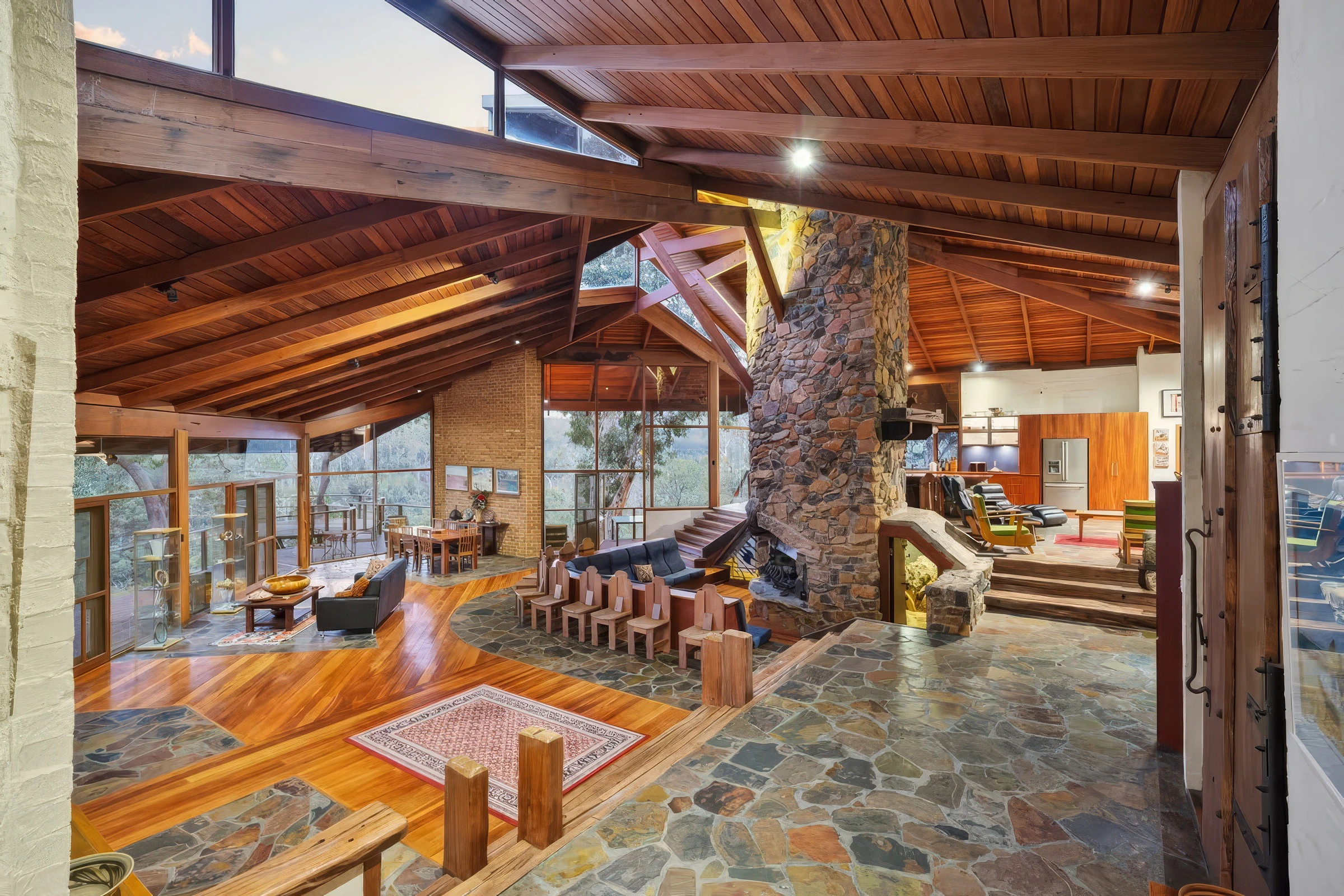
Inside, a single, expansive volume unfolds under raked timber ceilings. Here, the eye is pulled first not to the view but to a cylindrical fireplace of rough local stone that anchors the room. Its mass and height, combined with the way the floor steps down into a curved, sunken lounge around its base, reveal its role as the plan’s organiser. Seating, dining zones, and circulation work like tiers around a stage, which is why the property is widely known as the “Hills Opera House”. Real estate agent Jo Skirrow calls the chimney “the biggest feature in the whole main room… it’s phenomenal.”
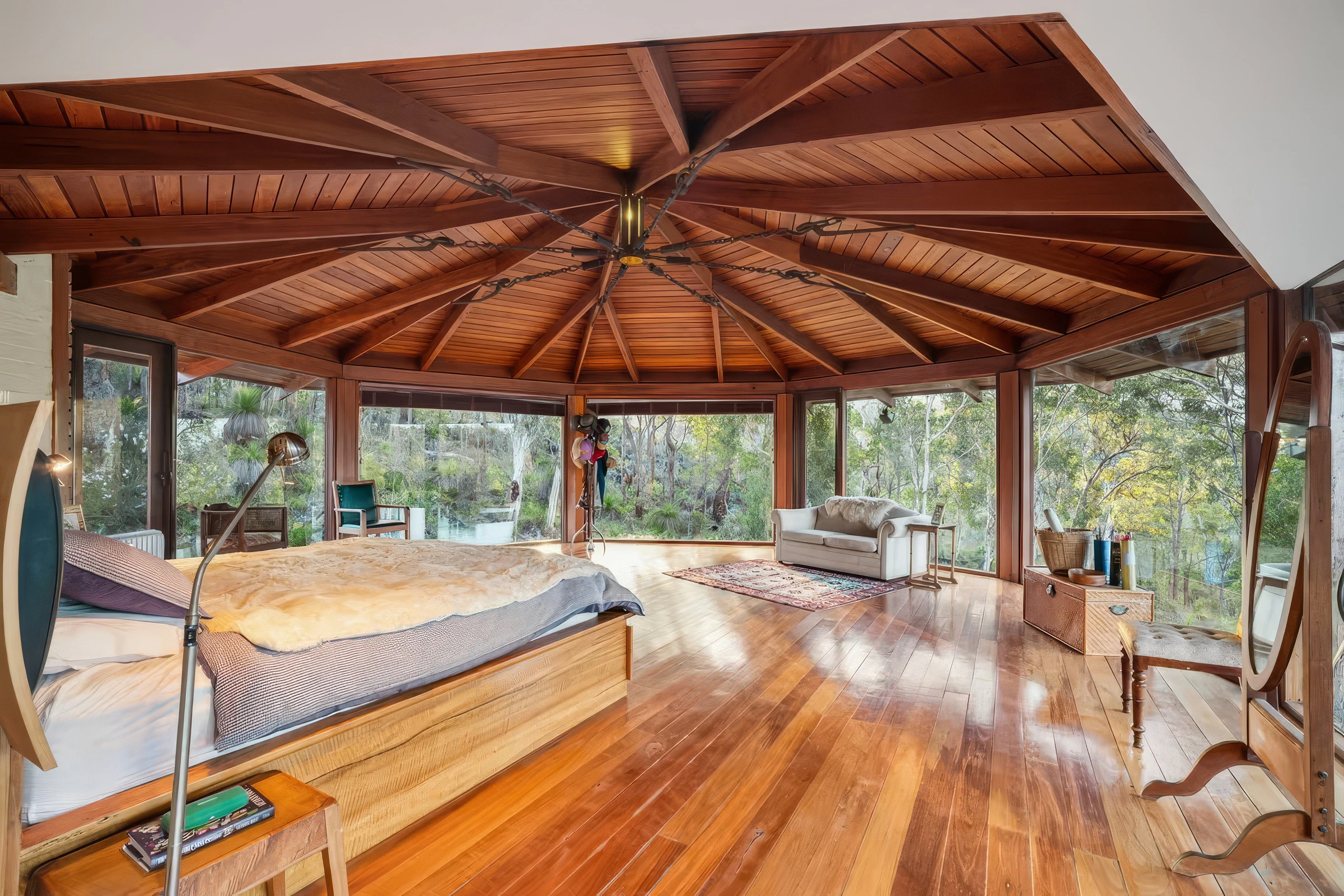
Private spaces extend the choreography vertically: a glazed main bedroom perched high to catch sunrise, and lower retreat rooms embedded in the cooler side of the hill. Continuous decks loop around the middle level, culminating in a circular lookout that hovers above the falling topography.
Matthews’ house is both a landscape instrument and a domestic theatre, using structural bravado to frame everyday acts – arriving, gathering, watching weather roll over the Perth Hills – with an operatic sense of occasion while remaining firmly rooted in the textures and colours of its bush setting.
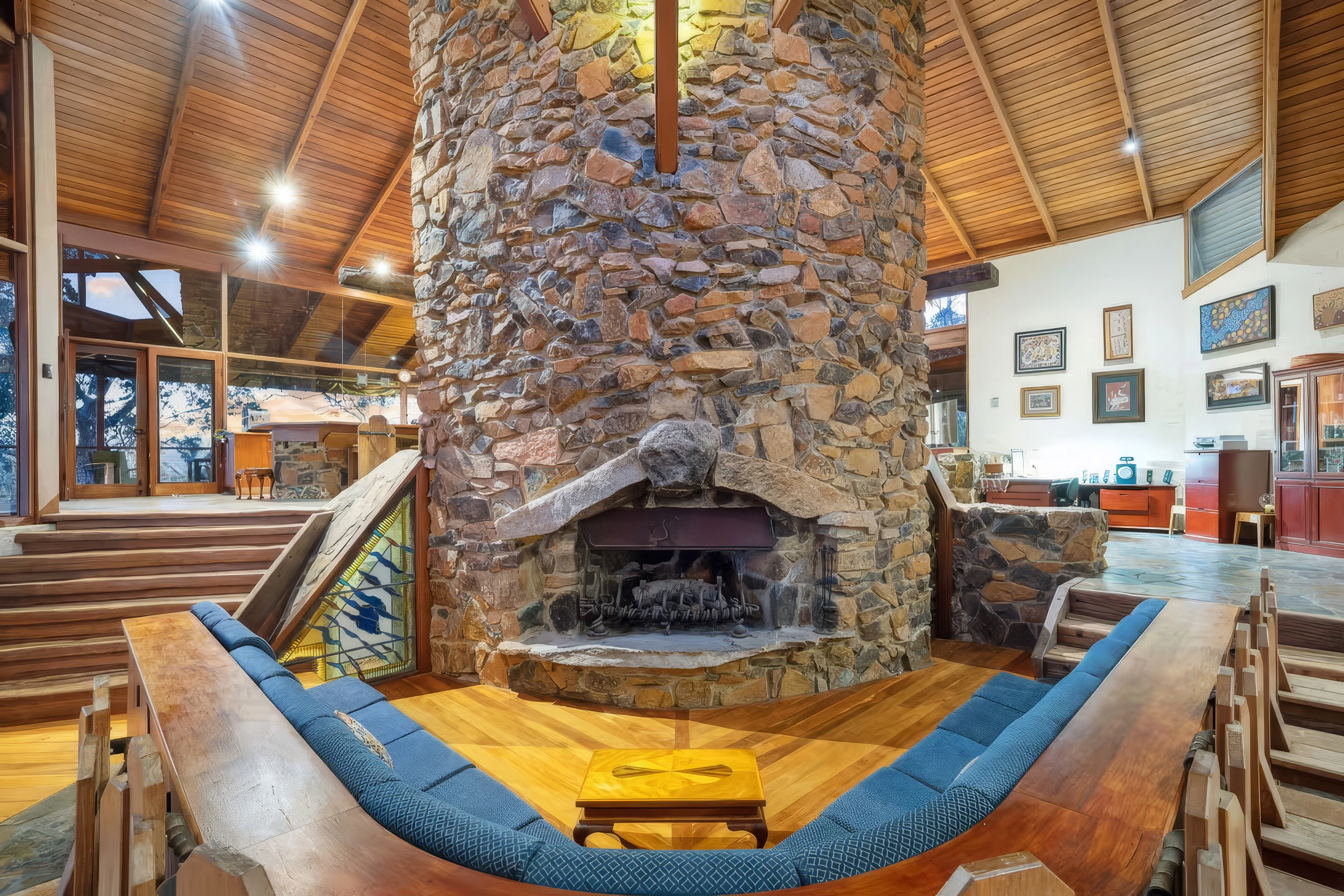
“It's got fires on both sides of it and it's absolutely stunning”Jo SkirrowReal Estate Agent