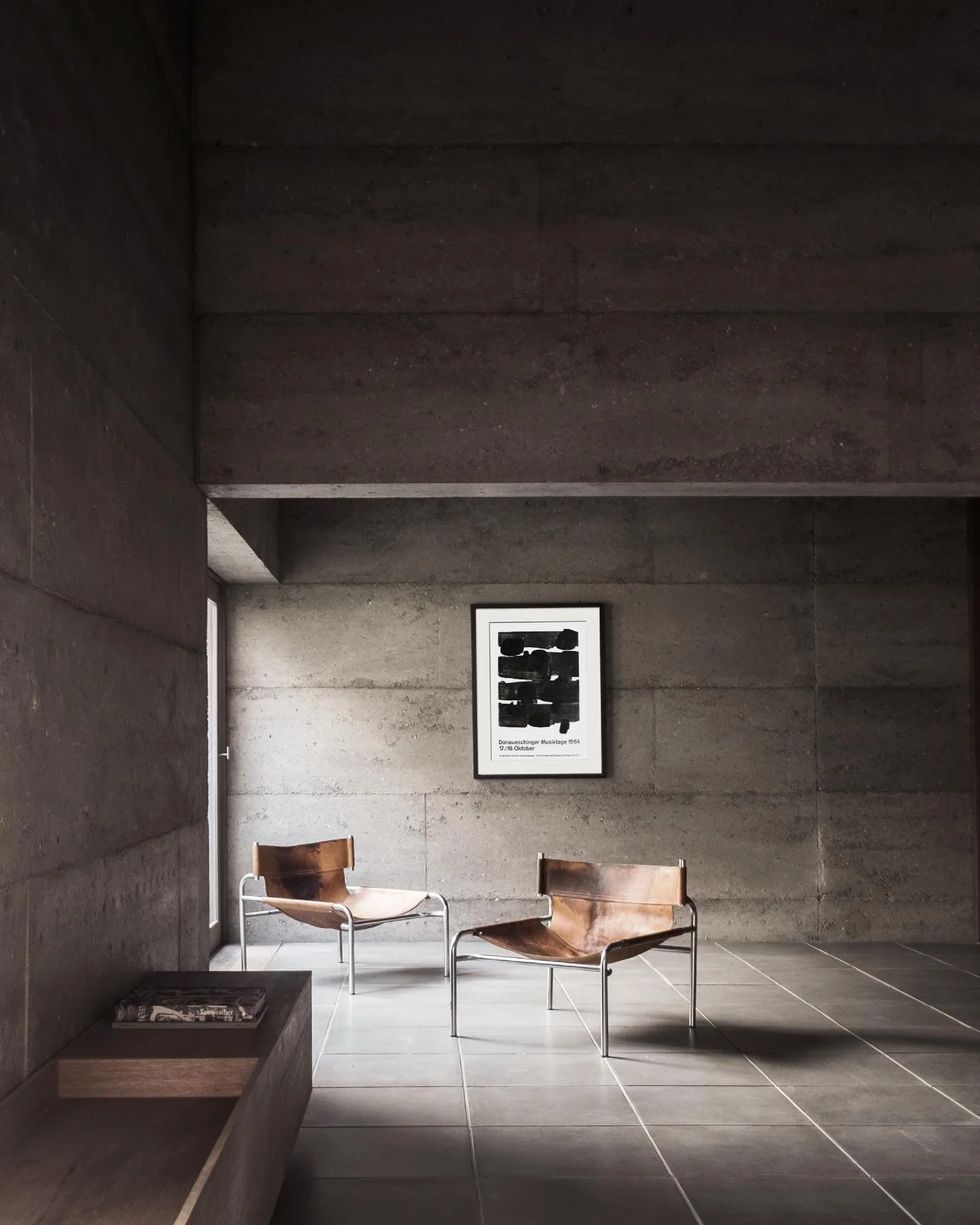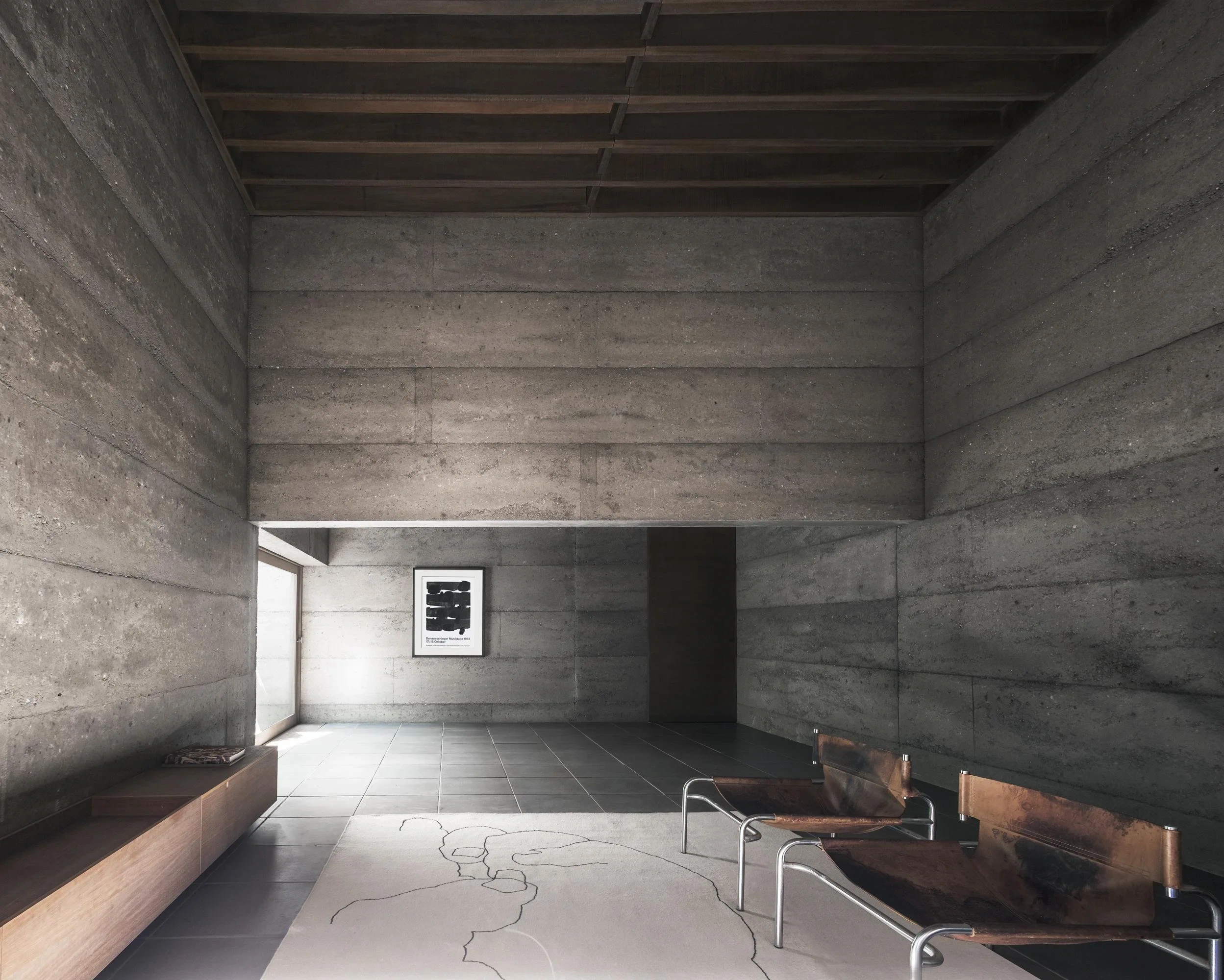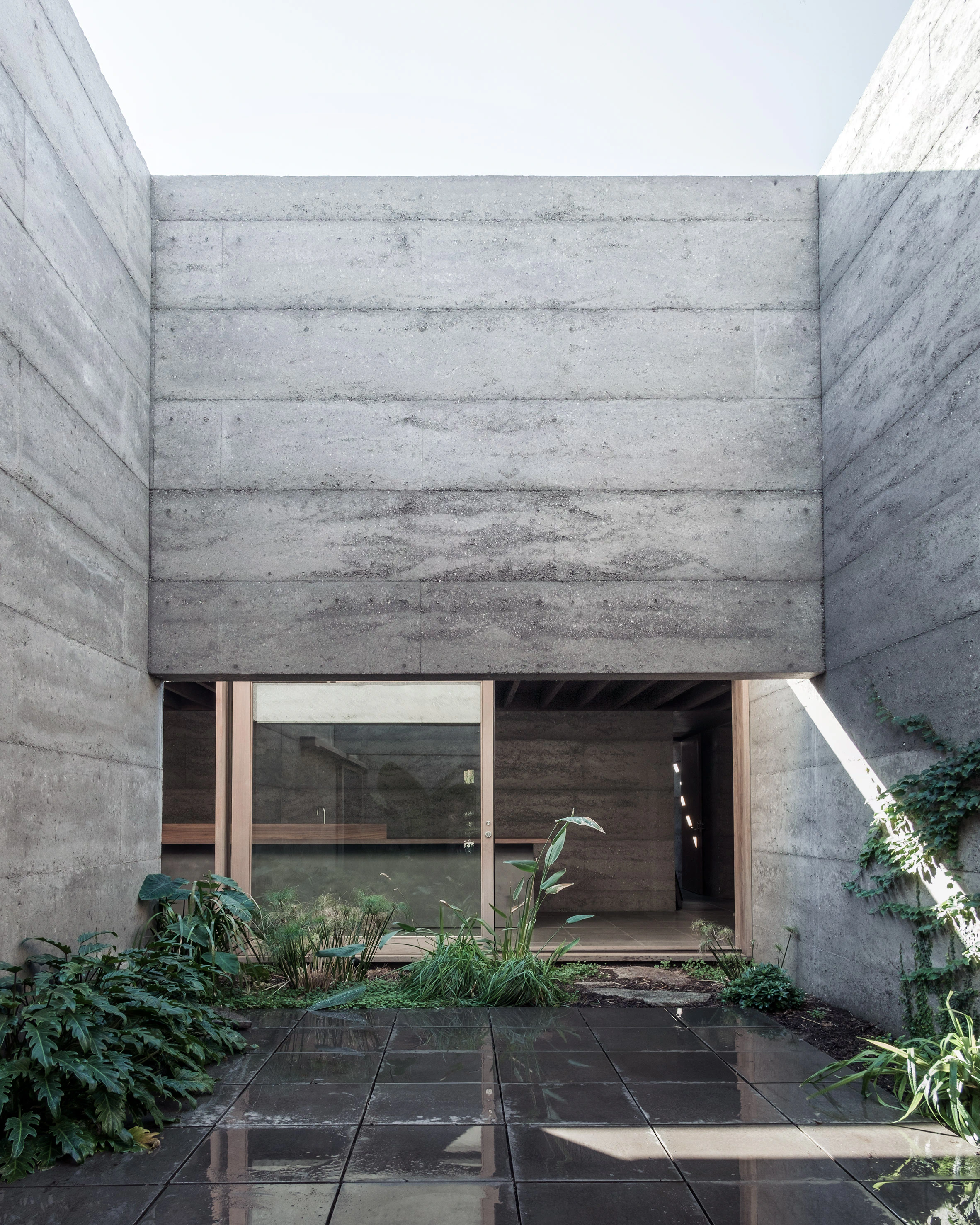
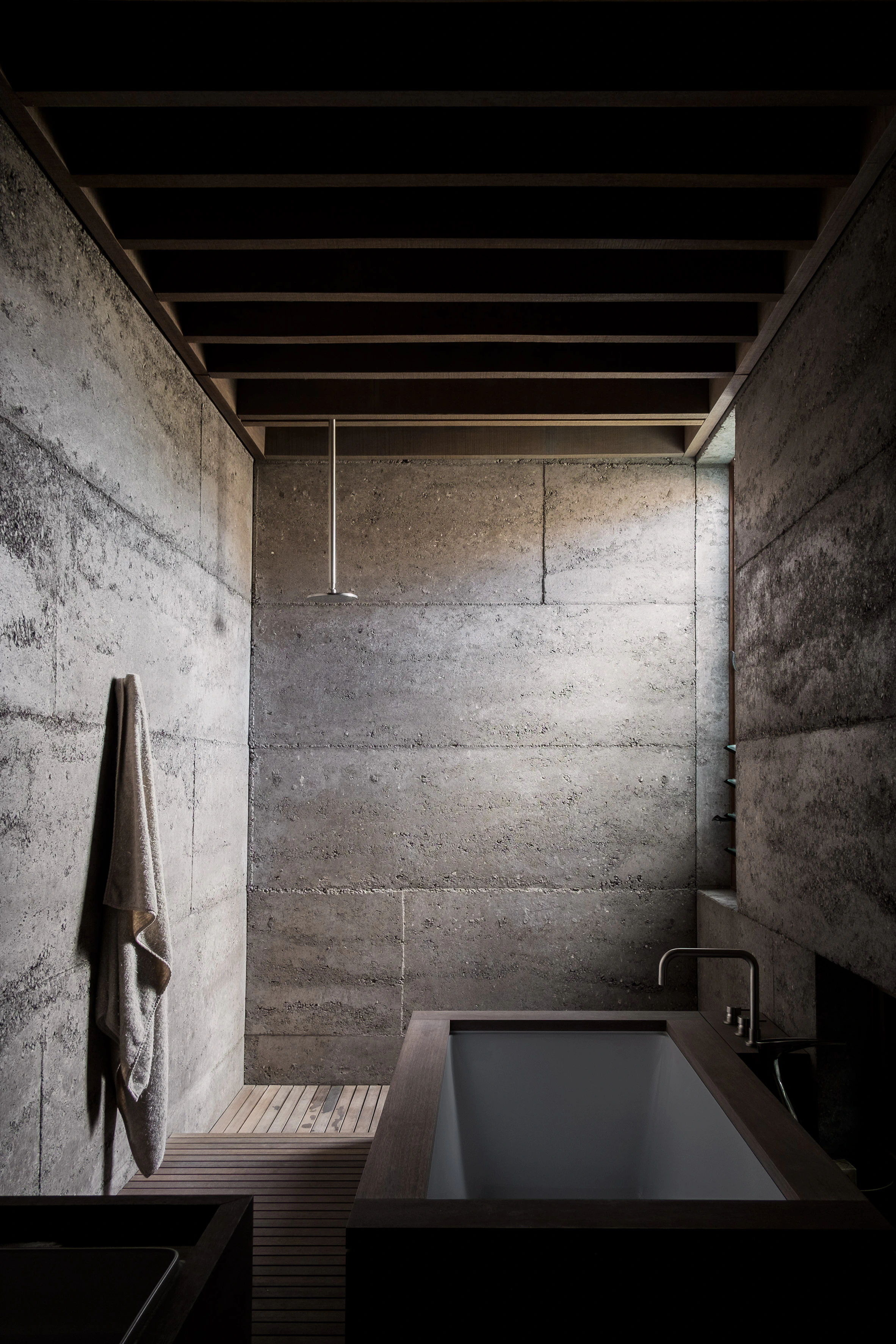
Bounded by robust, earth-hued walls, a house in Floreat, Western Australia, stands as both refuge and testament to material clarity. The immediate experience is shaped by the structure’s assertive boundary: a shell of cement-stabilised rammed earth, rectilinear and continuous, defining the perimeter with palpable weight. This imposing gesture at first suggests the gravitas of classic brutalism—a celebration of mass, volume and protection—yet the character of the earth, with its muted stratified hues and tactile layers, brings a sense of warmth and belonging absent from poured concrete.
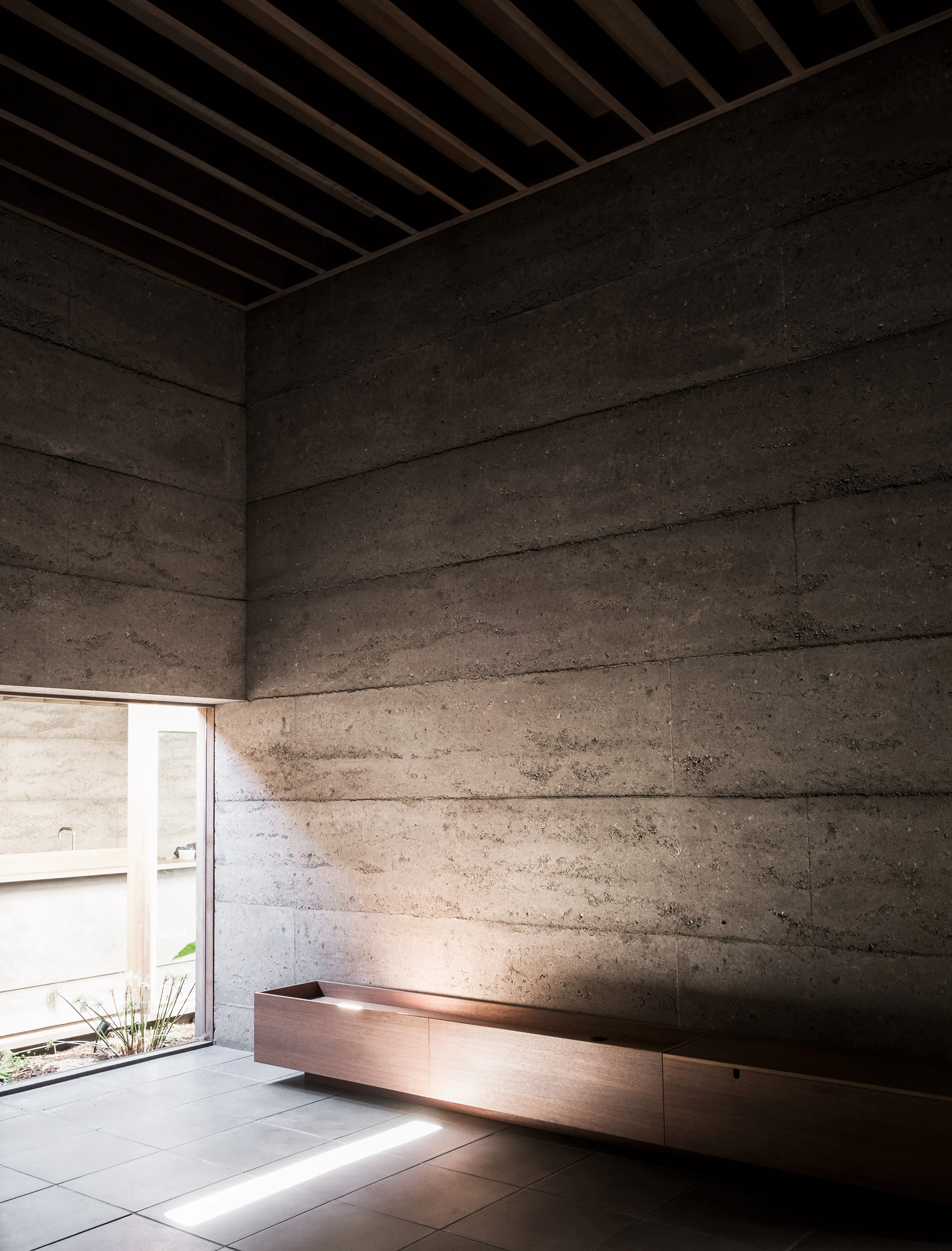
Stepping through the recessed openings heightens the sensation of entering a private realm. Thickened walls not only shield from the suburban context but also quieten the transition, ushering inhabitants into a noticeably cooler, hushed threshold. The evidence of horizontal banding across the raw earth surfaces records each lift as a visible memory, grounding the architecture both physically and visually in its Australian setting. This material truthfulness, familiar from the ethos of brutalist architecture, here resonates with a crafted finesse. The cement-stabilised rammed earth, expertly compacted, achieves both low-tech sustainability and monumentality, its depth and texture amplifying diffused light and shadow throughout the day.
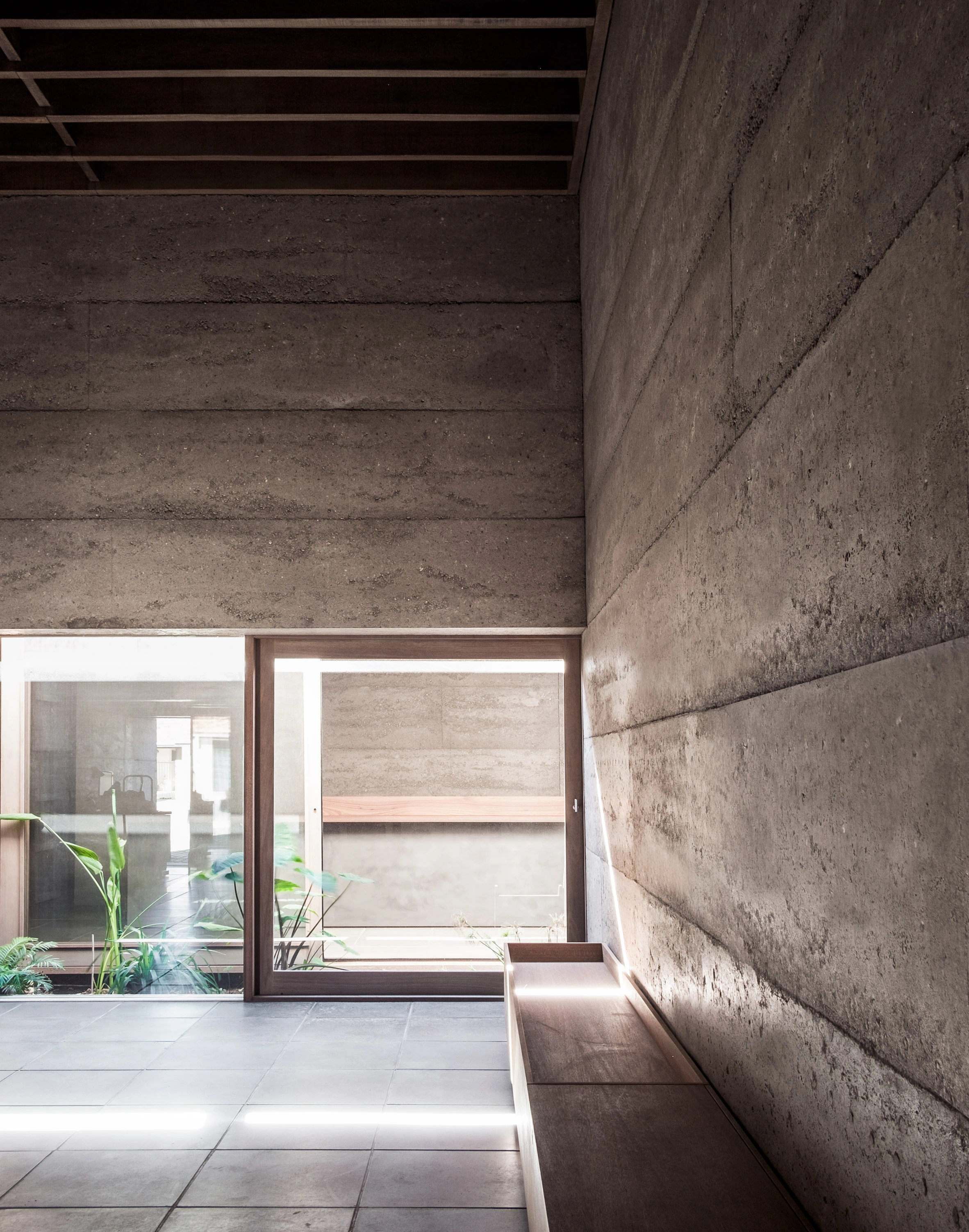
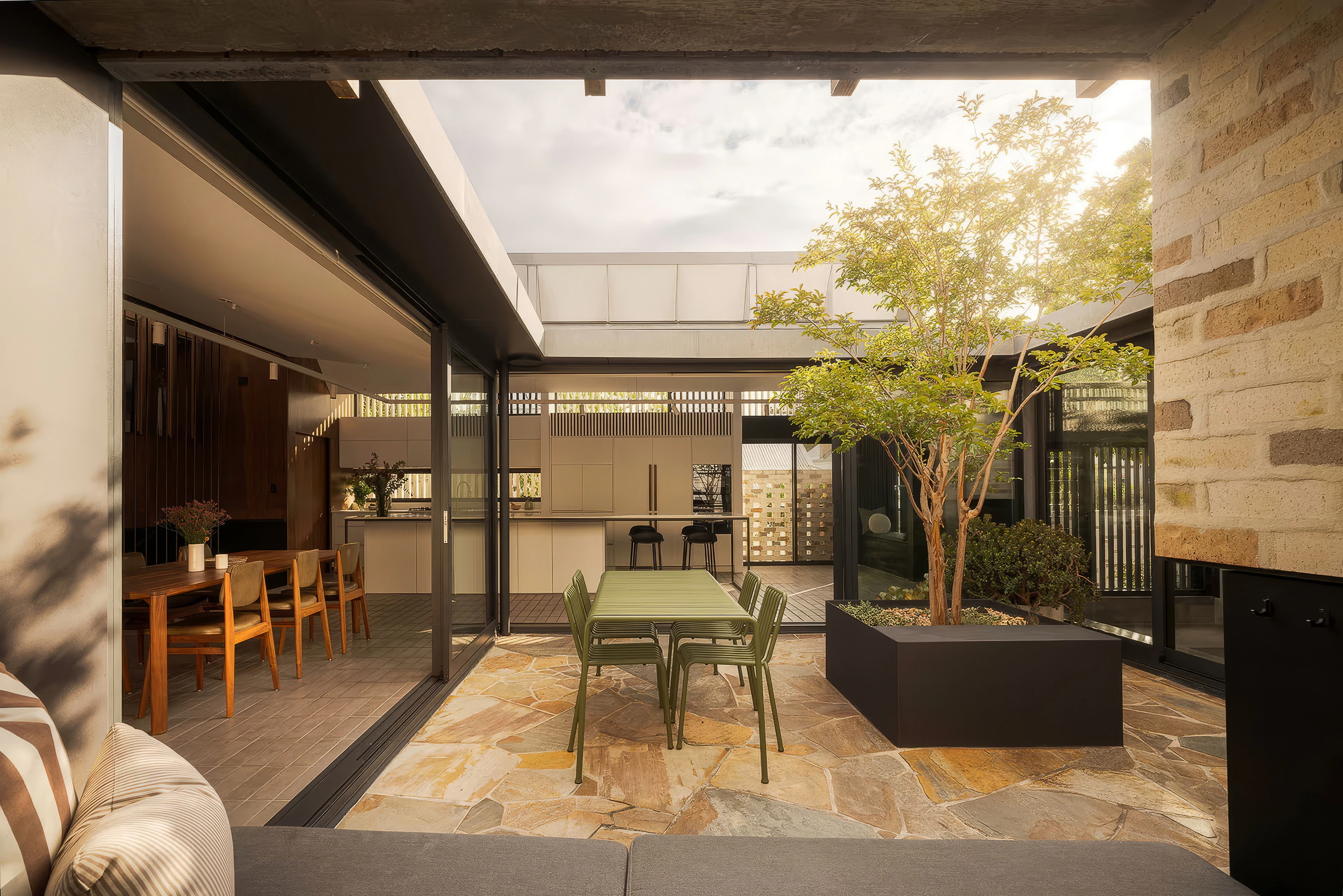
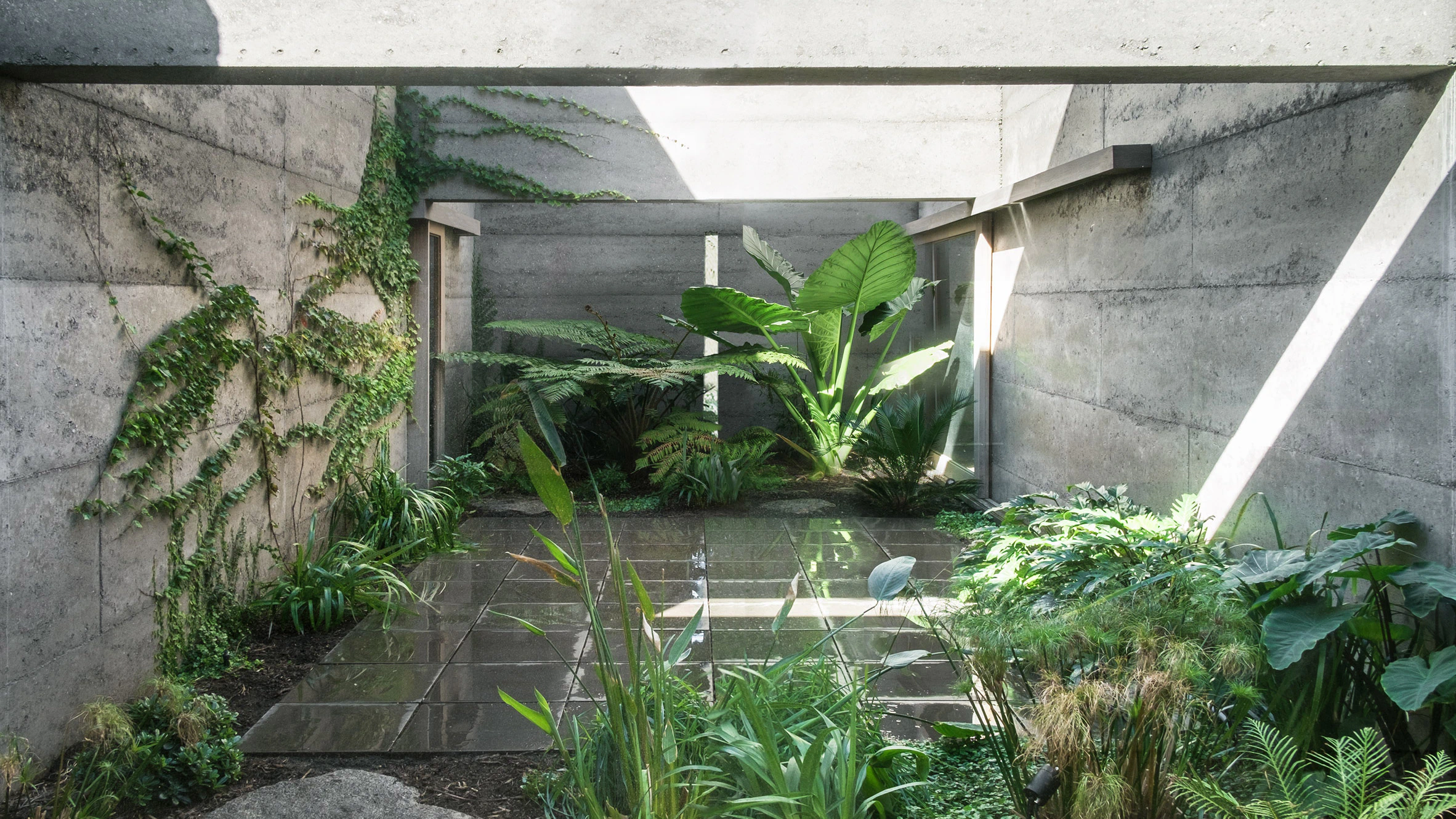
The plan orients the home inward, funnelling movement gently towards a generous inner courtyard. Photographs reveal the predominant theme: everywhere, lines of vision return to this green heart, framed precisely by solid walls, deep-set windows, and extruded porticos. In distinct contrast to the envelope’s heaviness, the garden offers lushness and openness, forming a tranquil enclave that evolves with the seasons. This moment of openness, protected yet exposed to sky and sun, transforms the experience—turning the “defensive” outer shell into a sanctuary that is at once isolated and inviting.
"The everyday activities of the inhabitants are continuously framed by the central void, and protected by its material presence"MORQ Architects
Functional spaces unfurl sequentially around the cloistered garden, each benefiting from proximity to daylight and views of foliage. The interiors extend the restrained elemental palette: timber and polished concrete serve as subtle counterpoints to the dominant earth walls, acting as accents rather than distractions. This approach ensures that the sanctuary of the inner courtyard remains paramount, with living areas arranged to continually reinforce a relationship with nature—borrowing cues from monastic cloisters yet reimagined within a distinctly contemporary Australian context.
A notable thread running through the home is its unapologetic commitment to form and substance. Like the best of
The architecture’s confidence is rooted in its material. The