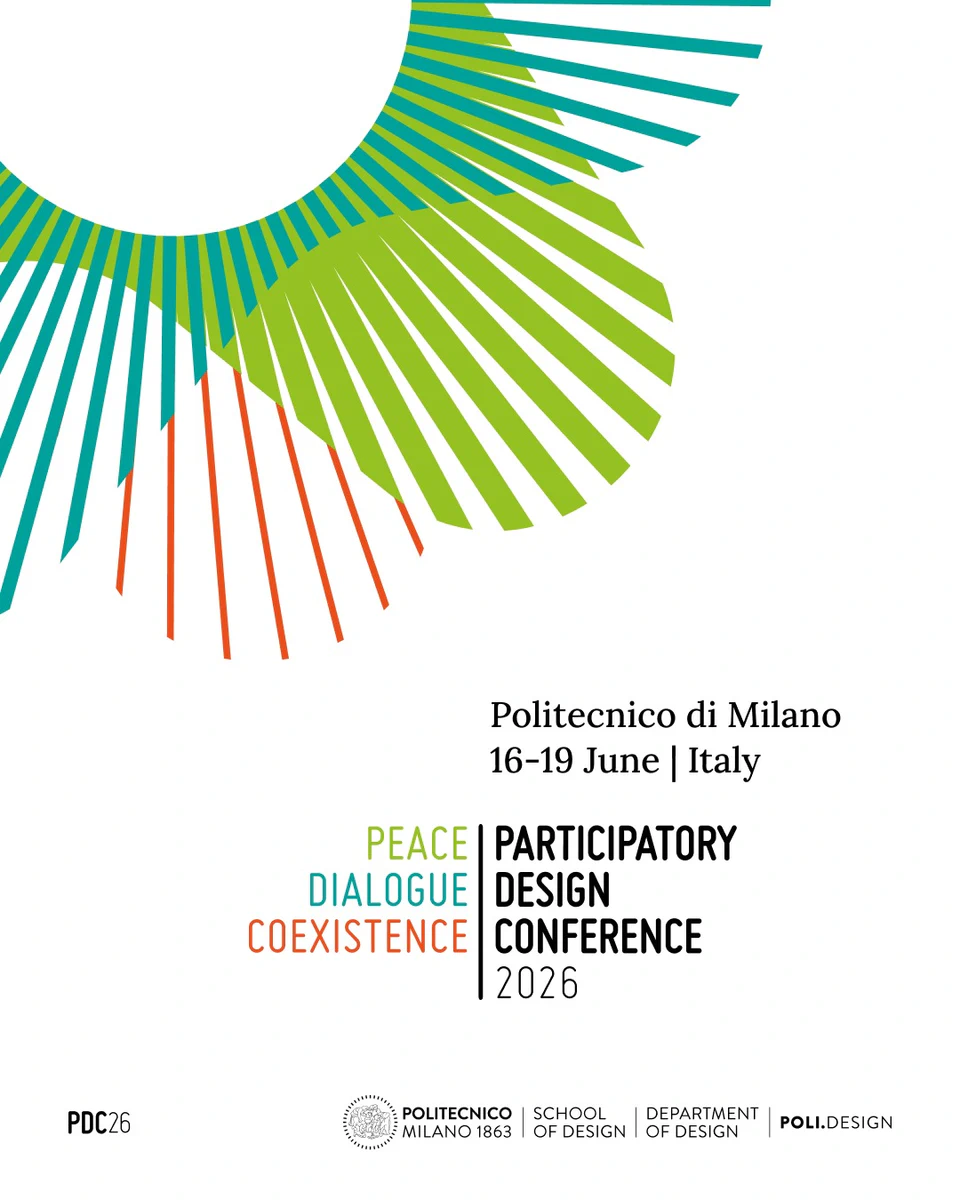
Participatory Design Conference 2026
Piazza Leonardo da Vinci, 32, 20133 Milano MI,
Details
The Participatory Design Conference 2026 (PDC 2026) brings together the global participatory design community to explore design’s role in fostering peace, dialogue, and coexistence. The event’s central theme investigates how participatory and co-design practices can help address societal fragmentation, conflict, and the climate crisis. Attendees will engage with ways in which design may facilitate solidarity, reconciliation, and inclusive participation, not only within communities affected by conflict but also across broader systemic challenges.
PDC 2026’s program is structured around a series of “Conversations”—integrative sessions that combine academic research outputs, localised practices, and thematic discussion. Submission formats include Full Papers, Exploratory Papers, Workshops, a Doctoral Colloquium, Situated Actions, and PDC Places. These formats encourage multidisciplinary engagement with issues such as the dynamics between global systems and local experiences, the impact of artificial intelligence on democratic participation, methodologies for civic engagement in the climate crisis, equity in design, participatory policy-making for sustainable transitions, as well as multispecies and more-than-human perspectives on technology and interdependence.
Situated Actions represent immersive formats—ranging from performances and games to participatory prototyping and community walking experiences—that engage with local contexts either prior to or during the conference. PDC Places extend the conference’s reach through decentralised, site-based events held in advance of the main conference. These localised events are intended to support situated, decolonial, and intersectional approaches to participatory design, foregrounding lived struggles and non-institutional knowledge bases.
The design and thematic focus of PDC 2026 underline a conception of participatory design as a democratic, political, and ecological process, oriented toward peacebuilding and systemic transformation. By highlighting diverse methodologies, lived experience, and inclusive dialogue, the conference positions participatory design both as an avenue for critical reflection and as a practical means of addressing social fragmentation and cultivating coexistence.